For our 200th episode, we're revisiting the film that inspired our podcast name!
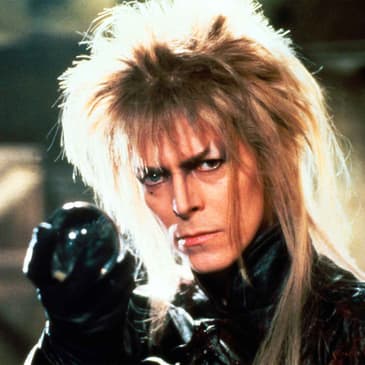
David Goelz of The Muppets joins us as our very special guest to celebrating the 40th anniversary of Labyrinth. The film paired Jim Henson’s creature-shop with a Terry Jones screenplay, George Lucas producing, Brian Froud's world-building, and David Bowie doing what only Bowie could plausibly do: play a goblin king as if he were headlining a particularly sinister school dance. Jennifer Connelly’s Sarah, annoyed beyond reason at being asked to babysit, spends the film crossing a maze filled with sarcastic puppets, impossible architecture, and a villain who seems to believe charisma and a Limahl fright wig is a substitute for governance.
It recouped less than half its budget at the box office, but is the lighter companion to The Dark Crystal (1982) a delightful adventure that rightfully found a devoted audience on VHS, or should it be locked in its own oubliette? Find out!
Support us on Patreon to nominate films for us to cover, access exclusive bonus content, and vote on the final verdict!
Rate and review us on your podcast platform of choice, and tell a friend about us.
Follow us on TikTok, YouTube, Instagram and Bluesky.
Hosted on Acast. See acast.com/privacy for more information.
[00:00:04] Welcome to Movie Oubliette, the film review podcast for movies that most people have mercifully forgotten. I'm Dan. And I'm Conrad. And in each episode, we drag a forsaken film out of the Oubliette. Discuss it and judge it to decide whether it should be set free. Or whether it should be thrown back and consigned to oblivion forever.
[00:00:36] Movie Oubliette
[00:01:01] This is a recording podcast for Forgotten Fantastical Films with me, Conrad, excited to hit this milestone in Cambridge, UK. And I'm Dan. Yes, me too. Just a tiny bit tired from a night of board games in Melbourne, Australia. We focus on forgotten fantasy, sci-fi and horror films because we love magical monarchs, paradoxical dimension bending staircases and creatures with detachable heads. Hello, Dan.
[00:01:30] Hello, Conrad. Congratulations on 200 episodes. Yes. Yeah. And same to you. Same to you. It's been like eight years or something. We started in 2018, I believe. I know. How is that possible? I know. Yeah. Yeah. Lots of things have changed. We've moved houses. We've upgraded gear. Yeah. Lots of things. Exactly.
[00:01:57] And we've got a really great community around us now, which we didn't have when we started. So it's... Yes. Yes. Yeah. It's quite the lovely family we've built up. Yes. I do love the back and forth between all our patrons. It's hilarious reading the comments. It is. Yeah. I really enjoy it. So, yes. It's going to be a special episode today. So you're a little bit hungover from a late night of rowdy board game playing. Not hungover, just a little bit tired.
[00:02:25] I think I needed maybe a few more hours sleep. But I am glad to be here. Yeah. So I have to shout out to my friends. So Carla, Elizabeth and Paula, we had a great night. Lots of food. I don't think I've eaten that much cheese and carbs in one sitting. So, yes. It's funny. Gary is here.
[00:02:53] Our famous AI voice, Gary. My brother is visiting at the moment. And we went to the fish and chip shop for the first time in ages. We always have a bit of cheeky takeout while he's here. Oh, yes. And the portions of chips. I mean, good grief. Well, yes. It could sink anybody. Unbelievable. We made the mistake of ordering large portions. It was like enough to feed the whole street. Oh, really?
[00:03:22] Oh. Okay. Insane. I don't know why. Australia calls it minimum chips. But there's no maximum chips. You just say minimum chips. And it's like the portion size that we're all used to, which is bizarre. I don't know who came up with this like portion size terminology. It's ridiculous. Well, I definitely experienced maximum chips today. Okay.
[00:03:49] Let's move on to our mailbag for our 200th episode, Conrad. Yes. So, we had some correspondence about Masters of the Universe. Fabulous episode with Matt Swofford joining us on great form. Wicked person got in touch and said, it struck me as a film without a main character. It wasn't clear whether the annoying Tom Paris from Star Trek Voyager actor with the eminently
[00:04:15] punchable face or He-Man was really the main character of this story. And the story didn't seem to have any idea either, changing its mind throughout. Yeah. Yeah. That's basically it. Right. It's quite true. I racked my brain. I think it's Courtney Cox's character is the main character. She's certainly got the biggest backstory. Yeah. I don't know. Yeah. I still stand by it. It's ensemble cast.
[00:04:44] I don't think there is a main character. No. Maybe it's Skeletor, actually. Yeah. And of course, we heard from Serge of Cold Crash Pictures. Hello, Serge. Oh, hello, Serge. And he said, Masters of the Universe doesn't have the budget to pull off anything spectacular. The cleverest parts of the script are how it manages to keep costs below 22 million, mostly by setting half of it in California. But it's got a lot of lo-fi charm. Langella is particularly inspired.
[00:05:14] In a world that already has Conan the Barbarian, Star Wars, hell, even Krull, I might never watch it again, but it has just enough moxie to make me feel kind of bad for giving it two stars on Letterboxd. Oh. Okay. Yeah. It's a peculiar film because it's on paper. It doesn't work. It's not a good film. But it's still, yeah. There is still a charm to it.
[00:05:42] There's something about it that still draws you in. I think so. There's something kind of winning about it, but it might just be us. Serge, it feels as though Serge was left cold. Ah, yes. But here we go. Well, thanks for letting us know what your thoughts are, everyone. We always love hearing from you. Yeah. We love reading your comments and emails. Okay, Conrad. The movie for today. This forgotten gem that no one talks about at all.
[00:06:11] No, it's never been mentioned. Okay. I will just amble on over to the Oubliette to find out. Oh. Oh, good grief. What is that stink? Oof. It's pretty strong. Oh. It's some sort of swamp or bog. Over there, there's an orange horned monster that's struggling with breathing. Ooh. Oh.
[00:06:42] Well, fortunately, the Blu-ray's right here, so I'll just grab that and come back. All right. Let's use those steeping stones that are appearing. Yeah, I'll just hop across those. Okay. This is an Oubliette. Labyrinth full of them. And I'm back. Yes. What do you have today? Well, I have with me today the film that taught me one of the words that is in the name of our podcast. The 1986 musical fantasy film Labyrinth.
[00:07:12] Oof. Yes. Yes. Directed by Jim Henson with a screenplay credited to Terry Jones, although I think a lot of people participated. And starring David Bowie and Jennifer Connelly of Phenomena. Yes. Our second Jennifer Connelly of the year with music by Trevor Jones and David Bowie. Mm. Mm. Yes. So those not familiar, what happens in Labyrinth?
[00:07:39] Well, in Labyrinth, teenage fantasy fan Sarah would rather flounce around the local park in period costume, reciting lines from her absent mother's plays than babysit her screaming baby half-brother Toby. Mm. In a moment of brattish irritation, she underestimates the danger of saying, I wish, during a thunderstorm and calls upon the goblin king, Jareth, to take the child away.
[00:08:07] Toby is promptly kidnapped by giggling goblins and Jareth gives Sarah 13 hours to navigate a glittering nightmare of tunnels, traps and talking creatures before Toby becomes a goblin forever. Mm. Sarah plunges into the labyrinth, picking her way through impossible logic puzzles and rude muppets, making unlikely allies in the form of Hoggle the Dwarf, a giant orange fairy beast called Ludo, and a chivalrous fox terrier called Sir Didymus.
[00:08:37] Will Sarah outwit the maze and rescue Toby before time runs out? Will the goblin king be undone by his own theatrical excess? And how can it be possible to cast David Bowie as the ruler of a puppet kingdom and somehow it ends up being the least strange thing on the screen? Find out after the break. Uh, yes. And we will be joined by a very, very special guest. Oh, yeah.
[00:09:20] Our special guest today has made a career out of giving fantastical creatures compelling inner lives. As a central member of Jim Henson's creative team since the 70s, he's brought us Gonzo's peculiar but lovable genius, Sir Didymus's fearless pomposity, and let's be honest, delivered the most moving narration of Dickens' festive classic. We are very excited to welcome Dave Gulls. Hello, sir. How are you? Hello, Conrad. Hi, Dan.
[00:09:50] Hello. Hi, Dave. We're very excited to have you on the show because we are celebrating our 200th episode as well as the 40th anniversary of Labyrinth this year. When you look back on the film, can you remember what the team's goal was for this second standalone fantasy feature film after The Dark Crystal? Because they're quite different in tone. You know, it's a great question.
[00:10:17] I was really apart from the development because I was shooting Fraggle Rock in Toronto at the time, and Jim was over in England working with the various writers. And I wasn't directly involved, though Jim sent me drafts every so often, and I would react to them. But my mind was on Fraggle. I wasn't really thinking about Labyrinth yet. So we got there and found that we were faced with shooting this mammoth production. It was going to be five months. That was what we got to do in those days.
[00:10:47] And it was also very episodic. You know, from a performing standpoint, it was these little vignettes with a character or two as Sarah passes through the labyrinth. And we don't see that character again oftentimes. So to us, it was like sketch comedy almost. We just had to devise characters for a short scene and then devise more characters for the next one. Didomus did actually continue once he was introduced through the rest of the plot. And that was kind of fun. And I liked playing him because he was just officious.
[00:11:16] And there was a lot of bluster to him and maybe not quite as much substance as he thought. Yeah, he is a very lovable character. He's absurdly overconfident. But the film, I don't think, mocks him. Did you approach him as a satire, as completely sincere, as a mixture of the two? Well, in the script, he is certainly loyal. Yes. And he has a moral center.
[00:11:42] So I guess the way I approached it was to think of him as essentially a vulnerable character who was putting up a facade. I just had great fun with his thinking, showing his thinking on screen. Yes. In the very first scene where he confronts Sarah and the others when they want to cross the bog of Stanch, I do have a little story about that because I was rehearsing with about four or five of my team,
[00:12:08] David Barclay, Karen Prell, and a couple others who were working these cables that would control Didymus' eyes, eyelids, eyebrows, those sorts of things. And so we had about a three-page scene when he was introduced, and we planned that scene by the beats. We just did it by the numbers. So that on a certain syllable, the eyes would do a certain thing, right? The eyes might open up a little bit or they might narrow and become a little more squinty.
[00:12:37] And just so that we could go in and do this one little scene, we wanted to have a way to make sure we got something that was usable. It's ironic that you would think you can't ad lib with these types of puppets because there's so many people involved. But after a while, after a couple weeks of working them, it actually does become possible to ad lib. Wow, really? And just work on the fly. And because you kind of know this time your little team knows each other, and they can kind of get into a flow state.
[00:13:06] And follow the whatever I'm doing, you know, the stream of consciousness of the character, and they kind of know what to do. But in the beginning, when you're just shooting the very first thing, you don't have that experience. And with Labyrinth, he wasn't on the screen all that much after that. So we never really did get to where we could ad lib with him. But for that scene, that's why we did it that way. We learned it by the beats. Everybody knew they were going to pull their lever on a certain syllable. But that can be mechanical.
[00:13:35] When you get in there, it can be mechanical. And so at that point, you have to step up to another energy level when you're performing and just feel it and kind of trust that you know when you're going to pull your lever. Right? But, you know, if you don't do that, it can seem kind of mechanical. You know, it can be kind of like, you know, I'm doing gestures for those people who are listening to audio only. But the gestures are just non-fluid. They are mechanical in nature.
[00:14:02] And when you're doing these characters, you have to get past that. So what we did was we learned the three pages. And then I went down to the high street near the studio. And I bought a beach chair. A folding chair with the wrong webbing that you would take to the beach. And I also got the production to bring me a music stand. The first AD teased me because he said, what do you want now, a Nubian slave? And I absorbed his teasing because, and his name was Ken Baker, by the way.
[00:14:31] I absorbed the teasing because I just thought, I know how I need to do this. And I need to put everything on the screen. I don't want to waste any effort thinking about how my leg hurts or how I'm losing my balance or anything like that. I want to put 100% on the screen. So I got myself really comfortable. We shot three takes. And it was three pages long. So we shot these three takes. The first one was 90% there. The second one was only about 20% or 30% there. And the last one was 90% there.
[00:14:59] And then I folded up my chair. And I folded up the music stand and gave it back to props. And I started to walk away. And Ken Baker, the first AD, said, I know I was teasing you, but that was really impressive. It's wonderfully fluid. I mean, my personal favorite moment in that is when he finally decides that he can just say yes to let them pass. And his expression on that and the eyebrow raise, his physicality is beautiful.
[00:15:30] Yeah. I'm glad that you appreciated it because a lot of work goes into it because you have to decide what the character is feeling at every moment. Yeah.
[00:16:07] I would really love to give him a big hug because I loved what he did. I love that accent. What is that? What is that? What would you call that accent? Oh, yeah. You know, that kind of... Very received English, yes. Like the Queen. But you can tell that he's slightly putting it on as well, which is perfect. Exactly. It was like this admiral who comes back after the war, you know, and then he starts telling his war stories.
[00:16:35] And so that was kind of what I took from what David did. But it really went beyond the way I had done it. You know, it really enhanced it. And the reason we were doing that, by the way, was just so that we didn't have recognizable voices, Muppet voices in the show. Like, you know, whatever voice I would do, fans might recognize as me. So we just, you know, had most of the characters done by somebody else. And of course, that was done in post. I was back on Fraggle Rock. I never got to meet David.
[00:17:02] You came to the Muppets, I think, through your love of design and engineering, creating these characters from a technical viewpoint. I was wondering if you could talk to us about some of the techniques that were explored for Labyrinth that hadn't been done before. So by the time we got to Labyrinth, our workshop had evolved and was no longer necessary to do cable controls for these puppets.
[00:17:25] They now were controlled by remote control servos, like you would use the same thing you used in a radio control airplane. And so now all that mechanism was in the head. It made the head heavier, but it didn't involve cables pulling on the performer, hindering the performance. So it was a net gain for the guy who was trying to do a character. And that was something we were benefiting from during Labyrinth. Yeah, it's amazing work.
[00:17:53] Oh, Conrad, it's crazy work. Who has a job like any one of our jobs on that thing? It's just, we're so blessed to be working in a world where that can be our concern. You know, how do I get a smooth eye movement? Which is a huge challenge and it's really rewarding when you get it right. Yeah. Oh, yeah. You know, everything Jim did was ambitious from a puppetry standpoint, a shooting standpoint. It's always hard to do. And there were some ridiculously hard things in this movie.
[00:18:21] I think the column of hands, and I'm calling it the wrong name, but whatever that was. Yeah. That thing was 30 feet tall. It was a cylinder and puppeteers got all around it and stuck their hands into these foam latex hands that you could see inside the cylinder. Camera was in there. It was able to move up and down as she fell. And she was on a wire. Sarah was on a wire going up and down, camera going down with her and stopping periodically to talk to certain groups of hands on the way.
[00:18:49] We shot that, I don't know how long we spent on it. It kind of feels like we spent three or four days, but I don't remember exactly. But it was a very ambitious bit of puppetry. Because if you imagine, let's say you're doing part of one of these hand faces. Maybe it's two or three people doing that hand face. You're all on the outside of this big eight-foot cylinder sticking your hands through. And you have to look at a monitor someplace. Now, your face is kind of pressed up against the cylinder.
[00:19:16] And monitors have to be placed so that all the people that are doing these hands can see what their hands look like on camera. And, you know, if you imagine a face made out of six hands, that's three people. You know, the mouth is one, the ears are another one, or the eyes, you know, are looking around. That's another person. It all has to be done in sync for that little team of people who's doing that face. It was really ambitious. Yeah. Yeah. So were you one of the hands?
[00:19:46] Oh, yeah, I did some of that. I can't remember what I did. But I was a group of hands. I was part of a group of hands. Yeah, for sure. Wow. Yes. I can imagine being a puppeteer, like being in very awkward positions, often just holes in the walls with your hand just sticking through. You have no idea. Yeah. It's really, really difficult. I mean, I know so many orthopedic surgeons way too well. Oh. Yeah. Yeah.
[00:20:15] It's done a lot of damage. So I've had to have a lot of repairs. Yeah. You do play quite a few characters in this movie. Yeah. I mean, the Fiery's in particular, it was a very physical puppetry. Yeah. And you're all dressed in black and just running around on stage. Yeah, we did that. I can't remember how long we rehearsed it, but it was a very physical puppetry. Again, it seemed endless to me. We just kept rehearsing and rehearsing and rehearsing. But we went in to shoot it and it worked quite well because everything had been worked out.
[00:20:42] Like the head's going to come off and you don't want to hold the arm up where the other puppeteer is passing behind it. You know? Sure. There are all kinds of logistics things that you have to get right. So we worked out fine. And I have to share with you, we had a second unit director on that named Peter. I used to tease him all the time because I had this, I picked the best Fiery, which is a guy with a very long, straight, skinny nose. It got very skinny.
[00:21:07] And he had these big eyes that were kind of small pupils and big eyeballs that could look in a state of surprise most of the time. Yeah. And I had him keep biting his cheek just before we shot. You know, the director would say, okay, everybody ready? Yeah. In five, four, three. I bit my cheek. I would just say, I bit my cheek. And it just got Peter so upset. He just hated it. He hated having fun on the set.
[00:21:36] He hated goofing around. One scene that has always stuck with me since childhood is the door knocker scene. How was it achieved, that sort of metallic finish? Like it looks so metallic, but it's so fluid in movement. Dan, that's a great question. The door knockers were cast foam latex. And the original models were very smooth and very shiny, and the faces had great texture on them. And the way that the bronze look was achieved was with powders.
[00:22:05] You know, there was a mixture of paint and powders. And when you walked up to them, they looked absolutely perfect. They looked like they were made of bronze. Yeah. You know, like they were big bronze castings. They were very convincing. But at the same time, they had all the fluidity of foam, so they could change facial expressions in a way that was just like humans. Yeah. It looks incredible. And it almost looks like CGI. It's so fluid in movement. I take your point. It's just astonishing. You know, we had the most wonderful workshop. And, you know, we all became friends.
[00:22:34] It was the privilege of working with these gifted people. Everybody on the film, everybody that Henson pulled together was gifted in some way that nobody else was, you know? And God, it was just really, really, really fun to be in that world. Still is. I mean, I'm still in it. That's what I have to tell you. It's a constellation that Jim gathered around himself. You know, he hired people and they were all different. Like even in the New York workshop, the Sesame Street and Muppet Show workshop,
[00:23:01] these people in there, I went in there and I thought when I first got there, these folks wouldn't be employable in Silicon Valley where I just came from. It's a corporation and it's all rigid and organized. But here, Jim loved what everybody could bring and he wanted them to be themselves. And it didn't take long for me to realize, oh my God, this is a gift. Jim's love of diversity is a gift. And it became my own love of diversity.
[00:23:31] I've read that you had a very particular take on Sarah, that you were concerned that she might be a struggle for audiences to identify with, to sympathize with. How do you look back on her now? Oh, that's a fun question. My feeling when I read all of the drafts was this is not a sympathetic character. She won't babysit her brother. She's just a brat. Why do we care about her? It wasn't anything to do with, you know, the performance or anything like that.
[00:23:59] It was just the concept of the character. Jim came over to screen the movie in Toronto and then he pulled me over to the side afterward and said, well, what did you think? And I said, Jim, I just, I'm sorry. I just can't follow that character. I don't feel sympathy for her. And then of course he was very disappointed with how it was received publicly. It was a very tough period of his career. I try to be nice about it. I hope I was nice enough, but you know, I just didn't get it. I just thought she wasn't sympathetic. Then years go by, 15 years goes by.
[00:24:29] I get into therapy. I start deepening and softening as a person. And then I started to see it. And then I realized that while I might not like that aspect of the personality, I could really feel the strain of trying to grow up. What do you take from childhood? What do you leave behind? And all of a sudden with therapy, it was a great, great movie for me. And then I could not ever watch it without crying. Yeah. So that was one stage. And then later on, I had a family and I have a girl who became a teenage daughter.
[00:24:59] And then I completely understood, you know? And so the problem of not being sympathetic was no longer existed for me. But Jim was gone and I couldn't tell him, you know? Oh, right. Yeah. The movie is very ambiguous. So other people see other things in it, but that's just how it affects me. There are plenty of other ways to take it, I think. I think because she is not a perfect, instantly likable character at the beginning, I do think as an adolescent, you relate to her struggle.
[00:25:30] Yeah. And so I think that's why it resonates. I think so. I think you're absolutely right. I was 28 or something when I saw it. Yeah, of course. Yeah. I've noticed on the fantasy films that we've looked at during the course of our podcast that boys tend to go on a very object-driven adventure where they have to fetch the sacred artifact and defeat the big bad. And girls tend to go inward into a world of their own creation because I feel as though
[00:25:57] Labyrinth is, it's all coming from Sarah. I love the line from Jareth at the end where he says that he's just been performing for her, that he's none of the things that we've seen. He's just been performing for her. It's all theater, very much driven by the figure of her mother that she's lost. This is something that I have never actually heard before. And I'm going to share it with you because I only just discovered it. This is a whole take that my wife, who is super plot sensitive, she's like plot supergirl,
[00:26:26] that my wife observed in the film and I never even heard anybody talk about while we're making it. Now this is in the early part of the film. She's at her desk or whatever she sits at in her room. And what you see here is her own mother. And she's pictured with David Bowie offstage and then David Bowie in costume and her mother's in costume. Apparently her mother ran away with another guy. Her mother was an actress.
[00:26:53] Sarah is trying to learn lines in the beginning of the movie. She wants to be an actress too. And the movie is driven by the fact that she's been abandoned by her mother. That bloated my mind. I never knew that. Yeah, you can see hints of it. It's there in the background. Yeah, I mean, that's a real prop that was in the shot, you know? Yeah. So this figure that David Bowie plays is a very significant figure that represents more than
[00:27:20] just burgeoning sexuality. He's also a threat. Yeah. He stole her mother. It works on so many levels. And, you know, it has been criticized for having a dysfunctional story structure. But I can watch it without thinking about the structure and just feeling it, you know? And I think that's why it's popular with a bunch of people. You know, they feel things that are particular to them that are being acted out on the screen. So it resonates and they relate, you know? Yeah.
[00:27:49] And, you know, the negative way to look at it would be said, well, it looks like a committee job. Which it was. All these different writers weighed in. And they all had completely different ideas of what to do in the movie. And, you know, Jim was a visual guy more than a story guy. And so it just wound up being kind of a little unclear as to how the plot is working and what is being intended. But that actually, for me anyway, turns out to be a positive.
[00:28:14] So because of the sort of chaotic nature of production, did that mean you had some more creative input in the characters? Well, working with Jim, everybody in the room could have creative input. I mean, everybody on our cruise knew that if Jim walked in the door and they wanted to share an idea that they had, they could just go over to him and share it. And if he likes it, he'll use it. Right. Everybody is in. Wow, that's great.
[00:28:41] I wanted to ask about working with a human performer in the center of the cast, because you've got Jennifer Connelly, you've got David Bowie, and, you know, obviously you've gone toe-to-toe with Michael Caine. So how does that change the energy or the way of working, performing with Muppets when you have humans in the mix? We like it. We're happy to do it, you know. We love it. It's easy for us. I think for Jennifer said that she and David found it difficult in the beginning because
[00:29:09] they were trying to act with these puppet characters, but the voice of the puppet character was coming maybe from behind them or some other place. Oh, yeah, yeah. For them to get the concentration and to locate that character within the puppet was hard, and I can understand that. The truth is, I didn't have too much direct interaction with either one of them, less with Bowie, because my characters just didn't interact, so we didn't have scenes together. Sure, sure. But I can just sort of tell you as an onlooker that Sarah was a 14-year-old girl, and she was
[00:29:38] really, I felt, really right for this. She was right at the place where you don't know where you're going, you know? And it's scary. And David Bowie was incredible. He brought his star power and his unbelievable music to this production. Yeah. You know, the music is absolutely essential. And of course, we started this whole thing not knowing what the music would be. And Jim was notorious for letting a composer just do their thing.
[00:30:02] He went away and recorded these in New York and came back with this amazing music that we all love to this day. I mean, who can't love underground? The lyrics. Like, I often wonder how he did it. Like, he had the script, but the songs are not directly related to the script. Just a couple of words every so often in underground. No one can blame you for walking away. Too much rejection, though love injection. It's all spot out of the movie, but none of the words are shared. Life can't be easy.
[00:30:32] It's not always swell. Don't tell me truth hurts, little girl, because it hurts like hell. It's brilliant. But down in the underground, you'll find someone true. Down in the underground, a land serene, a crystal moon. Ah! It's only forever, not long at all. Lost in the lonely. That's underground. Yeah. That just goes like one level above the movie and keeps on flying. But it's building around the...
[00:30:57] There is something at the core of Labyrinth that I think inspired all of the artists around Jim. Absolutely. This is the movie, but restated in a simple way that is lyrical. And, you know, it's just so good and so evocative. And it's those times when I think, how did I get so lucky to be in this world with people like this? You know? Yeah. It is an incredible film that didn't hit in the box office immediately. I don't know what. It could have been timing. It could have been marketing.
[00:31:25] It could have been a whole host of other things. But it's certainly found a fervent fan following since then. How do you look back on it now? What place does it hold in your memory? Well, I don't feel that I contributed much to it, but I love what it says. I love the thing that I take away from it, which is about growing up and deciding that you can take some of your childhood with you. You don't have to leave it behind. I mean, I guess it resonates for me because, look, that's my whole career.
[00:31:52] I've been playing with toys ever since I joined Jim. I was 27. And I was so lucky to have my childhood again. And it's important to have it. It was my job to have it, and I still have the same job. It's still important to play. I would say Labyrinth, Dark Crystal, and Muppets as well. I think they all bridge many generations. You can watch those movies as a child, but also as an adult.
[00:32:21] And I watched the Muppets growing up as a child all the way through teens and 20s. Muppet Treasure Island was my favorite movie. I love that.
[00:32:57] Oh, yeah. We saw Treasure Island and Christmas Carol. He was doing a great job. He just really stepped up and did a fabulous job on those two pictures. And I used to love to just try to come up with some little twist, even if I was just doing a little incidental character. I just loved surprising Brian and cracking him up. Well, that's the thing. If you have a creative leader who isn't a dictator, who is somebody that you just love going to work with them because you want to please them. You want to make them laugh. You want to make them smile.
[00:33:27] Oh, yeah. I mean, that's the dream, isn't it? It really is the dream. And, you know, Hollywood kind of operates on fear a lot. You know, it's easy to get into fear there. Everybody's afraid to do something out of the ordinary that will get them fired. You know, they're just trying to keep their jobs. And, you know, we didn't have that concern with Jim or Brian. They're all about discovery. You know, let's see what we can discover. That's what we're trying to do is make it better. Of course.
[00:33:52] Well, it's been amazing to have an opportunity to talk to you about this film and to reminisce and to see the film anew after all these years. So thank you so much for taking the time and talking to us. You're very welcome. Thank you and thank Dan. Thank you so much.
[00:34:20] And we are back to talk about Labyrinth. Dan, amazing guest, David Goals. Yeah, I'm still pinching myself that that happened. Like, because childhood me would be just so enjoyed right now. I know. Actual gonzo puppeteer, David Goals, joined us to talk about Sir Didymus and the Labyrinth in general. And what a lovely guy he was to chat to. Amazing, amazing, amazing. So was Labyrinth the childhood movie for you?
[00:34:50] It was, actually. I think like many kids, this became a staple on VHS because it didn't win back its budget. Unfortunately, when it was released in theatres, it was quite well known to be a bit of a disappointment, at least domestically in the US. So the budget was 25 million. And I think it earned about 13 million, just under in the US. But it really found its audience on cable and on VHS. And that's certainly where I watched it over and over again.
[00:35:19] Because again, it's one of those escapist, child protagonist goes into a magical realm and has a fantastic adventure and learns about themselves along the way. Yeah. Kind of story. Yeah. How about you? Is it like that for you? Yes. It was on regular rotation at every kid's birthday party, it seems. Or like after school care or, you know, rainy days at school. Labyrinth was always put on. It was kind of the three main big fantasy movies.
[00:35:47] Labyrinth, Dark Crystal and Never Ending Story. And yeah, Labyrinth was always a big favourite. But I do remember not liking it that much when I was growing up. I preferred the Dark Crystal a bit more. It was darker, it was more, it felt more immersive. And I don't think there's singing, right? There's no singing in the Dark Crystal. There's a lot of humming. Oh yes, that's right. Yes, yes.
[00:36:10] But Labyrinth is very much in the vein of, this is a kid's movie, we should put zongs into this movie. Also, I had no idea who David Bowie was. Oh my goodness. When I was a child. Like, you know, I was like probably six when I first watched it. Right, that's fair. So yeah, I had no idea who he was.
[00:36:30] And so I didn't understand the significance of having this amazing, like world-renowned pop star music legend in a Muppety fantasy movie. There was no significance there. It wasn't until later. So I watched it a lot when I was a child. Didn't really, it wasn't a favourite. I still loved it, but it wasn't a favourite. I didn't understand all the references or anything. Watching it as an adult, it's like a masterpiece. Like there's just so much about it to love.
[00:37:00] Like it's just effects alone, practical effects, all the Muppets, all that stuff. Incredible. Every scene I'm questioning, how did they do that? How did they do this? It's like watching magic on screen, even as an adult, knowing that it's all practical. It's phenomenal work. Yes. Well, there is a bit of CGI right at the beginning of the movie, of course. Yes. That was super surprising when I rewatched it because I did not remember that. I thought, did I get the wrong copy?
[00:37:29] Is this some sort of George Lucas, like, reissue of the movie where you just insert CGI shit everywhere? No, fortunately not. This is a very early attempt to do a CGI rendition of a living creature. And it looks, you know, very metallic and very basic. I think some people compare it to a screensaver. Yes. But in 1986, this was mind-blowing. Oh yeah, I can imagine.
[00:37:58] Like, that's why I was questioning, is this the right version? Because I didn't think they could do something like that in 1986. Because it's an owl. It's a fully flying owl, swooping and flapping around. But yes, it does look like a video game, basically. It's got that very polygonal look that early CGI had. They couldn't render texture very well.
[00:38:23] Everything looked very sharp and made up of shapes rather than, like, an actual texture of feathers or anything like that. Yeah. But it's quite the showcase for the beginning of the movie. I think it's one of the earliest examples of trying to recreate a living creature in computer graphics. It's beyond, I think, Batman Returns. The Bat Swarm in that, I think, was another one that we talked about. I think there were penguins as well. Like, some of the wide shots of the penguins were CGI.
[00:38:51] But it was so far back that you couldn't really make them out at CGI. Yeah. But aside from that, you're right. Everything is like the pinnacle of animatronic and puppetry of the time. It's like Jim Henson's crowning glory. I mean, even compared to The Dark Crystal, something like Hoggle. I mean, it's just a... Hoggle is amazing. Yes. Yes. Just so much expression in his face. And that's all remote control, right? Animatronics.
[00:39:20] Brian Henson operating the jaw. Four people operating the face. It's Sherry Weiser performing the physical movements inside the suit. And all of them practicing and practicing. Which is something that David talked about. Yes. That they would just practice, practice, practice. Until they can all synchronize what they're doing to create the perfect performance together. Yeah. I mean, that's what's just mind-blowing about a lot of the puppetry in this. It's just so many people having to do whatever they're doing at once.
[00:39:50] And often not being able to see what they're doing as well. They're just putting hands through a hole in the wall and, you know, moving a puppet around. It's incredible. Yeah. Like, even the shaft of hands. Like, they have so many hands. Not even know what they're doing because they can't see. They're just putting their hands through these latex gloves. And then having to form all these, like, incredible faces with their hands. It's really amazing. It is, yeah. Yeah. So you've got all of that.
[00:40:19] And then you've got the goal of the movie, which is to do something that is lighter in tone. Yes. Moving away from the Dark Crystal, which also wasn't a huge success at the box office, unfortunately. So Jim Henson thought, well, let's make it lighter. But he's still leaning on the artistry of Brian Froud, who designed the world, the great illustrator and artist. But they're doing something more fun.
[00:40:47] So they end up with Terry Jones, one of the Pythons. Yes. I don't know. Fighting the screenplay. Yeah. There's a lot of Python humour in this, if you really pay attention. All the sort of back and forth squabbling between characters is very Python-esque. It is, yeah. And also the sort of meta-commentary on your expectations for this type of story and for the genre.
[00:41:12] Even from the very beginning, when Sarah is wishing that her brother will be taken away, you are cutting for the very first time into this weird alternative dimension where the goblins live and seeing them waiting with anticipation to see whether she's going to say the words or not. And then she gets them wrong and they're all like, oh, that's not it. She's got it wrong. Yeah. And you think, okay, this is clearly Python. Yeah. Yeah. Yeah. Yeah. Really is.
[00:41:45] I mean, I love the influences. Like it's clear references to other sort of fantasy stories. Even that scene in her bedroom, in Sarah's bedroom, you see all of the references as just book covers. You've got Wizard of Oz, Alice in Wonderland, Where the Wild Things Are, Grimm's Fairy Tales, Snow White. Like you can see all of that within the movie with like the hedge maze, like Alice in Wonderland.
[00:42:11] And when she falls in the end and it's this weird world where everything's floating, all the rocks are floating. It feels very Alice in Wonderland. And seeing all the characters in her room as well. Yeah. I never noticed that until I rewatched it again and again. And I was like, oh my God, there's a Ludo soft toy. And there's a Sidonimus soft toy. And then there's like Hoggle bookend at the end of the bookshelf. And there's a maze.
[00:42:38] It's just so many great little touches that reference the rest of the movie. And sort of the idea that maybe she's imagining this entire world from her bedroom, from all the sort of influences from her bedroom. It feels very Wizard of Oz, like where she sees all the characters when it's the sepia part of the movie. And then those characters become the characters in Oz.
[00:43:02] Yeah, I saw somebody online suggesting that the shape of her headboard is the same as Jara's throne as well. The entire fantasy world that she ventures into is in her bedroom. Yes. So this really is a voyage into her childhood. It's her coming of age story. Her Bildung's Roman.
[00:43:23] She's entering this world that physically represents the struggle of adolescence, the struggle of coming to terms with your childish impulses, your simple binary view of the world. The way she spends most of the first part of the movie screaming, it's not fair all the time. Yeah. And being quite bratty versus being responsible and looking out for her half-brother. And also, let's be honest, dealing with her burgeoning sexuality.
[00:43:52] Because one thing that has to be said for David Bowie, they do not tone down how hot he is. He's very much a masculine presence and a sexual romantic fantasy and threat in this movie. So it's all of that. I mean, yes and no. It's interesting how he's represented because he's not the masculine fantasy of like sword and sorcerer movies. He's not this greasy, muscly, big arnie. He's not He-Man.
[00:44:21] No, he's not He-Man. He's not brandishing a sword. Like he's in tights and he wears lots of ruffles or, you know, nice jackets and his hair is all fluffy and hair dried. Like he is very masculine, but in a sense, he's also very unique in how he's, I guess he's very 80s. He's very hair metal. Yeah. Which maybe that is also the female gaze of the time.
[00:44:49] But it is interesting, like talking about Sarah's sexuality or like coming of age or going through puberty because Jareth, we talked about this with David, is the actor that ran away with Sarah's mother and took her mother away from her, basically. And they ran off together and left Sarah. So she has this kind of weird fetishization of the guy that took her mother away. It's kind of a strange dynamic. It has weird dichotomy, isn't it?
[00:45:19] So he is both a threat and yet again, he is stealing a member of her family away and she has to face up to that fear and deal with him. But also she's acknowledging. She's attracted to him. Yeah. She finds him sexy. Yeah. Which is like, I mean, it's quite odd to see that in a kid's Muppet movie because she's like 14 at the time. Yeah. Jennifer Connelly was 14. And David Bowie is, you know, a man, an adult man. Yeah. It's pushing it. It is.
[00:45:48] The thin white duke in criminally tight jodhpurs with an enormous codpiece. Oh, the bulge. The bulge is ever present in this movie. I'm not even sure it's a codpiece. I think that's just David. I think he was quite the blessed man. Oh, yes. Yeah. There's a lot of movement down there. There is a lot of movement. It's like, oh, there's nothing holding that back. That's free and prison. Yeah. He's quite the specimen.
[00:46:17] He's really good in this. He is so good as Jareth. Jareth. Because a lot of times, you know, you put a rock star in a movie and, you know, we had Sting earlier this year on The Bride. Yeah. And it's like, I mean, we thought he was okay in that, actually, because he was playing a dick. But this, David Bowie is playing such a fascinating figure in Jareth. Yeah. Because he is simultaneously trying to be everything that she wants him to be.
[00:46:43] But he's also trying to tempt her away from growing up and to like that fantasy that he puts her in where they're just dancing and she's permanently going to be like a pampered, protected princess. Yes. Dancing with her Prince Charming. He is trying to lure her away and trap her and make her safe and within his power. But he's also kind of a tragic figure as well. And that comes out in his song, which I'll talk about in the Mobley Awards.
[00:47:10] But the song Without You during the Escher sequence with the staircases everywhere. And he delivers that with a real sense of fragility and vulnerability. Like, I can live within you. And he looks really sad. So there is this sense that he's sort of like a tragic, pained figure as well as a threat and a fantasy. He's doing a lot. Yeah, yeah. And it really works. Yeah, there's that line that he says to her. Just fear me, love me, do as I say, and I will be your slave.
[00:47:39] And it's like, oh, okay. That's not what I expected you to say. I thought he wanted her to be his slave. But it's, yeah, it's almost like he is at her will, basically. He does not exist without her. No, exactly. So Terry Jones is the sole credited author on this screenplay. Okay. But apparently Dennis Lee, who I think was a lyricist on Fraggle Rock, he did an original 90-page treatment based on Henson's ideas.
[00:48:10] Terry Jones did a script which was very comedic and very episodic. Okay. And you can still see some of that. Yeah, you can. She goes here and you get this skit. And then she goes here and you get this skit. And so on. Yeah. It feels very Holy Grail to me. It does, yeah. And then apparently Laura Phillips came in and revised it to emphasise the character relationships, particularly Sarah versus Jareth.
[00:48:35] And then Elaine May came in and polished it five days before filming and humanised the characters and grounded Sarah's emotional arc. And then George Lucas came in and assisted with structure. So there are a lot of cooks. Okay. And Terry Jones apparently felt quite disconnected from the end result. He didn't really feel like it was his thing anymore. Right. That's interesting because normally when we come across movies where it's got a big list of writers, it's a disaster.
[00:49:05] Everything feels out of place and there's no sort of sense of continuity or character arcs. Whereas this feels very grounded. It actually feels quite cohesive. It does, yeah. She really does go on an arc through this. Yes. And it's quite dense. But the great thing about this is, is for all that, it feels like the lighter of the, like you compare this to Dark Crystal and it feels so heavy. The world building, the law, the seriousness of it, the cruelty, the stakes, the sort of
[00:49:34] world ending stakes. And then this is just Muppets being silly and three or four just pure dance numbers where the whole movie grounds to a halt and we sing a song. Yeah. Not all of them advance the plot, it has to be said. Magic dance, for example. You remind me of the babe. Yeah. That one. I love that. Which is such an earworm. But it doesn't advance the plot. It doesn't tell you anything about character. It does nothing.
[00:50:00] It's just like, here's a room full of Muppets dancing around singing this incredibly catchy song about a baby and magic. Yes. Yeah. I mean, normally I would be annoyed by stuff like that, but it's just so catchy though. I was literally singing it before we got on to record this episode. It's good. I mean, like you don't like musicals. Did you not like the music in this? I mean the songs. So I have the soundtrack album.
[00:50:29] I'm hit and miss with it. So magic dance, I do like. I do think it serves no purpose. It's chilly down the sequence with the fireys, which again serves absolutely no narrative function whatsoever. Yeah. That one I could skip. I find it quite irritating. Okay. Within You, I think is an absolute barnstormer. Yeah. I find it really moving that one. And Underground, I think is quite a good song. The one that sort of opens and closes the movie. Yeah. Yeah. Yeah.
[00:50:57] I mean, I think having David Bowie as the connective tissue with most of the songs. Yeah. Connects it throughout the movie and it makes it feel like it's a musical journey with David Bowie. Whereas if everyone sang, if Sarah has a song, if Hoggle has a song, I don't know. Oh yeah. It would start to get like a little bit too Disney. Yeah. Would. No, that would really draw the line. Although apparently Jennifer Connelly can sing quite well. Oh yes. Okay. Yeah.
[00:51:27] I didn't mind it so much. It does get a bit muppety and stupid in places. And I remember as a kid, I used to lose patience with it, but that's because I was a slightly older kid than you were when you first saw it. So I was like nine or 10. Okay. Yeah. There are things like the chili dance with the fireys where I'm just sort of, I don't like that. See, it doesn't do anything for me. And also the attack on the goblin city when she finally gets there at the end. Yeah. It just feels like a lot of muppety silliness. It does. Yeah. With no stakes. Yeah.
[00:51:56] It feels like muppets meets Mottie Python and it's just like carnage and chaos and no one really gets hurt at the same time. And it's just lots of things flying around. It felt very cartoony to me. Which I don't know. I think as a kid, that's the stuff I loved probably. Yeah. Like I loved the muppets when I was growing up. I didn't know this was by the same company at the time. I had no idea. But yeah, all of that muppet stuff is like comedy gold for me. I loved all of that.
[00:52:26] And it's interesting as well because it is light, but it is kind of dark at the same time. Like the fact that Jareth has stolen Toby to turn into a goblin or something. Like eventually he's going to turn into a goblin after the 13 hours or whatever. It felt very folk horror to me. It did remind me of that movie we did, The Hello, where you've got the baby taken away by folk horror mythical creatures. And that's kind of terrifying.
[00:52:53] And I do remember the stairwell scene when I was a kid being quite terrifying as well because it was so weird. Like you had no idea what was going on and where Jareth would turn up next. Yeah. He's very frightening in that sequence because he's sort of flipping around different layers of the stairs and walking through her. And he seems very intense in that sequence. Yes. Yes. It was funny you should say the folk horror because, of course, Robert Eggers is going to make the sequel. Oh, really? Oh, interesting.
[00:53:24] Can you imagine? I mean, if he goes full Robert Eggers on the sequel to The Labyrinth, it's going to be quite different in tone from the original. Wow. But maybe he's going to show us his musical fun side. Okay. Okay. I'm intrigued by that. Is the Hinson Company going to be involved as well? Yeah. Oh, wow. Oh, interesting. Yeah. Yeah. Jim Henson's kids were involved. So I don't know how that is going to turn out if Jennifer Connelly will be involved. But yeah. It is rooted in that though.
[00:53:53] It is rooted in Brian Froud's folk fairy lore. Yeah. And inspired by an image that he drew of a baby surrounded by goblins. Yeah. Yeah. It's very prophetic, right? Yeah. Now it's time for Random Trivia. So Dan, what fascinating piece of trivia did you discover in The Labyrinth today? Oh, yes. Well, I think it's about time to talk about the word oubliette.
[00:54:22] It comes from the French word oublier, meaning to forget. Yes. And it's the place where they used to put prisoners and there was only one opening into the oubliette from the top of a trap door. And yeah, they would put prisoners there to starve to death. And yep, that's the premise of our show. Listeners. It is indeed. Just in case you didn't know.
[00:54:52] This is where a young Conrad learned the word oubliette. And I was one of those kids that read a lot of books, listened to words in movies and soaked them all up. I was fascinated with words. And oubliette. I mean, what a wonderful word. Yes. That's great. It stuck with me. So yeah, movie oubliette. That's it. Yeah. It's our origin story. It is. So, I mean, yeah, we have to create this movie.
[00:55:21] We would not exist without this movie. No, it's very true. And that's our trivia. And that's our trivia. It's a different type of fantasy movie because we have a girl as the protagonist instead of a boy. So there's no quest for a magical thing that saved the world. It's not like The Darkest or it's different. It's different. Yes.
[00:55:48] It's a girl who is on the cusp of womanhood. And especially, I think, Jennifer Connelly. I'm shocked that she's only 14. Yes. Because she seems so mature. We said this on Phenomena. Yes. She seems wise beyond her years. And she is stunningly beautiful. Especially when she is in the fairy tale sequence. I know it's a very poofy 80s dress that she's in and very, very big hair. But she looks stunning in it.
[00:56:16] I have to say, she looks way older than 14. She looks like 16, 17 in this movie. But that ball masquerade scene, she looks young. Like I feel like putting makeup and all of that stuff on, she just looks like one of those pageant little girls. Oh God. Yeah, she looks really young in that scene. Yeah. It doesn't actually follow the pattern of a woman learning to be responsible and to look after the baby.
[00:56:43] And fall into sort of a quiet, safe space that won't trouble men too much. It's not that. She recognises and rejects his authority. You have no power over me. She defines her own world. She takes the baby back and fucks off. Yeah. And she says at the end of it, she's not leaving this world behind either. Because there's that lovely tear-jerking moment when she's back in her room and sanity has been restored.
[00:57:11] And Hoggle and Ludo reappear in her mirror and say, you know, if you need us, we'll always be here. And she says, sometimes for no reason at all, I just need you. And they say, oh great. Then they have a party and the credits roll. Yeah. So she is not letting go of that wonderful part of herself, her imagination, her childhood, which I imagine spoke to Jim Henson in particular. Yeah. It is interesting because, yeah, she does learn to be responsible and to take care of Toby.
[00:57:38] And she gives Toby Lancelot her teddy at the end. So she's grown up. She's not sort of holding on to all of her childhood possessions. Like in that scene in that sort of junkyard where there's just all of these like childhood possessions of hers. And she's like, it's just junk. She doesn't need it. She can move on from that.
[00:57:58] But she still is aware that she still wants to retain that sort of childhood fantasy and that sense of, I don't know, not innocence, but like not responsibility, I guess. I don't know how to describe it. But yeah, having that end scene where she still wants to remember all the friends that she made along the way. And that's the best part. That's all I want from a fantasy movie. I want an adventure.
[00:58:24] I want you to meet a whole bunch of really interesting creatures or people along the way. And you're on a journey and then you defeat the villain. That's all I ever want in a fantasy. And this achieves that exactly how we want it. Because all the creatures she meets along the way are just so lovable. Yeah. And she gets to keep them at the end. Yeah.
[00:58:48] That was the thing that I always hated in movies was the sense that they were going to leave the world and they were never going to be able to go back and never see their friends again. So whereas in Return to Oz, she has to go back to Kansas again. But she can still look in on Osma through her mirror if she wants to. Sure. And maybe even get back. But this one, Sarah just gets to party with these guys whenever she wants to. And it is a great cast of characters.
[00:59:14] I mean, Hoggle, that's a great character arc that he goes through. Yes. He's fascinating because he does want to help Sarah. But he's also scared of Jareth. And he also has his ridiculous motives of getting jewels as well. So he still wants to kind of take advantage of the situation. But then he realizes he's made a friend. And that's more important than anything. Which feels like a very handsome moral to have.
[00:59:41] But it's such an important one to recognize friendship. And that's really what Hoggle needed was to know that somebody else valued him for who he was. Yes. I do love that everybody keeps getting his name wrong. Yes. They say Hogwart at some point. They do. Just like, what? Yes, I do wonder if a very young J.K. Rowling saw this movie at some point. Hogwart, Hegwart, Higgle, Hoghead. I think there's a Hogbrain at some point. Or Higg.
[01:00:11] Yeah, Hogbrain. I think my favorite one is where it's really quick fire between him and Jareth. Where he says something like, Higgle. And he says, Hoggle. And he goes, yes. Just whatever. I don't care. Yeah, I really like Hoggle. It's an amazing performance between Shari and Brian and all of the other puppeteers. It feels like a completely organic, full character that's just being created live on stage. And he's grotesque.
[01:00:41] I mean, the first time we meet him, he's pissing in a pond. Yeah. I did want to touch on the fact that this is a fairy tale. But again, it's subverting a lot of expectations. Yeah. When Sarah first enters the world of Labyrinth, there are fairies flying around. And Hoggle is like spraying them to kill them, I guess. And Sarah's like, don't do that. They're fairies. And then it bites her. Like it's trying to do things you don't expect.
[01:01:10] Like even Ludo as a character, you think, oh, he's some monstrous creature. But he's actually a gentle giant. And he's very lovable. Yeah. And even, yeah, Jareth as the villain is not what you expect at all. He's not. No, it's all part of this sense of performance. And yeah, that's the theme here is things aren't what they seem to be. She says at one point, it's one of the things she has to learn.
[01:01:32] And I love the fact that the whole movie, even though the production design is detailed and beautiful, it is very theatrical. It feels like they're on a stage throughout, which I think ties back to her mother being a stage actress. But it also just reminds you all the time that this isn't real. No. There's no exterior photography whatsoever. It's all very stage bound. It's all covered in glitter. A lot of matte paintings.
[01:02:01] Yeah, a lot of matte paintings. And it's all trickery, like discovering that what appears to be a straight wall that goes on forever is actually a door that you couldn't even see because of how the camera was lined up with the rows of bricks. And that Ludo looks like a monster, but he's not a monster. He's lovable.
[01:02:22] And even when she's trying to sort of mark on the floor which way she's going, these little creatures jump up and move the flagstones around so it doesn't point the way that she's going. Really satisfying things like that logic puzzle about one of us always tells the truth and one of us always lies on the doors. And she manages to figure out that if she asks a question about what the other one would say, then she can cancel out the double negatives and figure out what the right answer is. But then it's still wrong. Yeah. And she falls through a hole.
[01:02:52] Probably because the Muppets didn't understand the logic either and just got it wrong. So everything is a series of fake outs and performances and visual tricks. And it just reminds you of theatre. It reminds you of film. It reminds you of the magic of puppetry in and of itself and imagination and what you can do with a leap of the imagination and creativity to tell yourself a story and enrich your life. And it feels as though every part of the film is about that.
[01:03:20] It feels much more about Jim Henson's life work, I guess, than anything else he's done. Yeah. It's mind-blowing how much production value is in every single scene. Like, yes, it feels like a stage. It feels like, yes, we're on a set. But everything looks amazing. Like, at no point did I ever think, oh, that looks fake. It's like, it all is fake. But it's just this amazing fake world that they've created. Like, you know they're Muppets. Like, at no point do I think any of them are creatures. But I love them.
[01:03:49] And there's just so much detail in everything. All the goblins with the red eyes. Kind of glowing red eyes. Incredible. Like, Ludo. Like, I just don't even understand how they even achieve that. He's so immense in size for a person to be in there. And so much expression in every single face of every Muppet character. The door knock is incredible. Incredible amount of movement. And the same with the guardians that you talked about with the one lies and one doesn't.
[01:04:19] There's like two sets of people or creatures. Like, one upside down and one. It's incredible sort of concept design for all of these creatures. Yeah. It holds up as well. I was fortunate enough to see some of them in the Museum of Puppetry when I visited Michael and Melinda of Retroblasting in Atlanta. They had an exhibition of all of Jim Henson's work. And some of the labyrinth creatures were there. And those guards behind the shields were there.
[01:04:48] And you could get right up to them and have a look at them. And it's beautiful, beautiful work. Yeah. The movie's incredibly rich visually. And done with so much love and care and attention. Yeah. I think Dave talked about just that sort of sense of community amongst all sort of cast and crew. And the fact that I was never aware that the puppeteers were sometimes the voices and sometimes they weren't the voices.
[01:05:12] Like in this movie, they tried to stay away from all the go-to Muppet voice actors and they're all different. But it's just amazing. Like having Frank Oz in this movie and not voicing any characters, right? He doesn't voice any characters. Like he's so iconic, but he's still an incredible puppeteer. That is an art form. I had no idea how amazing that was and how much life it gives to a movie and all the characters in the movie. Absolutely.
[01:05:42] And I'm not sure that this sort of thing happens anymore, unfortunately. No. It's all just CGI and soon AI. Oh, God. Don't say that. Well, I don't think Robert Eggers would resort to that. So we'll see what happens there. And of course, in theatres right now, as we record this, Mandalorian and Grogu. And Grogu is still very, very Muppety throughout the movie. Oh, right. Yes. Okay.
[01:06:11] We should talk about the music, of course, because beyond David Bowie's five original songs for this movie, we also have a score from Trevor Jones. Yes. The South African composer who had worked with Henson on The Dark Crystal. But this is very different. It is not the enormous choral orchestral score with a whole phalanx of exotic instruments thrown in plus synthesizers. This is a pure synth score. Yes.
[01:06:40] There's a lot of electric guitar as well. Oh, right. Yes. I think there is. It feels very 80s, like electric guitar played in thirds. I just love those thirds in the 80s. Yeah. But I don't think it doesn't do a lady at all. No. Like, it feels right. I think because of David Bowie's songs, like, it feels in the same vein. Like, at no point did I feel, here's a David Bowie song. Here's the score. Like, it felt very connected. Yeah. Now, I like the score.
[01:07:09] It's still going for sort of an orchestral style arrangement. It's not always trying to sound like rock, but then it bridges the two quite nicely. Yeah, it does. And incorporates themes. So, I think it holds it all together quite well, actually, oddly enough. Yeah. And it also sounds very 80s. There's lots of 80s drums, a lot of fretless bass, I think. Yes. I think it's a fretless bass. Yeah. Feels very sort of proggy 80s. But it works. I think it does.
[01:07:39] It doesn't date the movie at all. No, I don't think so. It's a great CD, actually, to listen to. Oh, yes. I always enjoy it. Yeah. Yeah. And they do live shows of it now as well. Oh, do they? Ooh, that's cool. Yeah. Coming to you live from the Movie Oubli at Theatre, it's the prestigious Moobli Award. Hey, it's the Moobli Awards where we nominate our favourite riddle-we-this parts of the film
[01:08:06] in a number of Sir Didymus rescuing categories. Best quote. My favourite quote is a bit of a speech. So, brace yourselves. It's when Jareth is confronting Sarah at the end of the movie and she questions how he can claim that he's been so generous to her. And he says, Everything you wanted, I have done. You asked the child be taken. I took him. You cowered before me. I was frightening.
[01:08:36] I have re-altered time. I have turned the world upside down and I have done it all for you. I'm exhausted from living up to your expectations of me. Isn't that generous? I just love this. He has a point though. He does. He has literally done all of those things. But I found this mind-blowing as a child. Just the idea that the villain is standing there saying, This reality that you've created, I have played my role in it.
[01:09:06] I'm used to villains genuinely being frightening and wanting to be frightening. He's complaining about the fact that he's had to be. Yeah. I just found it fascinating that the villain would stand there and say this to the hero. So it's always stuck with me. And Bowie's great in that scene. He's so good. Yeah. Really good. I feel like, I mean, the most obvious choice for favorite quote is, You have no power over me. Yes. It's just so iconic.
[01:09:35] And you have recited that line many times in many other fantasy films that we've covered. Because that trope comes up a lot. I also love the quote about the ooblet. You don't even know what an ooblet is, do you? It's a place to put people to forget about them. Also with the line when she says, Thanks for nothing, Hogwarts. It's just like, wait a second. Best hair or costume?
[01:10:04] I mean, it's Jareth, right? It's gotta be. It's gotta be Jareth. It's just gotta be. I mean, his hair is, oof, you can't go past it. It's hair sprayed. It's hair dried. It's so fluffy. It's kind of shortish on the top, but very long. It's the perfect mullet, basically. The perfect 80s mullet. An explosive mullet.
[01:10:31] It looks like Limal, who of course was big doing Neverending Story a couple of years before this. He's got purple eyeshadow, scandalously tight grey jobbers, massive high collar. Yeah. He's terrifying. He's camp. He's sexy. He's theatrical. He's everything Sarah could ever wish for.
[01:10:53] And yeah, as you say, it's very early 80s new romanticism, sort of Regency costume filtered through punk. It's just wonderful. Most 80s moment. I would say it's the MTVification of the dark fantasy genre. So Gone is Trevor Jones's grand orchestral scores of the late 70s and early 80s.
[01:11:22] Here it's fretless bass, gated snare drums and synthesizers galore. And also the insertion of rock. So you've got Highlander with Queen being feathered through it with Michael Kamen. Legend with Jerry Goldsmith's score being dumped in favour of Tangerine Dream. The Neverending Story where Klaus Doldinger's score was replaced by Giorgio Moroder in parts. And Limal's song. And of course Lady Hawk. Oh yes, of course.
[01:11:55] Yeah. And the movie stops three or four times just to do a David Bowie music video for no reason. Yeah, yeah, yeah, yeah. 80s for me is glitter. There's just so much glitter. There is a lot of glitter. And well, you know, Legion is another obvious choice. Oh God.
[01:12:21] There are examples of excessive amounts of glitter on a set. I think there's also glitter in the Dark Crystal as well in some of the set design. And also we covered The Bride earlier this year. And there's that one scene. Oh yeah. The glitter bomb that pervades everything. Yeah. There's just everything's shimmery in this world. Everything is covered in glitter. Favourite scene.
[01:12:49] I think you've already mentioned it, but it's a simple scene with the worm and discovering the opening in the maze. Because every single time I watch that scene, I'm trying to pick out where does the opening start? And I cannot see it. Every single time it looks like Sarah's staring at a wall. Yeah. And it's just incredible. Yeah. There's no weird cuts or anything or moving sets.
[01:13:19] It's literally just an illusion of how everything's been set up with the props and the set and the vines and the brickwork. It's incredible stuff. Yeah. Kudos to the set designers for that one. Because yeah, you can't see it. Even in 4K, you cannot see it. You can't see it. At all. It's flawless. No. And when she walks through, my brain just has a meltdown trying to process what is going on. How can she walk through a brick wall? Yeah.
[01:13:49] Favourite scene for you. Well, I've alluded to it already, but I do love the Escher staircase scene and that song. Oh, it's a standout. Yeah. It's just, it's visually dazzling. There are so many techniques being used to convey the gravity-defying sense of disorientation in that scene. There's a stuntman with a pneumatic beam going through his boot to get him to slide across different planes of the stairs. Yeah, it goes from upside down to upright.
[01:14:19] I love it. And yeah, that song, Within You, I just think it's a showstopper, literally. But it isn't one that stops it just for a music video. It's with a purpose. We learn a lot about Jareth and what his motivations are. Most cliche moment. The adventure slide. We've said it so many times. I'd forgotten that there was one until I revisited this.
[01:14:42] Yes, after Hoggle rescues Sarah from the fireys and she kisses him, they fall through a trapdoor and slide down an adventure slide. Ah, yeah. Until they get to the bog of eternal stench. Yes. Yes. Yes. You've got to have one. You've got to have one. You've got to. You've got to. A few small cliches in this movie, towards the beginning, actually. So the lights that don't work. So when Toby's getting abducted, suddenly all the lights don't work. I wonder why.
[01:15:14] Also, things turn into snakes in horror and fantasy movies. So Jareth conjures up a snake and then throws it at Sarah and then it turns into a scarf and then it turns into a goblin. But yes, a lot of things turn into snakes in these types of movies. Yeah, they do. Best special effect. I don't even know where to begin with special effects. There are just so, so many. It's amazing, isn't it?
[01:15:43] I mean, Hoggle, I think, is the one that stands out just in terms of the puppetry. 18 different motors to control his facial expressions. And an actress, Shari Weiser, plus five other puppeteers on the controls, including Brian Henson performing the voice. Yes. It's just an incredible feat. Yeah. Hoggle. So amazing. Like that many people working as one. Yeah. Special effect. I mean, I've mentioned the door knockers.
[01:16:13] I've mentioned the shaft of hands. But I do want to mention the secret door out of the Oubliette. Because it seems to be all in one shot. He picks up a door. Hoggle picks up a door, puts it against the wall, opens it. It's a cupboard. He closes it and then opens it again. I don't think he does move it. He opens it again and it's a passageway. And again, just movie magic right there.
[01:16:40] And as an adult, I'm still questioning how on earth did they achieve that? It's just on set moving bits around really, really quickly. He does pause between the broom cupboard and the passageway out. Yeah. He pauses and says something to her. It's not a long pause, though. It's not a long pause. And the door hinges the other way when he opens it the second time. Yes, that's right. Yes. Yeah.
[01:17:07] You can just imagine all these people on the set running around frantically changing things. Yeah. Favourite sound effect. Well, I mean, childhood me would of course pick the bark of Eternal Stitch. That's what I've written because I'm still there. I haven't matured at all. Yeah. I mean, there's just something so undeniable about fart sounds. Ah.
[01:17:32] And especially as Sir Didymus is running along the path with Ambrosius and it's like really, really fast sequence of like machine gun fart noises. And contrasted with when Ludo went across and it's just like one step at a time. It's like you get to hear the full fart noise. Yes. Yes. Yes. Oh, that's right. The stepping stones. Every footstep is a fart noise. A different fart.
[01:18:01] And then Ambrosius runs across and you just get... As he goes. It's wonderful. Most funniest moment. Funniest moment for me. And it's a little bit of a nitpick, but it's all the dummy switch outs of characters. So you have a dummy Toby in the magic dance scene where Jared throws Toby in the air as kind of a wider shot.
[01:18:31] And you can see that's not a baby. That's a dummy. 100%. And also all the scenes with Ambrosius as a puppet instead of a real dog. They should have just gone puppet all the way. Because it's weird when it switches to a real dog in the kind of wider shots running around. And then all the close-ups are just like, that's not a real dog.
[01:19:00] And I don't know. They should have just gone with the puppet the whole time. It does look hilarious. Well, I mean, I find the whole movie hilariously funny. But one thing that I noticed today, quickly going through it before this recording, that I had never noticed before, and it's a nice little absurd touch, there are milk bottles outside the door to the Goblin Castle. Oh, yeah. There are two milk bottles on the steps.
[01:19:29] So I'm just imagining the milk man doing milk delivery for Jareth, the Goblin King, and leaving two full fat cream milks outside. I don't know. It's just, who did that? Who in the production team thought, let's put some milk bottles outside the table? Right. Yeah, yeah, yeah. All right. And that's our Memele Awards. It is.
[01:19:57] Hi, this is Tom Woodward Jr., and you're listening to movie Oubliette. Okay. Final verdict time for our 200th episode, Conrad. Should Labyrinth be released from its Oubliette to wow audiences with its crystal ball and be feared and loved by all? Or should it fall through the shaft of hands into the bog of eternal stench,
[01:20:26] then finally flushed back into the Oubliette and made to live the rest of its days burdened with its unfulfilled childhood dreams and forgotten possessions? Conrad. I think it's pretty clear to listeners what we're going to say. But yes, final words for Labyrinth. Well, initial reviews in 1986 were highly hostile to this movie.
[01:20:53] So Gene Siskel panned the film as a colossal waste of talent and money, criticising the baby in peril plot as a cheap narrative gimmick. The New York Times said that Jennifer Connelly's performance was flat and lacked conviction and suggested that Henson focused on his puppets and forgot that he had humans in his cast.
[01:21:17] This film really bombed hard when it came out and it really hurt Jim Henson, which is such a shame because as you've said, you've used the word masterpiece. I think this is really fun family entertainment that's incredibly deep. The production design is just astonishing. The technical prowess is amazing. Bowie is iconic. Jennifer Connelly's iconic.
[01:21:44] In fact, so much she sort of blew Japan's mind, it turns out. Who knew? I cannot fault it. It's funny. It's beautiful. It's dark. It's frightening. We didn't mention the scene where the baby is abducted and there's all that really creepy stuff where puppets keep appearing behind her and disappearing when she looks around. It's genuinely creepy. There are some show-stopping dance numbers, musical numbers.
[01:22:11] There are some that I don't care for, to be honest, and some of the finale is a bit muppety, but I can't fault it. I really can't. I think it's a stone-cold classic. And I'm pleased that it has found that audience and that general reception since then on home video. It's got to escape the oubliet. The thing that taught us what oubliettes were must escape the oubliette.
[01:22:37] Well, I mean, we're only indebted to this movie. For our creation, we would not exist without that prince. Watching it as an adult, it's very different to how I remember it as a child. And it's way better as an adult, I feel. Like, it's aged like a fine wine. It's just such a great movie.
[01:23:03] So many amazing, amazing production design effects and practical effects. And, I mean, I grew up in the Muppets. This is just Muppets in a movie, but with dark tinges in the fantasy world. It's a shame that Jim Henson didn't make that many movies. He directed, what, three movies in his career? The Great Muppet Caper, Dark Crystal and Labyrinth. Loved to have seen a few more movies.
[01:23:33] But yes. Yeah. Also, I feel it's very influential as well. There are so many movies I think of that must have been influenced by this movie. Like Pan's Labyrinth. It's even got Labyrinth in the title. But Mirror Mask as well that we covered. It feels like it was trying so hard to be Labyrinth. But not quite achieving that. No. But yeah, so many other. Like this is like the benchmark for fantasy adventure movie.
[01:24:03] These are the things you need to do. This is it. Yeah. Especially one that centers a female protagonist. Yes. Yeah. There's this in The Wizard of Oz, I think. Yeah. Yes. Well, not surprisingly. It got a full endorsement from us. But what did our patrons think? Gary? Acknowledged. I assume this matters to you. Patrons vote, please.
[01:24:31] It was released by popular demand. Well, that's a given, right? Of course. Our Oubliette family has the utmost of taste. They set it through unanimously. It's a 100% dance magic dance. It reminds me of the babe with the power. Set it free. Evander says, I've not watched it since seeing it in Paris with my father.
[01:24:57] Regardless if it has or not aged well, I think it's best to set it free. Nick Hardy says, it's a childhood classic and should be released immediately. I watched it as a boy 40 years ago and now I watch it with my son. It will be a staple family film for many years to come. And I'm sure if Jim Henson were alive, he'd be absolutely thrilled to hear that. Keeper Anthony said, it's a childhood favourite.
[01:25:26] Haven't seen it for about 30 years. On a repeat watch, I find the story and the effects still hold up very well. I find it surprising that it was locked up in the Oubliette. Set it free. Well, not really locked up. No, I think this one has not been forgotten. And I think it's for exactly this reason. I mean, when it emerged on VHS and cable, everyone discovered it for the marvel that it is. Yeah. Okay. All right.
[01:25:55] Off you go, Labyrinth. Be free. Approach us. Out of the Oubliette. Out of the Oubliette. That's our 200th film. And we've set it free. Yeah. A good way to end. Wow. What a milestone. I don't know how we're going to top that. I don't know. Now, 300th episode. What are we going to do for 300? I really don't know. Interview Spielberg.
[01:26:25] I don't know. Right. Right. Right. Okay. I guess we should reveal what we're doing in our next episode. What's the movie? So, we are still in the 80s and we are still doing films that are coincidentally being remade in theatres right now. It's the 1984 British production of a superhero film. Supergirl. Oh, yes.
[01:26:55] I do recall watching this. I think I liked it. I can't remember. Ah. I'll not say what I thought of it. And yes, starring Helen Slater as the eponymous hero with able support from Faye Dunaway as the villain, Peter Cook, Hart Bochner, Mia Fallow and Mark McClure as Jimmy Olsen, I think is the only character that's from the other Superman movies that shows up.
[01:27:24] Right. Right. Right. Okay. Yeah. Fascinating stuff. Yes. And we'll be joined by a guest as well. We will. Thank goodness. Yes. Okay. Listeners, you can keep up to date with all of our episodes on all platforms as Movie Oobly It and you can email us directly, direct to the source at movie.ooblyit at gmail.com. Yes. And if you'd like to support the show, head on over to Patreon where for a dollar you get
[01:27:54] extra portions of the show. Five dollars gets you the monthly Minnesodes. This month it will be the full uncut extended double length double stuff edition of our interview with David Goals where he talked about lots of other films besides Labyrinth. Yes. And for ten dollars you can be an executive producer like Chazilla, Isaac, Dr. Doggy, Serge, iconographer, Ryan, Nick, Luke, Keeper Anthony and Jasmine.
[01:28:24] Yes. Thanks everyone for the support. Give us a rating and a review if you haven't already. And that is it for our 200th episode, Conrad. Yes. Wow. What a journey. What a journey. Back to the beginning, basically. Indeed. Our inception. Labyrinth. And it's Oobly It. Indeed. Well, here's to 200 more. Hmm. Yes. Okay. Listeners, goodbye.
[01:28:54] Goodbye. We review the films of this tent to forget. Come with us and don't come up the movie you be yet. No one may pass without my permission. Thank you.