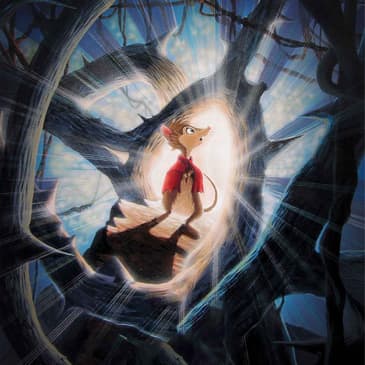
Jonathan McIntosh, creator of the excellent Pop Culture Detective Agency, joins us to uncover The Secret of NIMH (1982). Often remembered as an example of the surprisingly dark and sombre animated children's films of the 70s and 80s, alongside Watership Down (1978) and Disney's own The Black Cauldron (1985), The Secret of NIMH lacks musical numbers, but is filled with striking imagery, glorious hand-animated effects, memorable characters and a sumptuously rich Jerry Goldsmith score. The film made an indelible mark among those 80s kids who caught it on VHS or TV back in the day. But were they scarred for life by a morbid oddity or forever elevated by a magical piece of storytelling? Find out!
Support us on Patreon to nominate films for us to cover, access exclusive bonus content, and vote on the final verdict!
Rate and review us on your podcast platform of choice, and tell a friend about us.
Follow us on TikTok, YouTube, Instagram and Bluesky.
Hosted on Acast. See acast.com/privacy for more information.
[00:00:04] Welcome to Movie Oubliette, the film review podcast for movies that most people have mercifully forgotten. I'm Dan. And I'm Conrad. And in each episode, we drag a forsaken film out of the Oubliette. Discuss it and judge it to decide whether it should be set free. Or whether it should be thrown back and consigned to oblivion forever.
[00:00:36] Movie Oubliette
[00:00:59] We discuss forgotten genre films, sci-fi, horror and fantasy because we know that we, the humans, are the real villains, not the intelligent talking mice, rats, crows and owls living in our garden. Right, Conrad? Of course. Yeah. Every time. Yeah, yeah. And what about the kangaroos? Yeah. Yeah. So I've got my nephews visiting at the moment, so I'm going to take them.
[00:01:26] There's this place that we go in Melbourne where you're guaranteed to see kangaroos. And they're just wild kangaroos in the field. But yeah, it's this one place up in Plenty Gorge. It's a great place to go. Anyone living in Melbourne to go see kangaroos. But it's just amazing. They're just, I mean, they'll run away from you if you get too close, but they're just there happily grazing in this field. And it's amazing. I love kangaroos.
[00:01:56] Oh, wow. So are kangaroos veggie animals? Are they? I think so. I think so. Yeah, they just eat grass and things? Yeah. I'm not sure, but I think so. Yeah. I'm pretty sure. So they're not going to chew you. No. I mean, there's been, you don't want to get too close, you know. Yeah. Their hind legs are not anything to get up against. And they can balance on their back tails.
[00:02:25] So they balance on their back tails and they just kick you. No, you don't want that. No, I think staying at a distance is probably best. Yeah, it's fine. But so meanwhile, you've been stocking up on some new movies. Yeah. Vinegar Syndrome announced their new raft of releases recently. And I had to pick up a few of them. So I did my usual trick of one that I really like and I wanted to see again, which was The Dark Half in 4K. Ah, right.
[00:02:54] And one that I'd heard a lot about but never seen, which is Let's Scare Jessica to Death. Oh, yes. I've heard about that too. It's also been released in 4K. Yeah. I've heard about it, never seen it. So, yeah, sitting on the shelf, waiting to be reviewed. Yeah, yeah. And Dark Half, that's Stephen King, right? Stephen King as directed by George Romero. Yeah. Ooh. Yeah, I'm keen to check that out. Yeah, me too.
[00:03:22] And I think it's in the Oubliette as well because it didn't do too well on release and it was on the shelf for a while. Yeah, okay. Right, right, yeah. Okay. Yeah, well, I guess we should check in with our listeners. What have they been saying to us in the mailbag? Lisa MD 23 said about 28 weeks later, It is enjoyable. There's no denying it. But the plot holes are too big to ignore. No one is guarding the mum. No one?
[00:03:51] I'm not buying it. Right. Right. Yeah. I thought there was a guard, wasn't there? Well, it doesn't seem to stop the husband from wandering in there and getting infected. Well, he's got the card, right? The key pass that lets him into... He's master of everything. I don't know why he has so much access. I mean, what is his role again? He's the janitor, right? He's the janitor, yeah. But he can access everything and turn alarms off and on. Yeah.
[00:04:21] I think they just haven't sorted out their key card system, frankly. Right. Yeah. Yeah. We also heard from Joe Lipset on Superman Returns. He said, Oh, I think Cal Penn might be in this because he and Singer knew each other from the Hollywood gay circuit. Ah. I did not know Cal Penn was gay. No. He didn't either until quite late in life, it turns out.
[00:04:51] Oh. Yeah. So he plays Stanford, one of Luther's henchmen. Yeah. The non-talking role. Yeah. The brooding henchman in the background. I know. It's weird, isn't it? Yeah. It's strange. It's very odd. We also heard from Fan Edited by Bushman on Superman Returns on our YouTube channel. Oh. Shout out to our YouTube channel. And they said, Very enjoyable listen. Thanks, fellas.
[00:05:19] Superman Cinema's forum in the build up to this movie was such a fun place. I don't think I'll ever have that level of anticipation for a new movie again. Ah. Yes. Yeah. Because it's been like almost 20 years since the last Superman movie. Yeah. Yeah. And I don't think online forums are quite the same now as they used to be. Well, yeah. It's a bit of a minefield these days. Yeah.
[00:05:48] I was going to say, I think they've been mostly a bit abandoned by all decent and sensible people. Yeah. Yeah. Who knows? Who knows? And that's our mailbag. Thanks for getting in touch, everyone. Oh, yes. Yes. Conrad, I guess let's reveal the film for today. Yeah. Okay. Let me just scamper on over here and open the door. Oh.
[00:06:14] It appears that there's like a lift, but it's a huge lantern or something. Oh, okay. Yeah. What's with all the water? Wow. I was not expecting this. It's like some Jules Verne adventure I'm going on here. Oh. And now there's an airlock. Okay. And the film's just sitting here on the floor. Oh, okay. I'll come back. At least you didn't get wet. No. That's good. Whoa. There's a crazy lady with a hat. All right.
[00:06:44] What do you have? So I have with me the 1982 American animated fantasy adventure film, The Secret of NIMH, directed by Don Bluth, with a story by Don Bluth, John Pomeroy, Gary Goldman and Will Finn, based on the novel Mrs. Frisbee and the Rats of NIMH by Robert C. O'Brien. Oh, okay. And it stars the voice cast of Hermione Baddeley, John Carradine, Dom DeLuise, Elizabeth Hartman,
[00:07:14] Derek Jacoby, Arthur Mallett, Paul Chenard and Peter Strauss. Right. So what happens in this adventure? It centers on Mrs. Brisby, a recently widowed field mouse whose son contracts pneumonia just as spring arrives and with it the threat of the farmer's plow tearing up their home. With the help of Jeremy, a clumsy and neurotic crow, Mrs. Brisby seeks help from a nearby colony
[00:07:41] of super-intelligent ex-lab rats led by Captain of the Guard Justin and the wizard-like glowing-eyed Nicodemus. To repay their mysterious debt to her dead husband, the rats agree to help move Mrs. Brisby's cinderblock home to safety. But a sinister rat named Jenna sees it as an opportunity to engineer Nicodemus' accidental death,
[00:08:06] seize power and put an end to his plan to leave their electrified rosebush and start a renewable energy utopia in Thorn Valley. Why does everyone seem to know Mrs. Brisby's husband? Will the genetically altered rats build a better society, or at least a more robust pulley system, before Nim exterminates them all?
[00:08:30] And will an unexplained magical amulet conveniently resolve everything in the last five minutes? Find out after the break. Oh, yes. And we'll be joined by a guest as well. We will.
[00:08:58] Joining us today is a highly esteemed cultural critic and the creator of the Pop Culture Detective Agency, a series of incredibly insightful video essays and podcasts on the intersections of sociology, masculinity, politics and entertainment. We are very excited to welcome back returning champion, Jonathan McIntosh. Hello, sir. Welcome back. Welcome back. Thank you so much. It's great to have you. What have you been up to recently? More video essays.
[00:09:25] You know, I've been spending a lot of time writing and producing long form video essays. They've been getting longer and longer to produce. Probably about four months now per essay. Wow. It's like producing an episode of television all by myself. Yes. Basically. My last one is on the myth of the alpha male and how that's sort of propagated through mainstream culture, movies, TV shows especially, and all the ways that it sort of shows up, even though the myth itself is based on nothing. It's not real.
[00:09:54] And yet it still shows up over and over and over again. So I kind of catalog the ways that it shows up. I use about 150 different movies and TV shows to explain how it shows up and how it's still damaging, even when it's been debunked for decades now. Yeah. Wow. It's fascinating. What amazes me is how you find all of these examples, because some of them are ones that I'm familiar with that I recognize, but it seems to be exhaustive, your research. It takes a long time.
[00:10:23] And I actually, you know, the research is the part that I really like. Every time I find a new example that kind of fits my argument and kind of gives it credence, you know, I light up like, oh, this day is successful. And, you know, there's a lot of examples. And that research element of it, you know, when you're looking for patterns in media, specifically the kinds of things that I'm doing, there's no shortage of them. But it can often be kind of hard to find the footage because I want to use HD footage in
[00:10:53] my essay because it's sort of a visual argument, right? I don't just want to say a thing happens. I want to show that thing happening over and over and over again. And so, you know, finding, you know, one episode of TV from 10 years ago, sometimes that's really easy if it's popular. Sometimes it just takes forever to find like a usable clip of some sitcom that was on for two years, 15 years ago. But when you find it, it's a really fun moment.
[00:11:21] So, you know, I make these montages and I kind of show the same language or the same joke repeated over and over and over again in a variety of different contexts. Wow. It kind of really hits home that, you know, you can say a thing happens a lot on TV, but if you can show 10 of the same thing in a row, it really, I think, you know, makes that argument for you in a way that's hard to do in words. Oh, yeah. Yeah. It's really powerful. And you also capture some nuances that take you on to the next part of your argument. Yeah. It's beautiful.
[00:11:50] Quality content takes time. That's the thing. It takes a lot of time. You know, I hear people now on TikTok and they're like, I spent three hours on this video. And I'm like, three hours. I spent three months doing just the research on my video. I feel like I'm a dinosaur. Like no one does this. Yeah. But no, it is. It is a dying art, sadly, which is, yeah, it's a terrible thing.
[00:12:17] Now, I was fascinated by your latest video on the myth of the alpha male. And of course, it featured various animated features. And we are talking about an animated feature today that you've chosen for us. The Secret of NIMH. I have a feeling that you have a history with this movie. What's your personal story around this film? Yeah. So this movie was released in the summer of 1982. I was three years old.
[00:12:44] But it was one of those movies that we had on VHS. Yeah. We had a VHS cabinet next to the TV. It was me and my brothers. And this was one of our favorite movies in that collection. And so we watched it over and over and over. I mean, the little paper box that it comes in was all tattered and torn. And I think, you know, Don Bluth's movies were especially impactful, I think, because of their emotional resonance. We'll get into that later.
[00:13:12] But as a kid, I remember being terrified and scared. But I think one of the things that this movie did is it really made me feel something intense. You know, as a kid, you don't really know what the words are for those things that you're feeling. But like this one, sort of similar to Empire Strikes Back and Never Ending Story, those two have sort of a very similar kind of place in our household. And so I've always had very fond feelings about this movie. I also think it's a very good movie.
[00:13:43] I have a very similar story to that one. Dan, on the other hand, I think this is new to you. Yeah, this is brand new. This is the first time I've ever watched it. I've heard many great things about this movie. But no, I've never seen it before. I don't actually know much about Don Bluth either. But looking at his past other films, I have seen a good number of them. All Dogs Go to Heaven. The Land Before Time. Of course.
[00:14:09] It was a huge one for me because I loved Dinosaurs Growing Up, American Tail. And I've also seen Rockadoodle, which is one of my wife's favorite, one of her favorite childhood movies. Wow. Yeah. Which is a lot of fun. But yeah, this was a first watch for me. And yeah, I don't know much about Don Bluth and his history with animation in Disney. Yeah, it's the often told story in the background of this film was that Bluth had worked at Disney
[00:14:36] and that he'd become disenchanted with them during the late 70s because of the cost cutting, the lack of care that they were taking over their craft. So examples that he gave, there were no more reflections in lakes and raindrops no longer glistened when they hit the ground. And Disney's animated movies were not doing well during this era. They seemed to be focusing much more on live action pictures, which weren't going terribly well.
[00:15:04] I mean, we've done a few of them, The Black Hole and A Watcher in the Woods, which I really enjoyed, but they did not fare well at the box office. And so Bluth escaped. And I think he took quite a few people with him who wanted to go back to the era that inspired him to join Disney in the first place. Sort of like the movies of the 40s, things like Pinocchio that he remembered fondly. Yeah. I think it was 20 animators that he took from Disney. And Disney was not happy about it. No. At all.
[00:15:34] In fact, a bunch of theaters in the summer of 1982 wanted to do double features because that was a thing that used to happen. And they wanted to do Secret of NIMH and Tron, which also came out that summer. And Disney forbid it. They told theaters, you are not allowed to pair this movie, Secret of NIMH, with anything else. They were vindictive about it. They were very bitter. Yeah.
[00:15:59] Walt's son-in-law, Ron Miller, apparently called Bluth a son of a bitch, which is pretty strong. The fascinating thing about it is that in trying to recapture the sort of artistry, the craft, the detail, the layering, the literal fairy dust in a lot of scenes, including the opening scene. He is hearkening back to a Disney of the 40s. So he's kind of, when he's opening in 1982, he's competing with Disney of the 40s because
[00:16:27] digitally remastered version of Fantasia had been released in theaters that year. And also, of course, the Disney of the future, which was, of course, Tron with its groundbreaking computer graphics technology. So he was competing with both. But his aim was to jumpstart the second age of hand-drawn animation, which he kind of did in a roundabout way. Yeah. Yeah. I mean, especially in the 80s, because in the 80s, you had these Disney films that were,
[00:16:56] like you say, not doing very well at the animated films. And it really wasn't until, what is it, 89, when Little Mermaid came out that they kind of got back on track. But like in the 80s, you had The Black Cauldron, which some people don't even know is a Disney movie because they've kind of tried to bury it. But yeah, so it was, there was like The Fox and the Hound, which, you know, I personally really like, but it feels a little bit different than a lot of other Disney movies. One of the things that he wanted to do was he wanted to make films that were darker,
[00:17:25] emotionally, I think visually, story-wise. And Disney was not having that at the time. And the stories I've heard, and I don't know how much truth there are, but that he tried to get Secret of Nim going at Disney, but there was, it was a non-starter because they said, this is way too dark. You can't release this for kids. It's not going to be rated G, which they, even Don Bluth was surprised to get a G rating. He thought it would be PG. Which if you've seen the movie, then you know that it is very intense. Death, yeah. It is, and it opens with death.
[00:17:54] The very first thing you learn in the movie is a mysterious figure you do not see recording someone's death. I'm interested to hear from you, Dan, what was the impact on you watching this? I mean, you're watching it as an adult. Yeah. Jonathan and I are both looking back at it through nostalgia-tinted glasses, but what was the impact on you emotionally of it? I mean, it's pretty terrifying. Right? Even as an adult. I mean, see, you see blood in the movie, which I don't know whether I've really seen
[00:18:23] in a sort of kids animated movie before, especially from the 80s. Yeah, there are lots of scenes, the scene with the owl, all the scenes with Jenna. Pretty terrifying. But it's also really interesting because the whole premise of the movie, when you step back, it's quite ordinary. It's a bunch of animals in the backyard trying to escape a plow. Yeah. Right. But the way that it's animated, the way that it's told, it's the most terrifying thing you've
[00:18:52] ever seen. Like, the scene with the tractor and the plow is really, like, gripping in each of your seat. It's a pretty action-packed moment. Yeah. The whole movie has death and the real possibility of death hanging over it from the very beginning. Yeah. And not only is the movie scary for kids to watch, and adults too, but it's scary for the characters to be in, which is something that you don't actually see that often in kids' movies.
[00:19:19] I watch a lot of kids' movies, especially animated movies for my critical essay work. All of the Minions movies, Despicable Me, you know, all of them. Wow. Yeah. Yeah. And I don't know if you've seen them all. No. But there's a very different vibe, a very different tone that sort of modern movies for kids fit into. There's a sort of a template. Uh-huh. And even if there are scary moments, they are moments. Right. They quickly pass. Right.
[00:19:49] But in this movie, it is scary over and over again, like for extended periods of time. I mean, it's sort of part of the wonder of the movie is that you have a character, Mrs. Brisby, walking into these spaces that she hasn't been to before that are terrifying from her perspective. But they're also beautiful. I mean, that's something that is remarkable about this film, the background paintings, the animation style.
[00:20:14] But there's a sense of sort of foreboding that you don't get, at least very often in modern animated films that are targeted towards kids. And so, you know, watching it, it just, it feels so different than what we get in the theater today. Yeah. What I also love about it is it's this kind of adventure in this miniature world, which
[00:20:42] there's a lot of films that delve into this kind of setting, like modern films like Arthur and the Invisibles or The Borrowers in 97 and the Studio Ghibli film, The Secret World of Arrietty. Yeah. Or like Honey, I Shrunk the Kids is one that was really big for me. Yeah. It's just this kind of like, what if you were really small? Everything is dangerous. Like a cat is like a monster, like literally named dragon. Yeah.
[00:21:10] And it's just everything, it's just way, way more dangerous. And I love that. But also the sort of idea of you've got ordinary things in this world as well. Like you've got buttons and candles are the lighting, but it's like a normal human candle, but it's a huge pillar of a candle. And it's just this magical, almost like a magical realism world of everything being smaller and much more dangerous. Yeah. It's interesting reading back on contemporary reviews, Roger Ebert was worried that children
[00:21:40] wouldn't have an identification figure in this movie. I can imagine various reasons why he would come to that conclusion. But the film, of course, in my case and in Jonathan's, I suspect it became a fondly remembered totemic thing of our generation. And I think it is because as a child, you can identify with being powerless in a world that seems incredibly big and incredibly scary. So I identified with Mrs. Brisby immediately.
[00:22:07] And also as a young child, I can immediately relate to a mother looking after her children, because that was just a microcosm of the world that I knew the most intimately. So it's interesting that Ebert would think that. And it is also interesting that this film centers a woman and a mother as its main character. Yeah, it is, again, something that's quite remarkable about it, because you do, Mrs. Brisby is the character that you see the world through, right?
[00:22:36] So her sense of terror at being in the owl's den, her sense of wonder at being in the rat's rosebush temple that's filled with lights and all kinds of sort of mystical things. She's seeing it for the first time. And we as viewers are seeing it for the first time. And the animation style really, I think, gets across this sort of sense of like, this is a magical place, filled with things that are like, well, those are just Christmas lights.
[00:23:03] But at this scale, and animated in that way, I mean, it looks like some sort of futuristic temple. So seeing the world through her perspective, through her eyes, is part of, I think, what makes it work so well. And it's not just that she's a mother and that she's not out to seek adventure. Adventure's been sort of thrust upon her, right? Yeah. And so she's reluctantly going through it, and she's going through it because her son is sick.
[00:23:31] And, you know, that's something else that, at least for me, is markedly different than the kinds of stories we get today. So if there's an animated film that stars a woman or a female character today, it is sort of infused with badassitude. Yes. I don't know if that's right.
[00:23:51] It's their empowerment comes from them being a complete badass, like extremely confident, good at dealing damage via violence, usually. And then they come upon something that there's always a struggle and so on. But like their core confidence and their badassery is sort of like a part of their character. Yeah. Right? And then everything that happens happens sort of on top of that or whatever. Like I just saw K-pop Demon Hunters, which is fun.
[00:24:20] It's great music, lots of fun. But, you know, it's about three badass women who fight demons. Like that's the first thing that happens. And then the story happens after that. So there's no moment where they're like ever scared. There's no moment where they have to go, oh, maybe I'm not prepared for this. If the character has some doubt, it is sort of momentary. Right? Then they get over it and then they fight on.
[00:24:44] In this movie, Mrs. Brisby, she is very consistently terrified and for good reason. And so are we, right, as the audience, we're terrified for her. And she's pushing forward with this sort of dogged determination. But it isn't because she has the confidence that she can survive it. She's doing it because she feels like she has to. And that sense of fear isn't just momentary. It's sort of, it lingers. The scene where she walks into the owl's den.
[00:25:13] Those are prolonged, you know, minutes long scenes. These aren't jump scares. Yeah. Right? Scene after scene of her being scared, feeling like she's underwater, that she's in over her head and that she's not cut out for this, but she's going to do it anyway. Right? She has a fear of flying, but she's going to fly up to the owl's den. There's no moment where you think, well, this woman is a badass. No. Right? And yet she's brave in every single scene. Yes. Right? Like so brave that I get like choked up watching it.
[00:25:43] And that is a feeling that I do not get almost ever with modern films. So there's been a serious shift in that regard. But I think that we've sort of lost something in that, right? In this sort of like quest to make everyone feel like they're hyper confident and badass all the time. We lose that ordinary person or ordinary mouse being thrust into a terrifying situation. And I do think that, I mean, there's certainly around this movie, there's a whole bunch of
[00:26:12] writing about how, oh, it's too scary for kids. Right? Oh, this is not something I would want my children to see. But I actually think that, and this is true for most of Don Bluth's stuff. I think that it's actually good to build emotional intelligence. It strikes me as something that is missing in a lot of, not all, but a lot of modern animation. Yeah. Yeah. I think it also was prevalent in all the sort of strong female action hero trope that came
[00:26:41] in through the 90s and 2000s. It's still going now, really. Right. We've got, yeah, a strong female character that has no emotions and is just very courageous, but there's no sense of fear or doubt or sadness or anything. Whereas this is all of that. And of course, Mrs. Brisby's still brave, but she has that determination to save little Timmy and her family.
[00:27:06] Like the setup is they need to move the breeze block that they're living in, which is quite funny when you finally see it. It's like, oh, that's their home. It's just a breeze block. They need to move it to the other side of the rock so they won't get plowed by the tractor. And that's the quest for Mrs. Brisby. And she goes through all of this. She has to see the owl and then the owl tells her to see Nicodemus.
[00:27:32] And it's just, yeah, this ongoing quest to go places to find things. But it's not the normal hero's journey that you expect. And even having a reluctant hero, normally a reluctant hero is comedic. I'm thinking of movies like Jabberwocky, where it's just like this klutz that happens to save the day, but it's all funny. Right. Whereas it's not funny. Like she really wants to save her family. It's a lot riding on what she has to do. Yeah. Her child is at death's door.
[00:28:01] So she's forcing herself into these situations that she's incredibly uncomfortable with. And she doesn't have confidence to begin with. I mean, she cries. She breaks down a couple of times in this movie and says, I just can't go on. But what I love is another female character that shows up, Auntie Shrew. She's set up as this figure of fun, this stupid, fussy, nosy neighbour who's a bit of a blowhard and makes so much about all the burdens that are placed upon her to organise all of the animals
[00:28:31] in the field for moving day before the plough comes. But once the tractor scene hits, it's Auntie Shrew that stops the tractor when Brisby freezes. And at the end, when Brisby is breaking down, she says, stop it. So you just see this community of women who are used to dealing with how difficult life is and used to showing up for each other and willing each other on. And again, where do you see that in narratives? Well, yeah.
[00:28:59] And there's a solidarity there in that relationship between Auntie Shrew and Miss Brisby that you don't expect, right? Because she's set up as this sort of like nagging, you know, comedic character. She falls down the stairs and everything. But then when the shit hits the fan, you know, when the tractor hits the field, she doesn't hesitate. She's immediately putting her life at risk to try to stop a giant, terrifying plough. I mean, if you haven't seen the movie, it's a monster. I mean, that's how it's sort of framed.
[00:29:29] That's how it's drawn. And she has to go to its heart and like yank out the tubes to stop it from moving. And she doesn't hesitate. She just like, it's the solidarity between the animals in the field is, for me, it's very powerful scene. I mean, there's a lot of stuff about animals in this movie that's very powerful. But that one, the idea that there's sort of an instant solidarity between all of these animals of different species and types and so on was very affecting.
[00:29:56] It's interesting on me as a kid that, yeah, of course you put your life on the line to help your neighbors. It's not even a question. It feels like there's a palpable, actionable empathy going on in this movie that, again, is not based in badassery. Yeah. Yeah.
[00:30:21] The rats, the rats of NIMH, the National Institute of Mental Health, they are the survivors of experiments to genetically alter them and enhance their intelligence. Yes. They are not necessarily sold on helping the lower creatures, at least not unanimously. So they have intelligence and they have a parliament and all of a sudden they're assholes. Right. Right. And this is the other thing about the movie that is, I think, really interesting because
[00:30:48] the humans in this movie are horrible. Full stop. Every single one of them, terrible. Right. Starting with the scientists experimenting on animals. Right. And if this didn't turn a whole generation of young people into animal rights activists, like, I don't know what did. I think it was this. Right. And Watership Down, possibly. And Watership Down. Yeah. Yeah. Yeah. So the farmer is awful. His kid is awful. Like, all of the humans. Right.
[00:31:17] And then the rats of NIMH are sort of a bridge. Right. They're in between the human intelligence and the animals in the field. And they're sometimes horrible. Right. Half of them sort of horrible. Right. So it's this idea that intelligence doesn't necessarily equal good. Right. Doesn't necessarily mean that you're kind and empathetic. And in fact, complicates things. And so you certainly have rats that are Justin and Nicodemus and, you know, so on.
[00:31:46] But then there are the rats that feel very much like modern day politicians. Yes. Right? Yes. Yeah. The character of Jenna, wasn't it? Yeah. Yeah. Yeah. The explanation about the experimentations on the animals was quite a surprise for me. Because I'm watching this movie thinking, oh, it's just like a kid's movie of talking animals. That's normal. Of course, you expect all the animals to talk. But then they explain why they are talking intelligent animals.
[00:32:14] Because they've had these extreme laboratory experiments done on them being injected with whatever. And you see it. Yes. You see these poor animals in these cages and they're crying and they're like clupering and they're trying to hold each other and they're scared. Like, it is hard to watch even now. Yeah. Yeah. And they get injected and then there's almost these kind of body horror morphing scenes. Right. The sort of the weird like psychedelic like spinning DNA.
[00:32:44] Yeah. Oh. Yeah. It's terrifying. But so NIM, it stands for, is this right? National Institute of Mental Health. Yes. So this is the experimentation they're doing to improve mental health in humans. Who knows? Something evil. I'm not sure. Something awful and unnecessary. Clearly. As Nicodemus says, it's to satisfy some scientific curiosity. Oh, yes. He doesn't know. It's just like, they're just doing shit. Right. They don't care.
[00:33:14] Yes. Yes. So it's sort of like the explanation is based in science. But then everything that you kind of see in the rat's world that they've built after they escaped, it's technology, but it has a sort of supernatural feel to it. Yes. So you get the sense that like, I think Nicodemus might be magic. Like he might be a sorcerer, right? He's sort of framed that way. Yeah. He can move things with his mind apparently. Yeah. Yeah. I mean, the amulet as well, like it has this sort of magical power that is able to
[00:33:43] levitate a breeze block out of this boggy, muddy abyss into the air. There's no explanation for that. It's magic. Yeah. But it's an incredibly ethereal, angelic scene. So I don't need any explanations. Emotionally, it works really well. People who fell in love with the book first. So the book by Robert C. O'Brien from 1971, which won the Newbery Medal for children's literature, I believe.
[00:34:12] That does not have any of the magical elements to it. And Mrs. Brisby is not blessed with a deus ex machina right at the end of the movie. In fact, it focuses on the rats moving her house, which they do without any issues whatsoever. And then the climax of the book is, are they going to get away before Nim kills all of them, which is just glossed over in the movie. They just leave and it's fine.
[00:34:41] And for the film, Bluth decided to focus purely on Brisby. So the rats' history is just a flashback, whereas it's much more detailed. The book almost splits into two. It's Brisby for one half and then the rats of Nim for the second half. Right. Okay. Interesting. One thing that we have to talk about in some detail is the contribution of one particular artist to this movie. One Jerry Goldsmith, who had never scored an animated movie before.
[00:35:08] He's coming off the back of very heavy films like, you know, Alien and most recently Poltergeist is what he'd been working on. Right. And when he's offered this, he's immediately charmed by it because it gives him an opportunity to do something different, but also something lighter, something lyrical. But of course, given the atmosphere of the movie and the intensity of the threat and the action
[00:35:32] and the mystery and the wonder, he is able to bring all of the experience that he has from science fiction and horror movies to bear. And he said at the time, I cannot score this in a Mickey Mouse Disney way, but I will just score this like I would any other movie. And that's what he did. Yeah. And the result is easily one of my favorites. It doesn't quite nudge out the explorers for me, but this is just gangbusters, this score.
[00:36:01] It's incredible work. Yeah. It's very, very cinematic. It's huge. Like it's full orchestra, right? And choir. And choir. Yes. Yeah. And there are some key scenes like the owl scene is terrifying music alone because you've got these blaring horns, you've got low strings. It feels like a horror movie. Yeah. And then all of the sound design and the giant spider in there. I can talk about it in the movies maybe.
[00:36:27] But yeah, the score is pretty affecting and not a kid's movie type of way. It feels much bigger than that. And it pairs, I think, really well with these gorgeous matte paintings. Yes. And the sort of multi-layer camera techniques that they used, which I think Disney was moving away from, but they were bringing back, where you have layers of artwork stacked on top of each other.
[00:36:51] And then as you move them, it looks like you can zoom in or you can pull away because you're moving these layers up and down on this giant multi-layer camera system. Wow. But those backgrounds, those scenes, those matte paintings are, well, they're gorgeous, first of all. Yes. But they're also dark and twisted. And not entirely. There's a little bit of whimsy, a little bit of wonder there, especially when she's walking
[00:37:17] through the thorns to get into the rat's lair, when she's going up to the owl or, right? It's atmospheric. Each of them is a painting. You know, that should be hanging on a wall somewhere and have you seen them. Literally a painting, yeah. And they did, I think they did over a thousand background matte paintings for this movie. Yeah. And each one is as gorgeous as the last. Yeah. Yeah. It's truly stunning work. And some of it was groundbreaking, the techniques they were using, like backlighting animated
[00:37:45] cells and diffusing the camera for one of the passes. So that's how you get Nicodemus and the Great Owls glowing eyes, for example, and all of the sparkling effects. Backlighting. Yeah. Yeah. The backlighting cells of animation and doing a separate exposure for that. Some of the takes required 12 different exposures. Wow. And they had two custom animation stands. It took them six months to design the specification for the cameras and 14 months to then build and test them. Right.
[00:38:15] This was their dedication to their art. I read this in American Cinematographer. It's a fascinating article. If you want to read more about the techniques of the hand-drawn animation that they were doing here. But in terms of attention to detail, this is as rich and as gorgeous as it gets. Yeah. I mean, some of the effects I've never really seen in 2D animation before. Like the sense of light is astounding. Like I didn't even know they could do this in 2D animation.
[00:38:43] Like when they show the amulet, it's kind of glinting. These kind of sparkles come out. It feels almost three-dimensional. Yeah. I didn't even know how to explain what I was seeing. Yeah. The golden glow is sort of became a signature of Don Bluth in animation. So like when Charlie gets into heaven, right, in All Dogs Go to Heaven, right, there's that same sort of glowing golden light that sort of seems to like jump out of the scene.
[00:39:13] It's like that's not animation anymore. It feels like something else, right? It does. Yeah. It's beautiful stuff. Yeah. I mean, during that scene at the end with Miss Brisbane and the amulet activating, I guess, and it's just blinding light. But it feels so not like animation. It feels much brighter. Yeah. Now it's time for Random Trivia.
[00:39:38] Jonathan, what fascinating piece of trivia did you discover about Mrs. Brisbane from The Great Owl today? Her name is Frisbee in the novel. Yes. I'm sure you may have heard this story. But they were in some legal hot water with the Wham-O Company. Right. This is a real thing. Like they recorded all the dialogue for this movie with Frisbee as her name. And then the Wham-O Company got wind of it and was not pleased. And so they went back.
[00:40:07] The sound editors went back. And they painstakingly spliced a BR over the F in every single scene where they say Frisbee. And then it becomes Brisbee. Just because they're afraid of the evil Wham-O Company for litigation. And this is also back in the day where it's on tape. Yes. So they're literally cutting and splicing physical tape. Yeah. And her name's called out many, many times. Yeah. It's interesting.
[00:40:37] I mean, I mentioned, of course, that we're centering a woman as our protagonist in this movie and a mother to boot. But we do have to note that she is never given a name. Right. She is Mrs. Jonathan Brisby. Yes. She is. But I love the kind of mysticism about his legacy. Because as soon as they find out she's the widow of Jonathan Brisby, it's just amazing. Everyone in the entire movie is like, oh. Yeah. Yeah, yeah. Oh, okay. Yeah.
[00:41:05] And since my name is Jonathan, I was very taken with that. And my brother's name is Justin. Oh, wow. Wow. It's just perfect. No wonder it was your favorite movie. Right? Yeah. Oh, that's great. All right. And that's our trivia. It is. One thing we haven't talked about is the voice acting. Right. Yes. I mean, it's great.
[00:41:34] I feel like there was a moment where animation used to be voiced by voice actors. Yeah. Like actual trained voice actors. It's not Steve Carell or Will Ferrell. Right. You know, everything now is just, what famous actor can we have? What famous rapper? Let's get Rihanna in the new Smurf movie. Like it's just like cameo acting almost, voice acting. Yeah. Stunt casting. Yeah. There was a time where it was all voice actors.
[00:42:04] And this is kind of in between because I was surprised that Shannon Doherty is the voice of Teresa and Will Whedon is the voice of Martin. In his first role. Yeah. Yeah. Both very young. I think Shannon was only like 11 and Will was nine. Yeah. Yeah. Very, very young. But yeah. The other voices are just, yeah. Nicodemus is incredible. His voice acting is just like outside. Yeah. Well, it's Derek Jacoby.
[00:42:33] So great Shakespearean actor. And then you've got John Carradine as the great owl. And you've got a scene that already has so many flavors to it that cue you into thinking this is a horror movie. And then you've got literal Dracula doing the voice. Right. Yeah. It's wonderful. And of course, Elizabeth Hartman, who's an actor I'm not terribly familiar with, but she's so effective as Brisbane. I believe she came out of retirement to play this role. Yeah. I think it was her last role.
[00:43:03] So she sadly took her own life in 1987. Not that long after this movie. So I guess the troubled life that she led. A lot of the fans of this movie, of this story, Secret of NIMS story, have given Mrs. Brisby the name Elizabeth in honor of her. Right. So you'll often see that as like, as that's her first name, but it's not in the books. It's not in the movie. Yeah.
[00:43:30] I saw one reviewer say that her acting is reminiscent of acting from the 1940s almost. Wow. Okay. I think it's a wonderfully measured performance. I mean, she goes through the whole gamut of experiences in this. And even sometimes she's playful too. Like I do love the scene where she is tricking Jeremy the crow into going away, basically, because he's just a disaster area wherever he is.
[00:43:56] So she tricks him into looking after her children by batting her eyelids and being very charming. So she even gets to be funny, which is lovely because otherwise she's got a lot on her shoulders for the most of the movie. So she's usually painting in very dark colors in her performance. Yeah. So the crow character adds, I think, a very necessary element of levity to an otherwise
[00:44:22] extremely dark and emotionally traumatic film. He is hilarious. Yeah. But he doesn't take over. It feels very calculated, right? You're going to have these moments of fun and levity. And also that his terror at the thing that she's going to go do, whatever that is, is also real. It's sort of made to be funny, but it adds to this sort of foreboding feeling of her journey that she's going on. It does. Yeah. And I think he's genuinely funny in this movie. He is.
[00:44:49] Whereas I think in American Tail, he gets a bit irritating. But then there's the other thing that this movie doesn't have, which is songs. Yeah. It is not a musical. Yeah. No, there's no... I mean, there is a song in it. Yes. But it's not sung by the characters. No. It is non-diegetic. It is just a lullaby while we watch Brisby take care for her child.
[00:45:13] So it's beautiful, but it is, yeah, it is not a musical, this film, which I think adds to the intensity of it for sure. Yes. Because you never break for a song. No. That's true. I didn't even think about that. That's a good point. It's a very, very intense movie. Yeah. There's a thing that happens in this movie in terms of the pacing, in that you find out or Mrs. Brisby finds out she has to do a thing.
[00:45:41] And then there's time and space between her finding out about it and her actually doing it. And it lets us sit in these sort of progressive moments of apprehension. And it's sort of filled with melancholy, right? Because a lot of it has to do with, you know, she goes back and she checks on her kids or she sees her child is sick again, reminds us of that. And so there's sort of foreboding, and there's an apprehension, but there's sort of an underlying grief, right?
[00:46:11] Because it's all based on her being alone because her husband has died. You know, every time that she's introduced to someone, it reminds us of that. We also get his story, a little bit of a story in the middle. And it's like there's palpable grief there, both in terms of the story and the dialogue, but also in terms of the pacing and the music, as we've been talking about, right? And unlike a lot of modern films where something tragic might happen, someone will die, there'll be a moment of sadness.
[00:46:39] But it is just a moment, right? Things move on very quickly, right? So someone dies, everyone gets sad, and then it's on to the next thing, the next sort of bombastic thing. Here, and not just in this movie, but I think in Land Before Time and All Dogs Go to Heaven, right? In a lot of these movies, you sit with that grief, that sort of like foreboding, that melancholy. And you're just allowed, it's allowed to linger. Yeah.
[00:47:06] In a way that I think, again, I think it helps build emotional intelligence. Sure. Right? It helps to sort of like say, hey, it's not telling you this directly, but it's communicating. This is okay. You know, feeling these feelings of grief or fear or of melancholy. It's okay. It's part of life. And it isn't something that we need to sort of skip over and forget about. And I'm really struck with that, again, because I watch so many of these modern animated movies,
[00:47:33] which are all, you know, often very good and fun, but they don't ever let us sit with those uncomfortable feelings for very long. No, you're right. And there's something remarkable about the ending as well, because when she finally has this moment of catharsis, where she seizes control of her power and solves her own problem in this blinding display of power, afterwards, it's odd because there is no sense of a celebration or
[00:48:00] jubilation or this badassery, this woman actualized. She collapses and everything settles into silence and people just slowly and hesitantly approach her unsure whether she's alive or not, or what the hell just happened. And then it fades to black. That's such an odd moment for a catharsis in the movie. And it's always stuck with me. I find it incredibly powerful, but I can't put my finger on why. Sure.
[00:48:29] Well, and she gives away the stone. Yeah. Right. In the next scene, we see her getting her hands bandaged and she says, no, I gave it to the rats. Yeah. So she doesn't keep it. She doesn't hold onto it. She uses it. She has this power. She does what she needs to do with it, but she has no, she just goes right back to being herself, taking care of her kids. And she doesn't turn into a mythic hero. No, no, no. She doesn't get a middle at the end. No, she literally gives it away. She gives the sparkly away. Yeah. She does the sparkly.
[00:48:59] Yeah. Yeah. Yeah. You never see, I mean, you hear that the rats have gone to the Thorn Valley. Thorn Valley. But you never see them. There's no sort of jubilation or celebration or anything. They're just, oh, they've just gone. Yeah. Yeah. Although there is a sequel. No. No, there's not. For everyone listening, there is no sequel. I have never seen it.
[00:49:25] I have never wished to see it, but we may watch it as a Patreon bonus episode. Oh, no. Well, Don Bluth wanted to make a sequel, but the studio took it from him. Right. And said, no, we own this now, so we're going to do our own thing. Yeah. And it's regrettable. It's a straight to video thing. Yeah. Oh, okay. It has nothing to do with anyone who worked on this movie. Oh, okay. At all. Not at all. It's just a 102 Dalmatian kind of thing. Right. Yeah.
[00:49:55] Well, there are sequels to the books, though, which I believe are written by the daughter of the guy who wrote the original, I think. Yes. And I actually went to high school with the granddaughter. Oh. Really? Wow. Of the people who wrote these books, yeah. Wow. Coming to you live from the Moewee at Theatre, it's the prestigious Moewee Awards. Okay. It's the Moewe Awards, where we nominate our favourite string-entangling parts of the film
[00:50:23] in a number of magical amulet-powered categories. Best quote. I have one that's very personal, which is Jeremy's Excuse Me, Pardon Me, which for some reason just embedded itself in my childhood brain, and now I say it whenever I bump into someone or I belch or anything like that. It just comes out of me. I turn into Jeremy and I say, Excuse Me, Pardon Me. Right. Yeah. So, yeah, that's stuck.
[00:50:53] Right. Yeah. I mean, Jeremy does have a lot of great lines, the crow. I think we've sort of alluded to it, but when he sees the amulet that Mr. Bisbee has for the first time, he says, Ah, ooh, a sparkly. You're wearing a sparkly. And it's just how the delivery is amazing. I love it. Yeah. I love Dom DeLuis' performance in this. Yeah.
[00:51:20] You know, the sort of overarching narrative is there's this narration by Nicodemus, right? And it's sort of this deep, grovelly voice, and it has this sort of mystical kind of feel to it, but there's a line, courage of the heart is very rare. Uh-huh. Yeah. Which I remember from being very affected by his kid, but it still kind of hits me. Wow. Yeah. Best hair or costume.
[00:51:48] My favourite piece of costuming, a little bit odd. The great owl is robed in cobwebs. Oh, yes. Like some sort of gothic monster. And they're translucent. They're slightly out of focus. It's almost as though he's not quite there. He's enshrouded in them. And it's the result of a very clever animation technique. It's another cell that's been photographed separately, out of focus, and only at half exposure or whatever.
[00:52:16] So it's, you know, it's slightly dissolved. It's not quite there. Right. I think it's a great effect. That's amazing how they did that. Yeah. It's beautiful work. Yeah. It gives him kind of a ghostly quality, but also ancient. Like he's been sitting in cobwebs for centuries. Yeah, he has. Jonathan, do you have a favourite costume? I like that the crow is covered in string or tangled up in something for the entirety of the film.
[00:52:46] Yeah. He's tripping over himself and he's tangled in something. Like he's the most ungraceful character ever. And so there's always something draped around him. Like he tries to go incognito. He's just like in a piece of laundry. Yeah. I thought it was really fun. Yeah. Another one I quite like is when he straps a lily pad on his head and he's breathing through a straw. Oh, yes.
[00:53:10] And he tries to leap gracefully across the lily pads after Brisby has done such a thing. Of course, she's a tiny little mouse. She can do this. And he just goes splot. Yeah. Splot. Straight in the water. That's great. It's great. Most Aces movement. I was going to go for unscrupulous animal experimentation. Oh, yes. There seemed to be a lot of it in the 80s.
[00:53:36] The Plague Dogs, which was the follow up to Watership Down. Oh. Not very well known, actually. But that one is heartbreaking. Deadly Eyes from 1982 apparently has killer rats on steroids. You have Food of the Gods from 1989, which is rats again. Lots of primates. So you have in Link 86, an intelligent ape. Project X, you have chimps being irradiated.
[00:54:05] And in the fly and the fly tube, there are horrible terrible portation accidents that mangle animals. And the Teenage Mutant Ninja Turtles, let's not forget. Oh, yes. The ooze. Yeah. The ooze. Yeah. Wow. Yeah, yeah. That's very 80s. Did you spot an 80s trend, Jonathan? I mean, I feel like something we've already touched on a little bit, but there was a very
[00:54:33] strong sense of empathy and solidarity in a lot of these kind of films like this, right? So there isn't a simple good versus evil story, right? It's more complicated because in a kid's movie, they often sort of, almost in a patronizing way, they sort of dumb everything down. It's like, these are good guys. Those are the bad guys. They look ugly and evil. And the guys look all fluffy and brightly colored and cool.
[00:55:01] And to me, it feels patronizing. And I think in the 80s, in terms of this kind of animation, you got some examples where it didn't feel patronizing. Hmm. Sure. There's a lot of respect for young people and their ability to understand the sort of the complexities of what's happening here. That, to me, feels very 80s. Sure. Favorite scene! You can't say the whole movie, right? No.
[00:55:27] I feel like when she first enters the rose bush and we see this sort of world that the rats have created, for me, it never gets old. I mean, that is this sense of, like, wonder. And it's a little scary. And it's futuristic, but it's also magical. But it's, you know... But I love that sort of exploration as they go deeper and deeper into the rose bush. And you get more and more technology. And it gets more and more wondrous. And then she finally ends up in Nicodemus's chamber.
[00:55:56] And then it's just pure magic once you get there. Like, I love that whole transition, right? Like, from how do I even get into this place to now we're going to go down to this, like... There's, like, a light... Yeah. Like a lantern. There's, like, a lantern that, like, goes in, like, becomes, like, a submarine submersible. And then they, like, drain the water at the bottom. I mean, it's very science fiction. And I love it. Yeah. I still get a sense of, like, awe when I watch that sequence. Yeah. Yes.
[00:56:23] Mine, if I had to pick one, I mean, I would say the whole movie too. But I think Dragon Encounter, or at least that's the name of the cue on the soundtrack album. It is that first action scene where all hell breaks loose because Jeremy the Crow has tangled himself up in string. And Mrs. Brisby has met him. And she is trying to untangle him. But he is flapping around and attracting the cat. And then all of a sudden they are both trying to escape from the cat.
[00:56:53] And that action sequence is just incredible in terms of its timing and the complexity of the shots. And it's just an excellent example of classic Spielbergian 80s action direction where it's very clear the consequences of this is getting tangled in this, which causes this reaction, which then gets cut by this. And then somebody just misses.
[00:57:20] And there are all these beautifully timed, whisker-thin close calls, if you'll forgive the pun. But never at any point are you unclear spatially where everything is in relation to everything else. And yet it is so fast cut. Most cliche moment. I guess the amulet is a bit of a cliche. This magical amulet that she's not really tasked with finding it. She's just given it.
[00:57:47] But, yeah, it does have powers that we can't comprehend. Yeah. And I think also the idea, which I'm not sure is entirely what the movie is going for necessarily, but the idea of the power was within you all along. Right. I think was quite a popular one. So a few movies that we've done already, Krull, The Glaive, where they suddenly realize that they can't defeat the beast with that. It's us. It's our love. Listen.
[00:58:13] It's a star chase of the legend of Orin where the blade is within Orin all along and he doesn't need the hilt. And Willow, slightly different Willow where his old sleight of hand illusion, a disappearing pig trick is the thing that defeats Bav Morda, not magic at all. It's just a talent that he has. So that one's slightly more refined, I think. But this whole the magic was within you, I think, is possibly a bit of a cliche. Yeah. Yeah. Yeah. Best special effect.
[00:58:42] The one technique I wanted to highlight is their use of, it's not exactly rotoscoping, it's using references. So, for example, for the birdcage and for the lantern, they filmed those. They are real physical objects that they filmed, but they painted them white and then drew black outlines on them. Okay.
[00:59:04] And then shot them against a high contrast background moving at sort of 90 frames per second so there wouldn't be too much blurring and they'd get really clean lines on them. Okay. And then they traced them. So they are sort of rotoscoping real physical objects and that's why I think it's the boat, the lantern and the birdcage look so good spatially in terms of their physics. It's because they just shot real objects. Oh, wow.
[00:59:32] But they painted white and put black outlines on so that they could trace over them. Wow. Okay. Very clever, I thought. I mean, you just do it with computers. Yeah. Yeah. Yeah. Was there a key special effect that you wanted to mention, Jonathan?
[00:59:48] Well, I mean, we sort of already talked about it a little bit, but the way they're able to do that golden light, which becomes a signature of the Don Bluth productions, the way that it feels so different, it sort of transcends the animated scene, right? It really does feel like it's coming out of this sort of supernatural place. Yes. It's so much brighter and there's a glow to it, right? Yeah. It's hard to describe without seeing it, but you have to kind of see the movie up until that point, right?
[01:00:16] You have to see the sort of muted tones. There's color and there's light and there's hints of it, right? Because when all the little Christmas lights, right? Yes. The little glints off things, right? You sort of get little glints of it. But then when you really see it shining out of the eyes or of the amulet, right? I mean, it sort of takes over and it feels like you're looking into the sun almost, right? It's a really beautiful technique. Yeah. Favorite sound effect.
[01:00:46] Mine is a little detail. It's a bit of magic from Nicodemus and it's when he telekinetically summons his staff and there's just this lovely little rotational synth noise. Oh, okay. Yeah. As it floats into his hands. It's a lovely little noise. Not what I expected, but I always remember it. Yeah. I loved the opening of Nicodemus's door because it's huge.
[01:01:15] It sounds massive. It almost sounds like it's like a croaking, creaking sound of the wood, I guess, opening with wind, howling wind and electric spark sounds. It's just the whole scene is overwhelming with sound. Yeah. It's huge. Yeah. The tractor. Oh. The innards of the tractor. It sounds both mechanical and organic at the same time.
[01:01:42] There's sloshing and there's also grinding of gears and it's horrifying. But those sounds, they make it feel like the heart of a cyborg or something. Yeah, yeah, yeah. Yeah. Yeah, like the tractor's another monster that they have to overcome. Yeah. Oh, it's very much like that. Most funniest moment. I mean, mine's all Jeremy. He is the comic relief of the movie. He is, yeah.
[01:02:11] And my favourite from him is just a line which I'm sure Dom de Louise improvised in the booth because he's talking about the fact that Auntie Shrew tied him up. And when he's discovered by Mrs. Brisby, he says, there's a crazy lady with a hat. Why the hat? Why? Why? But that's always stuck with me. There's a crazy lady with a hat.
[01:02:40] Do you have a favourite, Jonathan? Or is it too hard to pick? There's a moment where we first meet Justin that I actually quite like. Oh, yes. Where he comes up and covers the mouse's eyes, right? They have this little banter. And it's very playful. And when you first see him, he's pretending to be a statue. Yeah. And his eyes open. And you think this is going to be another one of those rats that comes after her, right?
[01:03:08] It's almost set up that way. Like he's going to attack them. Yes. But he's just fooling around. And I thought that was actually kind of a very nice character introduction too. Yeah. Yeah, yeah. Okay. And that's our Mooblies. Hi, this is Andrew Belling. And you're listening to Movie Oubliette. Okay. It's the final verdict.
[01:03:34] Should The Secret of Nym be rescued from the muddy dark abyss of the Oubliette to be praised by all? Or should it be stabbed in the back, crushed by a breeze block, and then tumble back into the darkness, lost forever? Jonathan, The Secret of Nym. Is this a classic? I think it's one of the great gems of not only animation, but filmmaking in general. Wow.
[01:03:59] I think it belongs in the Hall of Fame, for sure. Yeah. Yeah. I mean, as a first watch, I was very surprised by this movie. And I love the sense of adventure that it has, because I adore action adventure movies. But it's an adventure movie in the backyard of a farmer's house. It's quite ordinary, but it's extraordinary in how it's been sort of depicted.
[01:04:29] And it's one of those movies that I felt like, wow, this is the type of movie as a kid that you would watch on a rainy day at school. You know, this is like, it's cold and wet outside. Let's put on The Secret of Nym. And it feels like a warm hug.
[01:04:45] The whole movie just felt very, despite it being an emotional roller coaster, it did feel very comforting and cozy and almost nurturing in a way that I don't really experience much in movies, especially animated movies. In modern animated movies. So, yeah, it was a pleasant surprise and I deeply enjoyed it. Oh, I'm glad. Yeah.
[01:05:16] Well, I'm not surprisingly, I'm not going to vote against you. Yeah, this is a VHS that I worn down to a nub for sure. And it's, I know it's a dark animation. And I know many of the movies that I loved as a child, like Return to Oz, did have that dark tinge to them. But, you know, I don't think, I don't think parents should be frightened of building emotional intelligence, as you say, Jonathan.
[01:05:42] And in children, there are many things about the 80s that scarred me. But, you know, flights of fancy and art and imagination were not one of them. In fact, they were the lifeblood that kept me going. And this certainly was one of them. This was on the video shelf of things that I used to watch on a Sunday night before I had to go back to school. And I returned to it often. And I still do now. Every time they issue a new edition of it, I dutifully pick it up. And, yeah, I love it. I think it's a masterpiece.
[01:06:12] It is. Well, we should find out what our patrons thought. Hello, Gary. Hello. Patrons vote, please. They decided to set it free. Ah, of course. What monster would it? Well, exactly. Exactly. Film Aficionado says, Secret of Nym deserves release from the Oubliette based on its excellent cell animation, terrific Jerry Goldsmith score,
[01:06:40] and intriguing examinations of morality and the price of intelligence. The movie suffers from slow pacing during its first half. Are the gratuitous scenes with Jeremy the Crow necessary? I think so. Yes. Why must Mrs. Brisby meet the Great Owl to learn about the rats if she already knows Mr. Ages? But the movie is more interesting once we meet the rats and the ethical, ultimately physical conflict between Justin and Jenna being the high point.
[01:07:08] I welcome a remake someday with greater focus on the rat society. But Film Aficionado also says, By the way, Jonathan Brisby seems like the most lacklustre husband. Talk about not communicating with your spouse. She's better off without him. Which I think is a bit harsh. Hey, he taught her how to read. Yeah. Yeah. That's a big thing. He did. He did. Yeah. So yeah, we're setting it free, folks. Ooh, yes. Off you go, Secret of Nym.
[01:07:36] Friends, we journey to Thorne Valley. To the Lee of the Stone. Yes. Lee of the Stone. The Lee of the Stone. Yes. That was a word I had to look up. I didn't understand what it meant. Me too. Yeah. Yeah. So Jonathan, as always, it's been wonderful having you on the show. Where can our listeners find more of your content and hear more of your wisdom? They can go to the Pop Culture Detective YouTube channel.
[01:08:03] Uh, I've also got some stuff on TikTok and Instagram, but, uh, the full video essays, the bulk of what I do is on, is on YouTube. Uh, and you can just search Pop Culture Detective and you'll find it. Do you have any teases about what you might have coming up next? I have quite a few things coming up next. Um, I'm actually working on a, I haven't announced them yet, but I have a few projects that are, uh, a little bit more complex, a little bit more longer form. Mm-hmm.
[01:08:29] And, uh, some of the ones that I've already sort of teased is, is about redemption. So it kind of connects with this movie a little bit in that, uh, male characters often find redemption through death or near death experiences. And so I will have a whole essay on that trend. We'll talk about this movie. We'll talk about Independence Day, Star Wars, you name it. Wow. It's, it's in there. Stranger Things. I mean, you see it over and over and over again. Yeah. Yeah. Wow. I can't wait. Hmm.
[01:08:59] And listeners, if you want to follow us, you can find us on all platforms as Movie Ooblyit and you can email us directly at movie.ooblyit at gmail.com. Yes. And if you'd like to support the show, head on over to Patreon where you can get extra bonus content. You can get, uh, Minnesodes. You can vote on the final verdict, all kinds of bonus things over there for as little as a dollar. Yes, patrons. Thanks for the support.
[01:09:27] Uh, we do have a YouTube channel and merchandise on Redbubble. And, uh, if you haven't already, please rate and review us on, uh, whatever platform you're listening to us on Spotify, whatever, leave a comment. We love hearing from you. We do. And it does help us out. Yes. And tell a friend. Yes. Yes. Yes. Okay. Conrad, what are we doing next episode? What's the movie?
[01:09:52] So we will be doing another movie that ties in with something that's being released in theaters. It is the 2007 superhero action adventure film. Fantastic Four Rise of the Silver Surfer. Oh, I do not remember this movie at all. Um. Nope. Yeah.
[01:10:16] I do feel like those two Fantastic Four movies are better than what people remember them as. Like, I feel like at the time they got trashed. But in hindsight, compared to all of the other superhero movies that have come out, I don't think they're as bad as people say they are. No, I, I, I think you could be right, but I'm interested to test that theory because I'm sure I've seen them both and I remember nothing. Yeah.
[01:10:44] I don't really remember anything either. No. So that's worrying. Apart from the fact that Chris Evans is in it, which seems odd because he's in Marvel things now. Well, I mean, Fantastic Four is Marvel. So. It is, yeah. Two Marvel properties. He's in two Marvel properties, which of course was a great gag in Deadpool and Wolverine. I know. It's amazing. Yeah. It did make me giggle, although I did see it coming, but it did make me giggle. Yeah.
[01:11:14] Well, can't wait to check it out. Yeah. I'm going to watch them both. So that's your homework, everyone. Watch both Fantastic Four movies. If you can. If you can. Thanks again, Jonathan, for joining us on this episode and listeners. We'll see you next time. Goodbye. Thanks for having me. Goodbye, everyone. We review the films others tend to forget.
[01:11:40] Come with us and don't know another movie, Uriette. We have become intelligent.