
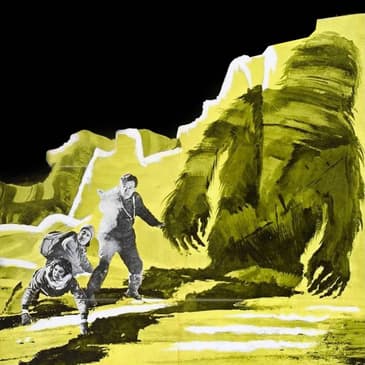
Writer/director and cryptid enthusiast Serge Bodnarchuk of Cold Crash Pictures joins us for a expedition into previous unexplored territory for Movie Oubliette: 1950s Hammer Horror! But The Abominable Snowman (1957) isn't a gothic horror or even a monster movie. It's an atmospheric thriller starring Peter Cushing as a sweetheart botanist with a thing for yetis who foolishly joins a brash American expedition into the Himalayas to find the eponymous beast, despite the protests of his wife and sage warnings from the local Lama. Sort of The Blair Witch Project meets The Thing with a dash of Wolfen? But, crucially, does this largely forgotten gem from the famous studio deserve to be carried back to civilisation? Or should it be used as monster bait with an unloaded gun? Find out!
Follow Serge's Youtube channel Cold Crash Pictures for excellent film essays – including one on cryptids!
Follow us on Tiktok, Facebook, Instagram and maybe what's left of Twitter, if it's still functioning.
Support us on Patreon to nominate future films, vote on whether films should be released or thrown back, and access exclusive bonus content!
Support us on Patreon to nominate films for us to cover, access exclusive bonus content, and vote on the final verdict!
Rate and review us on your podcast platform of choice, and tell a friend about us.
Follow us on TikTok, YouTube, Instagram and Bluesky.
Hosted on Acast. See acast.com/privacy for more information.
[00:00:00] Welcome to Movie Oubliette, the film review podcast for movies that most people have
[00:00:09] most offully forgotten. I'm Dan and I'm Conrad and in each episode we
[00:00:14] drag a forsaken film out of the Ubleiette. Discuss it and judge it to decide
[00:00:19] whether it should be safe free or whether it should be thrown back and consigned
[00:00:24] to oblivion forever.
[00:00:25] The movie review review review the films of this tent of forget come with a
[00:00:36] supplement not the movie who be yet.
[00:00:40] Hello listeners, welcome to Movie Oubliette episode 146, the continental traversing
[00:00:46] podcast with me Dan, living my year of the pickle down here in Melbourne, Australia.
[00:00:53] Meet me Conrad frantically replacing old Warner Brothers DVDs in Cambridge, UK.
[00:01:00] In this podcast we discuss Lesser talked about genre films, horror sci-fi and fantasy because
[00:01:05] we all know the greatest evil in the world is us, homo sapiens.
[00:01:11] Hello Conrad.
[00:01:12] Hello Dan, so what is the year of the pickle?
[00:01:16] Well I've got really into pickling things, so I don't know what it is but it's just like
[00:01:23] some addiction that I've somehow got into and yeah, I just pickling everything now.
[00:01:30] I've done cucumbers, I've done carrots, I've done onions, chilies, I've done kimchi
[00:01:38] as well so cabbage and radish kimchi I've done, so I can't stop.
[00:01:44] I'm constantly looking around for cheap vegetables to put in jars.
[00:01:51] So you're buying physical media.
[00:01:54] I'm frantically replacing Warner Brothers DVDs because our good friend Michael over at Retro
[00:02:00] Blasting.
[00:02:01] He publicized the fact that a certain batch of Warner Brothers DVDs have got disc rot, they
[00:02:08] were all produced in the same plant in the US and they are all deteriorating and I opened
[00:02:15] up my beloved blader on a box set and discovered that they do not play anymore.
[00:02:21] So yes, I hurriedly bought the blue racet for all this appears.
[00:02:27] So you can scary times which I can pickle those.
[00:02:32] Yeah, it's physical, nothing does last forever.
[00:02:37] Even if you look after it, you can get the dreaded disc rot.
[00:02:40] So check your DVDs people.
[00:02:44] Or sit up some sort of refrigeration unit.
[00:02:50] I don't know, something pickling.
[00:02:56] Well somebody doesn't need to be preserved is our special guest today.
[00:03:00] So we didn't throw sorry for that sake for you.
[00:03:06] It is of course writer, director, YouTube video essayist and special friend of the pod
[00:03:10] surge but not sure if cold brush pictures.
[00:03:13] Hello sir.
[00:03:14] Hi, thanks for having me.
[00:03:17] Thanks for having me back.
[00:03:19] It's great to see you how you doing.
[00:03:21] Well I'm at the point in my life and career where when my friends encounter cryptid media
[00:03:30] they think of me.
[00:03:31] Yes, yes.
[00:03:34] I understand that this was a random drawing from a viewer suggestion and you messaged me
[00:03:39] and you were like, so the next movie is going to be about a cryptid would you like to
[00:03:42] be on?
[00:03:43] And I was like yes.
[00:03:46] You're out go to guy.
[00:03:49] It was written it had to be I think because your latest YouTube video essay is about cryptids
[00:03:55] I believe.
[00:03:56] Yeah, yeah.
[00:03:57] It's about dinosaur cryptid films because I got a YouTube video series on dinosaur films.
[00:04:03] And in your message you were like, I bet you learned a lot about the Yeti that didn't
[00:04:07] go into your video because it's not a dinosaur and I was like, yeah, yeah.
[00:04:11] That's the years charged.
[00:04:13] I mean spoilers here for what we're about to get into but you will be our Yeti as much
[00:04:20] as yes.
[00:04:24] There must be a name for that.
[00:04:26] The thing I loved about your video essay was I was surprised to learn that it is much
[00:04:30] a case that art imitated life as life imitated art which I was not expecting that in fact
[00:04:39] sightings were based on viewings of films rather than the other way around.
[00:04:44] Yeah, yeah.
[00:04:45] The fact that the first detailed sighting of the Loch Ness Monster is beat for beat shot
[00:04:52] for shot a recreation of a scene from King Kong.
[00:04:56] I don't know why that's not more widely known.
[00:05:00] Like I didn't even know about it until I started researching the history of Nessie.
[00:05:04] You'd think it would come up anytime somebody talks about King Kong maybe like, oh by
[00:05:08] the way this is where the Loch Ness Monster comes from.
[00:05:11] Right.
[00:05:12] Blue my mind that little bit of inspiration.
[00:05:14] I loved it.
[00:05:16] Yeah.
[00:05:17] So check that out everyone.
[00:05:18] It's fantastic.
[00:05:19] Yeah, yeah.
[00:05:20] So I mean before we get into the film that we'll do today or anything in the mailbag
[00:05:25] on Ray.
[00:05:26] Yes, we have been hearing a lot about Dune you'll be surprised.
[00:05:30] Oh yeah, yeah.
[00:05:31] People have a lot to say about that film.
[00:05:34] Eddie Coulter got in touch to say that Via Vision which is a label in Australia I believe
[00:05:41] is putting out an all new blue ray of 1984's June with both cuts of the film along with
[00:05:47] a bunch of extras including his friend Daniel Griffiths feature length documentary on the
[00:05:54] making of June called the sleeper must awaken.
[00:05:57] Oh yeah, I mean as much as we didn't like particularly praise the film the production
[00:06:05] design was incredible and the sort of production history was really fascinating to research.
[00:06:12] So that I'm really interested to see what they look like.
[00:06:17] Yeah, I think it's an endlessly fascinating film to delve into so I'd love to see that documentary.
[00:06:23] But on Facebook called Chris said now that you've seen the David Lynch version please
[00:06:28] give the 2000 sci fi channel mini series version a try imagine if you will a university
[00:06:35] drama production with a bloom house budget and a smattering of popular American actors to
[00:06:41] make it more accessible to the sci fi audience all joking aside it and the sequel series
[00:06:47] children of June are a great summer evening binge whilst barbecuing off the back deck
[00:06:52] and hosting neighbors for a friendly board game.
[00:06:55] Okay, that sounds right up my alley to be honest.
[00:07:00] Yeah, I could imagine actually James Scurman got in touch to say I was nine when I went
[00:07:07] to see this at the now closed royalty cinema in Dartmouth UK during a family holiday.
[00:07:13] I remember it being very long and very weird but also kind of cool 40 years later I still
[00:07:22] haven't gotten around to watching it for a second time.
[00:07:25] Wow, just got a nine year old memory of it that's bizarre.
[00:07:33] And Joe lips it of the horror quiz got in touch to say okay, but sting is hot no.
[00:07:41] Well, I did I did question that like they were going for that wouldn't they?
[00:07:46] Yeah, zero body fat and glistening yeah, I think he's definitely going for something.
[00:07:52] And of course we heard from Sirge you've got car yes.
[00:07:56] Hello, Sirge what did I say?
[00:08:00] Well you said June 1984 has a lot of interesting things in it but given the way that it completely
[00:08:06] negates the book with its forced happy ending, it's disavowal by Lynch and the fact that you
[00:08:12] really can't sit through a screening without cliff notes.
[00:08:15] I definitely don't think it's indispensable viewing.
[00:08:20] Well, we always love hearing from you out there so please do get in touch.
[00:08:25] So Sirge, you're one of the few guests who has the special ability to visit the Ubleyatton
[00:08:31] Fetcher film for us. Would you like to give it a try now?
[00:08:34] I would love to it is an honor and a privilege.
[00:08:37] Okay.
[00:08:40] Oh wow did you guys install it with machines in here?
[00:08:44] Where's all this wind coming from?
[00:08:46] And it's so weird like right down by my feet there's like all this like dry white dust but
[00:08:51] often the distance I can see the outs it's so weird.
[00:08:57] Hang out, there seems to be something buried down here hang on let me brush it aside okay okay
[00:09:02] it's a stash of blue rays that somebody appears to have left from a previous expedition.
[00:09:06] Oh okay, perfect.
[00:09:08] Okay I'm coming out.
[00:09:13] Welcome back.
[00:09:14] Oh yeah what did you find for us?
[00:09:16] Well I found it is the 1957 Hammer Horror forgotten classic The Abominable Snowman
[00:09:26] directed by Val Guest written by Nigel Neal and starring Peter Cushing,
[00:09:32] Forest Tucker, Marine Connell, Robert Brown, Wolf Morris, Michael Brill,
[00:09:37] an Arnold Marl or Marlay as the Lama.
[00:09:42] And that's Lama as in Daly Lama, not the Peruvian Highland creature.
[00:09:52] Yes indeed and what happens in this movie?
[00:09:55] Well in this film, mild mannered British botanist John Rawlison and his wife Helen
[00:10:01] seem content to live out the rest of their lives studying the flora of the Himalayas as guests
[00:10:06] of the local Lama.
[00:10:07] That is until a team of brash American fortune hunters show up with plans to find and capture a living
[00:10:13] Yeti. Rawlison agrees to accompany their expedition high up into the Himalayas much to his wife
[00:10:18] Helen's dismay and soon finds himself at cross purposes with a fame and fortune hungry leader of
[00:10:23] the American expedition. Will they find the elusive Yeti? Will they capture the elusive Yeti?
[00:10:29] Is the elusive Yeti psychic? Find out in the 1957 Hammer Horror forgotten classic The Abominable
[00:10:54] And we're back to talk about the abominable snowman. I don't believe any of us had seen this before,
[00:11:04] had we? Nope. I had not seen it. No. No, I had not. Wow even in your travels through
[00:11:10] cryptid world. Yeah, Bigfoot tends to get all the movies made about it not so much the Yeti.
[00:11:15] Right so the difference is Bigfoot is wilderness, Yeti is snowy. Bigfoot is specifically North America.
[00:11:22] Right. The thing about Bigfoot versus Yeti is that every single continent, practically every single
[00:11:28] country has a myth about a six to nine foot tall hairy bipedal ape creature running around the
[00:11:37] wilderness. They just call it different things in different countries. You've got this Bigfoot
[00:11:42] of the Sasquatch in the United States and Canada you've got the Yeti and the Himalayas but then
[00:11:46] you've got the Elmasty in like the caucus region of like Georgia and Russia. Wow. You've got the
[00:11:52] Aureng Pendek of Thailand. You have African versions, you've got Australian versions, you've got
[00:11:59] like every country's got one of these myths. Right yeah yeah. It just happens to be called
[00:12:03] the Yeti in the Himalayas. Can we surprise to know that in New Zealand there isn't a myth about a Yeti
[00:12:09] but there's a myth about a moose. So apparently there's a moose that oh they're real. There's
[00:12:16] moose that gate's getting sighted in New Zealand in the wilderness. I've actually heard about this.
[00:12:21] I don't have any prepared notes, I just have like my impressions but yeah something about like an
[00:12:25] actual moose that the population was supposed to have died out a long time ago but people keep
[00:12:31] citing it. Yeah yeah it's strange. Similar stories pop up in lots of different countries as well.
[00:12:39] Like the Tasmanian Tiger of Tasmania is a very real animal that the last official specimen
[00:12:46] died in the 30s but people keep citing it. So this film I think was capitalizing on a very recent
[00:12:54] interest in the idea of the abominable snowman. It's the third adaptation of an Nigel Neil TV
[00:13:02] story, Nigel Neil being very famous writer in the UK screenwriter for things like the woman in
[00:13:08] Black and the stone tape and an adaptation of 1984 starring Peter Cushing. He also of course wrote
[00:13:15] Halloween 3 season of the witch, although he took his name off of that because he didn't like
[00:13:21] the way that it turned out. And he's most famous for the two films that Hammer did before this,
[00:13:26] The Quaytumass Experiment and Quaytumass 2, 1954 and 1956. And then they turned to this one which
[00:13:34] was something that he'd also written for TV that Peter Cushing had appeared in before. The creature
[00:13:40] which has a story about the Yeti and apparently I read that Nigel Neil said that he was interested
[00:13:45] in it because there'd been a recent expedition and it had generated a lot of public interest
[00:13:51] in the potential existence of a Yeti but I don't know what that expedition was. So it was the first
[00:13:58] half of the 1950s where the most popular interest in the Yeti demonstrated by parties outside
[00:14:04] Nepal. In 1951 there was the Shipton expedition where this guy named Shipton found footprints in
[00:14:12] the snow and he took photographs and they're like the most to this day that the most famous
[00:14:17] photographs have supposed Yeti footprints. Like I googled Shipton footprint before we started
[00:14:23] recording here and it was the second result was his famous photo. And it's a charismatic photo,
[00:14:28] it looks like the big toe looks curled in a way that doesn't look human but it also it doesn't
[00:14:35] look like a bear it doesn't look like it doesn't even look like a great ape it just looks like a
[00:14:39] giant human footprint with strange toes and it's very evocative but there are reasons to doubt
[00:14:45] its legitimacy. But so what happened was that that was incredibly popular and then there were two
[00:14:50] more expeditions I believe one in 1952 and then another in 1954 those first two expeditions that
[00:14:59] I mentioned they weren't there to find a Yeti they were there to chart a path to Everest. And
[00:15:05] they just like found the footprints on the way and took pictures and that wound up being what
[00:15:10] the expedition was most famous for. And then of course Everest is summited in 1953. Edmund Hilary
[00:15:17] and Tenzing Norge were asked by reporters did you see the Yeti and they were like no.
[00:15:24] But so finally the following year in 1954 the Daily Mail sponsors the first big expedition whose
[00:15:31] explicit purpose was to find the Yeti and they found nothing. But that's when popular interest
[00:15:37] was at an all-time high. And then there were a whole slew of Yeti movies and I think this is pretty
[00:15:44] much one of the last ones and it's from very early on in Hammer's existence pretty much before they
[00:15:50] were explicitly a horror production company. They were just sort of I don't know to try and exploit
[00:15:57] trends more than anything else. They hadn't really zoned in on Gothic horror particularly but not
[00:16:02] 1957 is interesting because you get the curse of Frankenstein which is pretty much their first
[00:16:08] Gothic horror movie and this which is a very different kind of movie I think it would be hard
[00:16:15] push to call it horror. Yeah more adventure thriller kind of it's not yeah you don't really see
[00:16:23] the creature and even in the big reveal at the end you still don't really see the creature.
[00:16:29] No and it's definitely one of those movies where you expect it to be oh this monster's killing
[00:16:36] everyone terrible horrifying monster but no no no humans are the real monster and the monster is not
[00:16:45] a monster he's a gentle creature that just wants to be left alone so it is kind of that trope
[00:16:51] that has become a trope more so in horror but this movie isn't really that type of horror movie.
[00:16:58] Yeah there are kills in it but you don't really see them they don't gruesome I mean this is a 50s
[00:17:06] you're not gonna see gruesome bloody murder. No well I think in their previous two movies the
[00:17:12] Quatermass experiment and X the Unknown the X's were in giant red lettering to try and highlight
[00:17:20] the fact that they'd got the X rating in the UK for these movies so they were sort of like a
[00:17:25] right the hard are for the American audience whereas this one ended up getting an A because it's
[00:17:31] quite restrained it's classy yeah yeah it does yeah there's very little on screen violence
[00:17:37] I mean there's no gore it's more of a the conflict comes from the clash of characters then
[00:17:43] the creature yes yes and that's very on purpose that's the point in fact I don't know if we
[00:17:49] want to rush straight to the end but the characters are talking about like Peter Cushing's character
[00:17:54] John Rawlison at the end he's like this Yeti has not been killing off the team it's been us
[00:18:00] yeah our stupid stuff that we're trying to pull the corners were trying to cut and the chances
[00:18:06] that we're taking are getting us killed and it's not the monster's fault yeah and there's this
[00:18:10] underlying theme throughout before they set off on their expedition the Lama is telling them
[00:18:16] you should be careful when you go up there because they're not sort of like the last dying remnant
[00:18:21] of a previous iteration of mankind or a missing link of some kind they're actually what's coming
[00:18:27] next they're hiding up in the Himalayas waiting for us to destroy ourselves through our stupidity
[00:18:34] and greed and then they will inherit the earth is kind of the philosophical message you get at
[00:18:41] the beginning and he says it in such a cryptic way that Peter Cushing's character doesn't really
[00:18:46] understand him he listens but he doesn't really understand but by the end of the story where they
[00:18:52] have through their colossal stupidity and stupid infighting as well they have died off other than
[00:18:59] I think there's like it's just John Rawlison that's left actually at the end of the movie isn't it?
[00:19:04] yeah yeah I do find it kind of similar in theme to the other movie that was discussed with you
[00:19:11] third Wolfen so this kind of ancient creature that's just been around for millennia
[00:19:18] they just want to be left alone really they just want to survive and just do their own thing
[00:19:23] while the humans just kill each other and that is a lot of similar themes to I also found with
[00:19:31] Miyazaki movies like a lot of Miyazaki movies like Nausoka of Valia the Wind and Princess
[00:19:36] Mononoki where it's about nature is mystical and mythical and ancient and just wants to be left
[00:19:46] pretty much so just just leave nature alone and you won't die yeah I was surprised how
[00:19:53] how much emphasis a film in 1957 put on they were really driving the point home where
[00:19:59] Peter Cushing is like maybe they didn't come up to the Himalayas to die they came up here to wait
[00:20:05] out humanity yeah I did find it surprising that this movie wasn't just what I expected it to be
[00:20:12] a really dumb very simple horror movie where you have a monster killing everyone off and then at the
[00:20:20] end they somehow overpowered the monster yeah it wasn't like that whatsoever it was like the humans
[00:20:28] were the savages as they put it it wasn't about the monster and also the Yeti seemed to have powers
[00:20:36] they seemed to know what they were going to do next it wasn't intelligent it wasn't violent it didn't
[00:20:44] hit a single person in the film there was an interesting take on it yeah there are some supernatural
[00:20:50] elements in there for sure I think that's probably why the film when I look at it in the very genre
[00:20:56] books that I have for reference I don't find it in the horror in cyclopedia I find it in the
[00:21:02] science fiction in cyclopedia and I think that's where cryptids tend to be yeah
[00:21:12] I found as well that the movie does explore sort of differences in culture as well so yeah of
[00:21:18] course you've got the Western versus Eastern culture with the Nepalese monks and the lama
[00:21:24] I noticed they spelled it lama with an H like exactly how the animals spelled
[00:21:30] not how a deli lama spell anyway and also the difference in culture between the British
[00:21:36] and the American yeah you've always got the Fulhardy glory seeking Americans you know charging in
[00:21:44] it's a tough but fair caricature yeah he's just there to make a quick buck isn't he that's
[00:21:52] the interesting thing that it's kind of the reverse shock to aliens in aliens Ripley is
[00:21:57] juped into a mission that she thinks is going to be purely focused on wiping something out and
[00:22:02] survival and then it's shocked to discover that there's a scientific effort behind it
[00:22:08] whereas this time it's the reverse John Rollerson finds out what do you mean you want to kill the
[00:22:12] thing yeah and he's quite disappointed about they calls Tom Friend that's our American character
[00:22:19] played by Forest Tucker he's actually replacing character who is played by a British person in the
[00:22:25] TV version so there wasn't that cultural split I don't think I think it was just because you're
[00:22:31] trying to get an American distributor to sign on to the film you have to have somebody American
[00:22:36] awesome Americans in the cast so he ends up being what Peter Cushing refers to as a cheap fair ground
[00:22:43] trickster yeah one point in the movie but he is a pretty disgusting guy because at one point
[00:22:49] he sets a trap for the Yeti with his friend as bait which is not great is it and then gives him
[00:22:57] a gun that it later transpires has no ammo in it yeah just in case he shot the creature yeah I'm
[00:23:04] saying he's a bit of a dick yeah he's he's willing to sacrifice human lives to get his fame and glory
[00:23:12] yeah yeah and I love the earlier point in the film where they just capture common a garden monkey
[00:23:17] of some kind and he says well Cousang our guide says this is the Yeti and we says Yeti so that's
[00:23:25] it it's official that's the story now yeah this is it and it's this this time it's a monkey
[00:23:32] they'd actually reflect real world stories there are countless instances of these
[00:23:39] Westerners who are living in the Himalayas the locals come to them and say there's a Yeti there's
[00:23:44] a Yeti right up there in that cave and they're like okay show me and they walk up to the cave
[00:23:48] and they look inside the cave and it's always either like some sort of macaque or like a Himalayan
[00:23:54] brown bear and they'd be like that's the Yeti and they're like yes that is a Yeti that is what all
[00:24:00] the stories are about and it's like okay so it's a Himalayan brown bear yeah or a monkey yeah
[00:24:05] but yeah that's generally considered the two most common explanations for what a Yeti actually
[00:24:10] is is a Himalayan brown bear or some species of monkey so it was interesting to see it pop up
[00:24:16] in the film and he's like this is the story we're gonna tell him that the Yeti is this kind of
[00:24:20] monkey and I'm like he's not far off from the real truth there yeah wow yeah right right but they
[00:24:26] have been like sort of falsified cryptids as well like we're we've just attached skeletons
[00:24:33] from other animals together yeah to try to make some mythical beast yeah there have absolutely
[00:24:38] been lots of hoaxes in fact there's a Yeti scalp westerners would make pilgrimages to this
[00:24:44] particular monastery in the Himalayas it might have its own Wikipedia page it's this
[00:24:49] it was presented by the Buddhist monks two Western explorers and scientists as a Yeti scalp
[00:24:55] and of course the DNA tested in the 70s in it and it comes back as a Ciro which is a kind of
[00:25:01] an ungulate like an antelope that lives in the Himalayas all right yeah they're all hoaxes every single
[00:25:07] piece of like this is a Yeti hand this is a Yeti pelt this is Yeti scat they test it
[00:25:13] and it's a brown bear or an antelope or human every single day right right yeah I remember when
[00:25:21] they brought back a platypus to the weasel world and no one believed it wasn't really with them yeah
[00:25:28] yeah yeah they I can't remember who it was who got the first platypus pelt from Australia but yeah
[00:25:34] they were like man these hoaxes are just think that we'll fall for anything these days
[00:25:41] you know some pretty weird things down there I know I mean yeah it's got a duck bill it looks
[00:25:47] like a beaver and it lays eggs I mean that's pretty out there and it has the poisonous spurs on
[00:25:54] its back feet yeah that's right it's got um yeah I think like it's it's chromosomes too
[00:26:00] it lactates but it doesn't have nipples it's got like humans have two sex chromosomes it has a
[00:26:06] lot more than two just like all sorts of not to go too off base you can cut this if you want but
[00:26:13] platypus pretty weird yeah yeah yeah well speaking of Yeti hands turning up yeah that's pretty much
[00:26:22] all you get to see in this movie is an arm that ventures into a tent it is every NRA members
[00:26:29] nightmare it goes straight for the guns yeah and that is all you get to see even though director val
[00:26:36] guest mentions in the commentary track that they were building him a full-sized Yeti prop and make up
[00:26:43] and they had a guy for the suit and so on and so forth he was saying to them you can build whatever
[00:26:49] you like I'm not going to show it really he was determined and yet Nigel Neal thinks that that
[00:26:54] was a mistake and he should have done even though he recognizes that the technology they had available
[00:26:59] at the time would not have done it justice he thinks that he was cheating the audience and I do feel
[00:27:04] it specifically at the moment when they have shot one yeah and the camera just will not tilt down
[00:27:11] to show you what they've shot yeah and towards the end as well when Peter Christian's character faces
[00:27:17] off with one or two actually and that walks towards the camera and it's just the face but it's
[00:27:25] all mostly in shadow you don't really get a good glimpse of what it actually looks like yeah they
[00:27:30] give it the Morticia Adams treatment where there's this shaft of light that's shooting across its
[00:27:35] eyes and that's it everything else is in shadow yeah yeah so that you can see the quote sadness
[00:27:42] and wisdom yes in the Yeti's face is Rollerson describes yeah that's all you're supposed to get
[00:27:48] and sort of a Star Trek the next generation approach to aliens which is slightly weird nose
[00:27:53] that's it yeah yeah yeah yeah so if you are going into this movie expecting a lot of Yitty
[00:28:01] you're not gonna get a lot of Yitty no you are gonna get a lot of suspense though yeah and that's
[00:28:06] the one thing although this is a 1950s movie the way that it operates is obviously different to
[00:28:11] the way that we would expect now in terms of generating suspense intention but this was
[00:28:17] built at the time as a nerve jangling grueling tale of suspense and I can see why I can see what
[00:28:24] they're doing and how effective it probably was for audiences then yeah I think they I mean
[00:28:30] they do that with the characters and the dialogue but I do find the setting adds a lot to it like
[00:28:35] the whole mountain side and in the closed quarters of the tent and the the huts that they stay in
[00:28:41] it did remind me of the thing actually it has that sort of very claustrophobic like isolated
[00:28:48] feel to it yeah and the location shooting helps I was surprised by that like I didn't expect
[00:28:54] like actual mountain side I mean it's not always actual mountain side but a good chunk of it is
[00:29:00] yeah so the film combines two techniques it's when it's the headlining actors it's on a set
[00:29:06] pinewood studios but they also have extensive wide shots that were done on location with standins
[00:29:14] yeah and I thought that they were working really well it's not just like one establishing
[00:29:18] shot of the mountain they're constantly cutting to these wide shots hmm which I was surprised to find
[00:29:24] from the commentary track were not the actors that they were just stands in I thought the standins
[00:29:28] or stands in anyway I thought they did a really good job of matching them and then Val Guest says on
[00:29:34] the commentary track that they worked very hard to make sure that they were matched well that like
[00:29:39] what an actor's arm was doing when it came time to shoot outdoors they would relay that to the
[00:29:44] stand-in to make sure that it all matched continuity so you can tell that they're on sets in some
[00:29:50] of the shots but there are enough of these on location shots done that it doesn't feel like as
[00:29:58] you said earlier it doesn't feel like an episode of Star Trek because like the cameras wouldn't operate
[00:30:02] at those altitudes in those temperatures so you know they're not actually filming there but I
[00:30:06] think they did a good job of blending it through yeah I think it blends really well because it is a
[00:30:11] black and white film yeah so you know white is kind of easy to match with black and white you know
[00:30:20] so um there's that but I was impressed I was really impressed I mean the main sort of tell
[00:30:26] that it was on set was because of the sound because it sounded indoors yeah it's the main
[00:30:33] yeah but I was I mean it didn't look cheap like even though you could tell it was a set and
[00:30:40] what was the snow made out of does it look like I think it's salt yeah I read salt it is salt yeah right
[00:30:45] yeah it had a nice powdery look to it but I could tell it wasn't wet right there was my only uh
[00:30:52] this isn't real yeah then the actors don't look terribly cold either which is always the problem
[00:30:57] murder you can see their breath indoors yeah the two weeks they did I think they shot on the
[00:31:02] Pyrenees so not the Himalayas but it didn't pull me out of the movie because I was just so impressed
[00:31:08] at the scope of it otherwise and the the scope of course it adds to the fact that it is cinema scope
[00:31:13] it's full two three five or hammer scope as they called it so it is a very handsome film with a
[00:31:20] very impressive sense of scale and remoteness in terms of the location it must have been quite
[00:31:26] exciting as a kid of the 50s to go and see this expedition into the Himalayas yeah and even the
[00:31:34] the sets the rocky mountain sides indoor sets looked really really good some of the shots being very
[00:31:41] ambitious with the avalanche scene and the blizzard scene yeah it's convincing yeah I was impressed
[00:31:48] with the production overall yeah this is the first time I have to admit that I have seen Peter
[00:31:57] Cushing not as moth-talking right we've seen him as Sherlock Holmes actually in Howe
[00:32:02] to the Basketballs but other than that I'm ashamed to say I've never seen him play anything else
[00:32:08] he's a very good actor yeah he is he is and he's playing a different character than what I'm used
[00:32:15] to anyway he's not a commanding you know space not see yeah yeah he's quite a warm generous like
[00:32:25] considerate person and trying to preserve a you know ancient creature as well and then very logical
[00:32:33] and practical about things like he's he's not always resorting to this is the worst thing can
[00:32:38] that that can happen like when Ed dies he checks him and he's like oh he's not scratch on him he
[00:32:44] died of a heart attack so he's he's very pragmatic yeah but also kind I'm remembering a moment where
[00:32:53] the first victim is McNeigh yes that's who here's the calling of the Yeti coming over the mountain and
[00:33:00] he just starts scaling a cliff without any gear or safety equipment and he loses his footing
[00:33:07] and he falls and he dies and then they I can't remember what pulls them away from McNeigh's poor
[00:33:13] broken body but Ed starts screaming back at base camp and they run back and Ed announces that he
[00:33:19] just was attacked by two Yetis and so like okay let's set up a trap for when they come back
[00:33:23] and they're talking about how they're gonna trap the Yetis and all of a sudden Peter Cushing
[00:33:27] goes I need a spade and they're like what for oh right McNeigh yeah yeah which is that was great
[00:33:34] I thought they did a really good job of making Peter Cushing he's just like such a sweetheart
[00:33:39] yeah he just like doesn't want anybody to get hurt yeah but he's he's a constant odds with
[00:33:43] the character his last name is friend which I found ironic because I kept forgetting that his name
[00:33:50] was friend and so Cushing would look at him and be like friend what are you doing and I thought
[00:33:54] he was calling him friends or castically yeah yeah yeah because everyone was referring to everyone
[00:34:00] it's different names so it was John to Helen but he was Rollison to everyone else or doc to
[00:34:07] yeah to Tom and then there was like it's a Peter Fox but everyone called him Foxy yeah it was
[00:34:13] a bit confusing but going back to Peter Cushing's character being very sort of sympathetic also he
[00:34:20] was very respectful to the the Nepalese culture as well he embraced T-drinking while everyone
[00:34:28] else was complaining about it and also the Americans just being very racist to any of the
[00:34:37] sort of local people so yeah yeah the Americans are anytime the Nepalese come up they insult them
[00:34:44] yeah to the point where like the monks at the monastery start singing and dancing
[00:34:49] and the American friend looks out the window and he's like what is a war dance
[00:34:55] and Peter Cushing goes no they're Buddhist they don't believe in war yeah yeah exactly yeah I think
[00:35:01] the Americans refer to the mosaic narrative and at one point when they're coming into camp I think
[00:35:06] his head says to another one stick close these guys elite you yeah awful and that isn't just limited
[00:35:13] to the Americans though because of course Peter Cushing's character is contrasted heavily with Foxy
[00:35:20] who is very much the British Empire stereotype who's also staring down his nose at these people and
[00:35:27] calls them ghastly and can't wait to get home to civilization and yet oddly enough when the
[00:35:34] Americans show up and start being rude to them he defends them and says that he finds them
[00:35:40] quite lovely so I don't know what's going on there that's a few yeah it's it's mixed messaging
[00:35:46] I know that he's supposed to be good on his part I think it's just hypocrisy so it's even worse
[00:35:50] I don't think it's supposed to reflect well on Foxy that he flip flops in that moment I think
[00:35:55] it's just hypocrisy on his part but it all goes to reinforce Roleson as this gentleman scholar
[00:36:03] the sort of ideal of the scientist who's just interested in knowledge and discovery
[00:36:08] and embracing different cultures as he finds them because he wants to understand and respect them
[00:36:13] which is quite a wonderful central character to have and you also have the fact that he
[00:36:19] he has brought his wife with him or I should say his wife has accompanied him because he describes
[00:36:25] her as his colleague yeah as his partner as every bit his equal in this exercise yeah also the
[00:36:34] fact that one might assume that she isn't going to follow them up the mountain because she's like not
[00:36:39] qualified or she's just a woman who can't handle it no it's not that she knows it's stupid yeah
[00:36:45] she's like please don't tell me you're going up and untarded Himalayan territory in the wrong
[00:36:51] season to go find a Yeti and he's like no I really want to and she's like I wanted to be back at
[00:36:57] base camp yeah and then she has the agency to create her own rescue party and leads it
[00:37:04] yep in fact to go and rescue her husband 1957 yeah that's pretty impressive yeah it is that
[00:37:11] is yeah I've watched a couple of 1950s giant monster movies in the last couple of months
[00:37:18] and they all have like one stock female character and they're always either the daughter or the
[00:37:25] assistant of a scientist who's of like an ancient 85 year old scientist who's there to like
[00:37:33] pontificate about the hubris of man and then they have like sometimes literally a playboy
[00:37:39] centerfold model as like his daughter who's there for the mission and yeah so you've already made
[00:37:46] this point I'm just repeating it with more detail but yeah it was very refreshing to see Helen
[00:37:50] even though she's not a mean character so much yeah but even her staying behind is proving a point
[00:37:57] beyond just she's not going with them yeah and then of course yeah she mounts the expedition to
[00:38:03] uh to go and rescue him because he does not get off the mountain by himself yeah I mean she's the one
[00:38:08] that discovered him as well yeah the end yeah she does did I read it right that there are footprints in
[00:38:15] the snow is the suggestion that rollison was a either accompanied back or carried back by Yeti yeah
[00:38:22] so he was rescued yeah the Yetis brought him back to his wife that's how we got off the mountain wow
[00:38:28] it's a very different ending from what I was expecting yeah I mean that's not to say that it doesn't
[00:38:34] sort of dip into some obvious trope sometimes we do get the white lady in danger trope at one point
[00:38:41] with Helen where she's surrounded by Nepalese people and has to be rescued quote unquote by Foxy who
[00:38:50] rushes in and disperses them yeah but I mean I don't think there's any sense that they want
[00:38:54] anything other than just to get paid actually well yeah yeah they've been left high and dry by the
[00:39:00] Americans and not being paid yeah I mean there's a scene as well where she is quite distressed and it
[00:39:06] does feel like this is a sort of an old Hollywood portrayal of woman being distressed in hysterical
[00:39:13] she you know biogen on the lamer and yeah that was a weird scene that I forgot about
[00:39:19] yeah that was the one where I noticed she's woken up I don't know smelling salt or something
[00:39:24] were given the stiff drink and the lamas says to her the servants found you in the secret part of
[00:39:30] the building but it is this temple have a secret part yeah yeah so it does sort of tread into some
[00:39:38] of those nativist tropes every now and again there's a scene where it's a little bit disappointed by
[00:39:44] as well where Helen spots a couple of porters talking to each other including Kusang who's going
[00:39:50] to lead Rollerson's expedition up into the Himalayas and there's a music sting and she immediately
[00:39:56] flies off in a panic obviously just assuming the natives are conspiring to kill her husband or
[00:40:02] something I don't know yeah I wasn't confused by the depiction of the lamer and kind of look
[00:40:10] like they were trying to make them out to be evil like having some sort of a hidden agenda but then
[00:40:15] he didn't I don't know what the approach was yeah well first thing they did was they hired a
[00:40:21] German to play him yeah I was going to get into it in the movie awards but it reminded me of
[00:40:28] the scene of breakfast activities oh Mickey Rooney yeah yeah it's a product of the time you know
[00:40:37] yeah it's a very weight guy playing a Tibetan and trying to be as mysterious as possible in all
[00:40:45] of his line readings yeah I mean the the accident is completely wrong yeah sounds like Eastern European
[00:40:52] but I kind of wouldn't have liked him doing a sort of an Asian yeah please accident either so
[00:41:00] maybe maybe it was beer this way and to be further at the accents generally we're a little bit
[00:41:06] all over the place me and Kusang's pretty much got British gentlemen down but as for the guy
[00:41:12] that's playing McNeigh the Scottish person I don't know what the hell that was was he supposed
[00:41:17] to be Scottish yeah what the hell was that I thought he was French yeah Michael Brill who's from
[00:41:25] Crueyton wow he's not Scottish I don't know what the hell that was it's very strange yeah I did
[00:41:31] not get Scottish from that I didn't either it's about as Scottish as Highlander Christoph Lambert
[00:41:38] yeah yes yes that was time for random trivia okay it's trivia time Conrad what piece of trivia have
[00:41:48] you uncovered from a snowy peak today well when this film was being developed they initially went
[00:41:55] with a slight modification of the TV versions title the creature they called it the snow creature
[00:42:03] just I'll leave anybody in any doubt slight problem they discovered that they'd already been a film
[00:42:09] about Yeti in 1954 called the snow creature directed by W. Lee Wilder who is the brother of Billy
[00:42:19] Wilder director of some like it hot and sunset Boulevard right but it's complete exploitative
[00:42:27] trash by all accounts haven't seen it so shouldn't judge but yeah so yeah they suddenly switched to
[00:42:35] the abominable snowman which in the US print for some reason was appended with all for the Himalayas
[00:42:40] in case they thought it was you know the Brooklyn one or something yeah oh wow yeah there you go
[00:42:48] that's our trivia
[00:42:55] uh should we talk about the score so the score is by Humphrey Searle the composer behind a film
[00:43:02] that we've covered already the haunting 1963 but whereas the haunting demonstrates his interest
[00:43:09] in modernist approaches like serialism this one is very romantic I thought it is yeah which was
[00:43:18] again not what I was expecting quite fulsome quite present quite active very much of its time
[00:43:25] very beautiful very effective I thought he never did another hammer movie and people have
[00:43:31] noted that his score for this is very similar to Ralph Vaughan Williams work for Scott of the Antarctic
[00:43:37] which was released in 1948 so I don't know if he was sort of going for the romance and the excitement
[00:43:45] of the adventure more than the terror and suspense of being in an isolated location with an unknown
[00:43:52] mystical creature yeah I found a quite a grand score like uh I was a very full orchestra
[00:43:59] or some strings yeah like you said very romantic quite sort of melodramatic almost like
[00:44:06] a scene were like much more theatrical sounding with the score in them also quite well queued
[00:44:13] like there were lots of scenes with with no score at all like it's just just dialogue and so it wasn't
[00:44:19] that never ending music that a lot of sort of old Hollywood tended to do interesting ideas as well
[00:44:28] if you've got throat singing I guess that was more digetic music with the monks you've also got
[00:44:35] some harp in there kind of interesting texture and also using I don't think it's like Asian
[00:44:43] modes or scales but more it almost sounded like more Arabian like Middle East and sounding scales
[00:44:51] but you know it's ethnic right it's not normal major minus scales so that there was a different
[00:45:01] take on it as well I mean I guess expected because you know you're in the Himalayas of course
[00:45:06] that's kind of the sound exotic yeah I did notice that there are you know quote unquote orientalisms
[00:45:14] which isn't non-ice word but for that stinger for example where Helen sees the two porters
[00:45:20] talking and just assume instantly assumes the worst the stinger for that is pentatonic I think
[00:45:25] is it right because I hear a lot of non pentatonic scales like there's a lot of chromatic move
[00:45:32] or like some chromatic movement which is I would normally associate with like sort of Middle East in
[00:45:38] time so maybe it was music for any listeners that aren't musically inclined what what does pentatonic
[00:45:45] mean no pentatonic is so a normal scale is made out of eight notes well technically seven notes
[00:45:52] pentatonic scales only made out of five notes so and it always goes up in the same way so it's like
[00:46:00] this is going to sound very musical but it's good like it will be like the root note in the
[00:46:05] attone attone and then all skip to attone and then all go to a third above and then another tone
[00:46:12] so there's only five notes to a scale as opposed to seven eight notes it does have a very cultural
[00:46:20] sound to it although it is used a lot in blues music as well so you've got that so it's adopted
[00:46:27] into a lot of guitar driven music as well so traditionally Asian sounding the pentatonic scale
[00:46:35] yeah to western ears and so it ended up you know whenever suppose that the Asian character would
[00:46:41] turn up in a cartoon they'd all of a sudden start playing sort of chopsticky type of
[00:46:46] yeah yeah yeah it just says very racist these days it does but I mean it was a way of sonically saying
[00:46:57] hey we're not in America right now we're in the Himalayas it's the same way where every time you see
[00:47:05] an army or the military on screen you've you've got to have like near drum rolls and like
[00:47:11] Ross a brass band this is neither here nor there feel free to cut this but I watch the Flynn
[00:47:17] Stones the live action one from 94 a couple of weeks ago and Halle Berry has a bit part in it
[00:47:23] yeah and every single time she walks on camera it's saxophone plays every single time yeah
[00:47:31] I mean I've seen that movie kind of as an adult and it really doesn't age they're well no
[00:47:39] it's yeah it's an uncomfortable watch yeah you can skip it
[00:47:55] hello it's the movie awards where we nominate our favorite 10-foot tall theory parts of
[00:48:02] the film in a number of glacial blizzard-swit categories best quote it's kind of a little speech
[00:48:09] that kushing gives when they're speculating on the true nature of the Yeti and he says suppose
[00:48:15] they're not just a pitiful remnant waiting to die out they're waiting yes but waiting for us to go
[00:48:21] suppose we are the savages perhaps so then we are the dark ages not homo sapien the thinking man
[00:48:28] but homo vastes man the destroyer yeah oh I love that one that was my favorite it's great yeah
[00:48:36] is the whole premise of the movie just summed up in one amazing speech it's great
[00:48:43] I went for something really really brilliant and childish um I thought that nothing could really beat
[00:48:50] Peter kushing's deathless opening line to the movie which was have you seen this veining fox
[00:48:58] oh with them both bent over something is what the hell is happening here I think they're looking at a plant
[00:49:11] questionable outer context it is the nickname Foxy does not
[00:49:19] best hair or costume this is uh the no brainer it's gotta be the Yeti's face
[00:49:25] oh right yes which which like very subtly done critically they do nothing to the eyes
[00:49:33] which like how do you convey otherness when the point is to not change the eyes
[00:49:38] Conrad you said it earlier you give them a weird nose yeah yeah it is it's the star trick approach
[00:49:45] leave the actor their eyes so that they can still convey things but yeah just give them a weird nose
[00:49:50] or weird brow or something yeah uh I went for something that I was very impressed with which
[00:49:57] was Helen's sensible and stylish white knitted rescue snooed which she wears when she sets off
[00:50:06] to rescue her husband off the Himalayas likes it very much looked really comfortable and warm
[00:50:12] mm-hmm most fifties moment that would have to be the theme of scientists are delving into secrets
[00:50:20] they aren't meant to know which was much more explicitly stated in things like the beast from 20,000
[00:50:28] fathoms like it had a whole ad campaign which was like it was usually atomic films oh yeah
[00:50:35] of course it was like man's hubris will get itself killed which is interesting that they had such
[00:50:40] a strong presence of that theme in this film even though no discussion of nukes obviously but yeah
[00:50:45] this whole idea that there are pieces of nature that we shouldn't interfere with but at the same time
[00:50:51] it's less science interfering with nature than showmanship and the monetization of discovery
[00:50:59] that is being I'm undermining my own selection here by saying oh this was such a cliche or except
[00:51:05] that it wasn't a cliche but yeah that reminded me of the fifties the most yeah my suggestion would be
[00:51:12] Helen might be able to mount and lead an expedition into the Himalayas to rescue her husband but she
[00:51:17] can't put on a coat unless a man holds it up for her oh yeah that's right put on your own damn
[00:51:26] coat Helen yeah favorite scene so my favorite scene is when McNeigh and Rollison are in the tent
[00:51:37] McNeigh has accidentally stepped in a Yeti trap and his ankles been injured and Cushing has spotted
[00:51:44] a Yeti at this point they both have and McNeigh asks Cushing what did it look like and Cushing
[00:51:51] starts rattling off all these it's height it's weight and how its age is probably difficult to assess
[00:51:57] and then McNeigh stops him and he goes no no no did you see what it looked like and that's when
[00:52:03] Cushing says yeah there was a sadness and a wisdom to it and I just I really like that yeah my favorite
[00:52:10] scene which is when we get to the point when friend and Rollison are the last remaining expedition
[00:52:16] members and they hear Ed calling for help on the wind when Ed's dead yeah and wrapped up outside
[00:52:24] their tent and that's the one piece of sort of uncanny earring horror I think real existential horror
[00:52:32] that you get and maybe that is because of this psychic or extra sensory aspect that isn't developed
[00:52:40] but it reminded me so much of Josh's fate in the Blair Witch project from 1999
[00:52:46] where again group of people looking for a mythical thing that lives out in the wilderness
[00:52:51] somewhere one of them goes missing and then the others could hear them calling for help in the middle
[00:52:56] of the night but I think this is better because his dead body is outside so it's clearly a rash
[00:53:01] yeah yeah yeah and all the more disturbing for it because then you definitely know that your hearing
[00:53:06] is coming from something else yeah most cliche moment it wasn't a cliche at the time I don't think
[00:53:13] but hiding the monster for as long as possible sort of became a cliche I think it's a great example
[00:53:22] of a cliche done really really well because you don't really miss the fact that you haven't seen
[00:53:28] a yeti yet like two thirds of the way through the film like they're still enough conflict between
[00:53:32] the characters that you're still engaged and you're not checking your watch waiting for the yeti
[00:53:36] to show up and then when it does show up but they pointedly don't show you the yeti there are several
[00:53:42] yeti attacks that take place completely off camera but there's a thematic reason I guess
[00:53:49] that they sort of put in there for not showing the audience the yeti until literally the last possible
[00:53:55] chance so it's a cliche that I really really liked yeah mine is the locals are afraid of the beast
[00:54:06] the mere mention of the word yeti startles koo saying I am I mean it happens in every culture so
[00:54:13] it's not just sort of in the empire versus the indigenous cultures it also happens in American
[00:54:19] well often London which I mentioned in the last episode to with the locals in the pub terrified of
[00:54:25] the well of so yeah it's a cliche yeah yeah yeah best special effect I thought it was a special
[00:54:32] effect until I listened to the commentary and found out it wasn't it's oh when the Americans first
[00:54:39] show up at the monastery you can see their breath oh yeah and I was like oh that's so cool did
[00:54:45] they refrigerate the set did they make them like suck on ice between takes or something how do
[00:54:50] they get their their breath cold and then on the commentary val guest is like yeah we filmed this
[00:54:55] outside in February and I was like oh okay it's cold yeah that worked out well yeah my favorite was
[00:55:08] the opening matte painting on the mountain side with the live element of like a post with some
[00:55:17] fabric attached to it flapping in the breeze in the foreground that brought it to life I thought
[00:55:22] oh this is this good work it's nice yeah my favorite sound effect is the keening of the yetis
[00:55:32] that cry oh yeah and echoes across the mountain tops after they've killed the first one
[00:55:38] yeah it's mournful yeah yeah it is it's not what you're expecting at all yeah no no it's scary but
[00:55:46] that because it's menacing but because it's so um sentient and sad yeah yeah yeah it is
[00:55:54] what about you Dan so one sound I would like to pick out is the cowboy whiston bullet ricochets
[00:56:01] sounds when they just yeah it's just like I just think of cowboy whistons when I hear it it's such
[00:56:08] a iconic sound most funniest moment so my funniest moment is definitely unintentional it's when
[00:56:16] it's the first death when McNeigh falls off the mountain yeah that's mine too and there is a
[00:56:24] very brief shot it's like less than a second it's less than 24 frames of McNeigh's body falling
[00:56:31] and striking a rock and the thing is it's like you expect in a cheap production they drop like a
[00:56:36] mannequin yeah I don't even think it was a mannequin yeah I think they literally dropped like a
[00:56:41] pair of pants in a jacket off of a styrofoam clip it doesn't look solid at all it just looks like
[00:56:50] no he just suddenly disappeared and oh yeah it's close remains like a rapture didn't
[00:56:58] fall yeah funniest for you the thing I laughed at the most was Tom Friend okay he's delusional
[00:57:08] but yeah his firing is gun everywhere whilst searching for Ed in a snowstorm I don't know how firing
[00:57:15] the gun is helping yeah is it a source of light what what what is he doing other than bringing an
[00:57:21] avalanche down on himself and possibly shooting Ed if he is out yeah I've no idea
[00:57:28] can that tell me that's all I'm Mary Jo Peel and you are listening to movie Ubleyette
[00:57:38] that's right it's final verdict time should the abominable snowman from 1957 be set free to
[00:57:47] wander the snowy peaks and be admired for its hairy greatness or should it be hit with a mighty
[00:57:55] avalanche and plummet back into Ubleyette and be a forgotten myth never seen again search your
[00:58:01] outgifts should this movie be seen by people I say set it free absolutely yes it was quite a
[00:58:09] pleasant surprise I haven't seen a lot of hammer horror but the ones that I've seen including
[00:58:15] ones that you guys have reviewed on this podcast I was not impressed so it's like okay so I don't
[00:58:23] know what when I was doing research I was like okay early arrow hammer horror about a cryptid
[00:58:27] film that I had never heard of I was like how good could it be but I was really surprised it's
[00:58:32] like if this were an episode of Twilight Zone it would be a classic everybody would still be talking
[00:58:37] about it I think yeah absolutely I think there should be more widely known and widely seen
[00:58:42] I kind of agree I think it's a bit a lot of expectations it was nothing of what I expected I
[00:58:48] thought it was just gonna be a dumb big raid and horror movie with a guy in a rapist suit but it was
[00:58:54] was none of that it was very very a hit of its time for the 50s like theme wise like character wise
[00:59:02] dialogue wise it was really impressive and you know white washing aside you know that's
[00:59:08] that's the time that it was it's it's a pretty solid film I would say that free yeah I agree
[00:59:15] I I was really surprised as well because I tend to think of hammer as being the place where
[00:59:21] Britain did its creaky gothic castles with Dracula and blood and this is a really classy picture
[00:59:27] I mean it's a handsome production it's got fantastic dialogue cushing's amazing in it
[00:59:34] and it's got a really lofty philosophical theme to it that I was not expecting at all it's not
[00:59:40] a monster on the run movie it's man coming a cropper on the mountain and proving the llamas
[00:59:46] prophecy correct it's yeah really quite thought provoking atmospheric and it even has a little
[00:59:52] bit of existential horror in the middle of it with people getting delusional and hearing things on
[00:59:58] the wind that genuinely creeped me out from a film in 1957 so yeah I was very pleasantly surprised
[01:00:07] so I would say it for you as well yes yeah we have to mention as well this is a patron's choice
[01:00:13] any culture that chose it thank you very much for leading us witness this film that no one has
[01:00:20] probably ever seen hmm well we ought to check in with our patrons and find out what their final
[01:00:26] verdict was hello how yes conrad final verdict please it's unanimous they want to set it free
[01:00:34] oh everyone agrees everyone agrees Eddie Koolton himself came back to say set it free
[01:00:42] the abominable snowman of the Himalayas is one of my favorite hammer films that unfortunately
[01:00:47] gets overlooked because it had the misfortune of being released between the hammer juggernauts
[01:00:52] of the curse of Frankenstein and Dracula if you're a fan of Nigel Niels Quatermass movies then I highly
[01:00:58] recommend you give this one a chance Jasmine said I've been wanting to see this since dark corner
[01:01:05] reviews my other favorite internet movie commentators reviewed it a couple of years ago this
[01:01:11] patron's choice was the kick in the pants I needed to watch it I thought it was excellent
[01:01:17] the scenery was visually mesmerizing after seeing so many big foot and yeti movies where the creatures
[01:01:23] spend their screen time ripping people to shreds it was very refreshing to have a take where they
[01:01:29] don't do that and yet it still manages to be intense and utterly terrifying great pick Eddie Koolton
[01:01:36] chazilla says I've always liked the abominable snowman reminds me of classic twilight zone just
[01:01:42] what you said just longer love the black and white photography the practical effects and real
[01:01:49] sets anyone else miss match shots as much as I do try as they might not even Peter Cushing could
[01:01:56] get anything past the high llama the choice not to reveal the full creature until the very end
[01:02:01] and then just in silhouette with a close up of its eyes really builds the anticipation and terror
[01:02:07] still scares me by the way I propose a drinking game take a shot every time that prick Tom Friend
[01:02:14] hoes Koo sang and maybe just maybe it won't hurt your dream
[01:02:23] and finally iconographer said I'd never heard of this movie what a pleasant surprise I do love
[01:02:28] creature features from the 50s so this was a lot of fun great storytelling and suspense
[01:02:34] let those abominable snowmen free to wander the Himalayas yeah all right it's official it is
[01:02:41] a free off you go let's just open that cage bye yeti well surge it's been fabulous having you here
[01:02:52] especially to lend your expertise from your recent video or at least unused material from your
[01:02:59] recent video yeah thanks for having me well where can people follow you and hear more of your views
[01:03:04] and your cryptid knowledge across all social media I mean they're called crash pictures or
[01:03:09] called crash pics if the URL could not be that long but primarily it's YouTube YouTube is
[01:03:15] the thing the real thing that I put most of my my time and effort into I just recently released a
[01:03:21] video about dinosaur cryptid films which you can see and I've started researching my next scripted
[01:03:28] video is going to be the next episode of sorry in cinema oh great any hints as to what that's
[01:03:33] gonna be about yeah I can tell you that it'll be about all six Jurassic Park films
[01:03:39] yeah but through one particular critical lens one particular like scholarly angle
[01:03:45] oh cool let me just I haven't seen many overviews of all of them yet so that should be interesting
[01:03:52] yeah and yes listeners if you want to follow movie uble yet we are everywhere as movie uble yet
[01:03:58] uh and you can email us as well as at movie dot uble at edgmail.com
[01:04:04] yes and if you want to support the show then head on over to patreon where for as little as a dollar
[01:04:08] you get access to extended portions of the show and can nominate films for future episodes as eddie
[01:04:14] Coolter did today yes for five dollars you get to vote on the final verdict and get access to our
[01:04:19] monthly minisodes and for ten dollars you can be an executive producer like surge yeah and chisilla
[01:04:28] eddie Coolter Isaac Sutton Dr. Doggy and iconographer yeah yeah we really enjoyed the patrons choice
[01:04:35] today uh we have also got merchandise at rebubble and a youtube channel as well and if you haven't
[01:04:41] already give us a rating and review on spotify or apple podcast whatever you are listening to us on
[01:04:47] does help us out a lot it does so conrad uh next film what is up for the next episode well we
[01:04:56] will be remaining with a british american crossover production but this time in my favorite decade
[01:05:02] the eighties it's the nineteen eighty american supernatural horror film the watcher in the woods
[01:05:12] oh yes i haven't seen this one it's been on my watch list for years people keep mentioning it
[01:05:18] i don't know anything about it very keen to check it out i've never heard of it uh it's a childhood
[01:05:23] favorite of mine it's from disney's dark period when they were experimenting with darker material
[01:05:30] and it went all went horribly wrong so i shall enjoy seeing your reaction to that one down yes okay
[01:05:38] alright look at what i got thanks surge for joining us again on another episode and listeners uh
[01:05:45] until next time goodbye bye bye
[01:06:00] if you should feel like another nip of that nobody's gonna call you a tipler