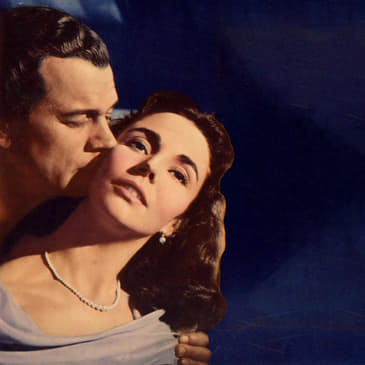
Actor, writer and producer Amanda Jane Stern – whose psychosexual thriller Perfectly Good Moment has launched on Tubi this month – joins us to discuss David O. Selznick's production of Portrait of Jennie. Based on a popular novella by Robert Nathan that Ray Bradbury said "touched and frightened" him, the romantic fantasy won an Oscar for Best Special Effects in 1948, but was not a success. Set in depression-era New York, it starred Jennifer Jones as the titular Jennie, an enigmatic young woman who inspires an impoverished painter, played by Joseph Cotton. The film is well regarded among those who remember it or have rediscovered it, but it's not easy to come by on streaming services or physical media. Unless you stumble upon it on Youtube, of course. But does it deserve to escape the oubliette and be immortalised? Find out!
Follow us on Tiktok, Facebook, Instagram and Bluesky.
Support us on Patreon to nominate future films, vote on whether films should be released or thrown back, and access exclusive bonus content!
Support us on Patreon to nominate films for us to cover, access exclusive bonus content, and vote on the final verdict!
Rate and review us on your podcast platform of choice, and tell a friend about us.
Follow us on TikTok, YouTube, Instagram and Bluesky.
Hosted on Acast. See acast.com/privacy for more information.
[00:00:04] Welcome to Movie Oubliette, the film review podcast for movies that most people have mercifully forgotten.
[00:00:10] I'm Dan.
[00:00:11] And I'm Conrad.
[00:00:12] And in each episode, we drag a forsaken film out of the Oubliette.
[00:00:17] Discuss it and judge it to decide whether it should be set free.
[00:00:21] Or whether it should be thrown back and consigned to oblivion forever.
[00:00:38] Movie Oubliette
[00:00:39] Hello everyone and welcome to Movie Oubliette episode 163, the continental spanning podcast
[00:00:46] with me Dan gorging my face with low quats in Melbourne, Australia.
[00:00:51] Oh, and me Conrad selling off old Oubliette movies on eBay in Cambridge, UK.
[00:00:57] In this podcast, we deliberate over forgotten genre films, sci-fi, horror and fantasy because
[00:01:04] we love meeting people trapped in time.
[00:01:07] Don't we Conrad?
[00:01:08] Hello.
[00:01:09] We do.
[00:01:10] Yes.
[00:01:11] Different ages.
[00:01:13] So what are low quats?
[00:01:15] Well, moved into the new house, obviously.
[00:01:20] We do have fruit trees in our yard.
[00:01:23] We've got figs, persimmon, cherries, a plum tree and a peach tree, I think, which is amazing.
[00:01:32] We've only eaten the cherry so far.
[00:01:34] But our next door neighbor has what is called a low quat tree.
[00:01:39] It's a fruit I was not aware of until we moved in.
[00:01:42] I think it's originally from China, but it's this really kind of small, round, yellow fruit.
[00:01:50] It's got really large seeds and it kind of tastes like a pear mixed with like a feijoa.
[00:01:59] But yes, the tree overhanging our fence is just like laden with them.
[00:02:05] And we've just been eating them.
[00:02:07] And I'm sure they don't mind because the tree is full.
[00:02:10] It is completely like drooping with fruit.
[00:02:15] What's the law around that?
[00:02:17] If it's hanging in your garden, it's fair game.
[00:02:20] Is that how it works?
[00:02:21] I mean, I'm an issue, sir.
[00:02:23] I mean, I'm being a little bit inconspicuous when I pick them.
[00:02:29] So I'm trying to be a little bit careful, but it seems to be a fine.
[00:02:35] I don't know.
[00:02:36] But meanwhile, you've been selling movies?
[00:02:39] I have, yes.
[00:02:40] I finally realized that I have an overflowing cupboard of Oubliette movies, including all
[00:02:47] the ones we've covered in the past right the way back to society.
[00:02:52] And including ones that we've thrown back.
[00:02:55] And I looked at them and thought, you know, I'm never going to watch that again.
[00:02:59] So I've been putting them on eBay.
[00:03:02] And surprisingly, physical media is selling, which I didn't think it did.
[00:03:08] But somebody told me it's a thing now.
[00:03:12] Yeah.
[00:03:13] It's only because streaming platforms don't have everything.
[00:03:16] And especially the movies that we cover.
[00:03:19] Like it's quite hard pressed finding them on streaming.
[00:03:23] Or, you know, it would be on a platform for a limited time.
[00:03:27] And then it's off and you can never watch it anywhere.
[00:03:30] So especially old movies as well, which is very apt for this episode.
[00:03:39] But yeah, people are getting back into physical media.
[00:03:44] Yeah, they are.
[00:03:45] Now, somebody at work told me that the youngsters love physical media now because they do not
[00:03:50] trust the ephemeracy of streaming services.
[00:03:53] Yeah.
[00:03:54] I mean, it's also so expensive.
[00:03:56] Like if you pay for every streaming service, you're spending hundreds a month just to be
[00:04:03] able to watch things.
[00:04:04] Well, there's so many of them now.
[00:04:06] Yeah.
[00:04:06] Yeah.
[00:04:07] So much.
[00:04:08] Yeah.
[00:04:08] So much.
[00:04:09] Yeah.
[00:04:09] Okay.
[00:04:10] Well, shall we move on to the mailbag, Conrad?
[00:04:13] What have our listeners been saying?
[00:04:14] Well, we heard from Wicked Person who was talking about No Escape.
[00:04:19] And he said, didn't expect to find this film watchable and was pleasantly surprised.
[00:04:25] Seeing the Merrick character, I thought that the initial treatment of Nagin in The Walking
[00:04:31] Dead TV show owed this film a bit of an apology.
[00:04:35] The whole disarmingly malicious thing.
[00:04:39] I hadn't made that connection, but it's a good point.
[00:04:41] Okay.
[00:04:42] Yeah, yeah.
[00:04:43] Yeah.
[00:04:43] I mean, I would agree.
[00:04:45] I had low expectations for No Escape.
[00:04:49] But it turned out to be, yeah, much more enjoyable than I thought.
[00:04:52] Yeah.
[00:04:53] And he also said, what a great super bazooka.
[00:04:56] It thoroughly obliterates everything except the guy you're aiming at and the scaffolding
[00:05:01] the two of you are standing on.
[00:05:03] Yeah, I noticed that as well.
[00:05:05] And I feel like there should have been a crater after that explosion.
[00:05:13] Yeah.
[00:05:14] And just this pillar of ground that the villain's standing on for some reason.
[00:05:21] Yeah, it's very peculiar.
[00:05:22] We also heard from Matt Swofford, who said, this one stings a little because I love so many
[00:05:30] of the ingredients here.
[00:05:31] Hudson, Henriksen, Leota, Stuart Wilson and Martin Campbell is a solid director.
[00:05:36] But this movie is a real turd.
[00:05:40] The whole thing feels like a Ray Liotta as an action hero experiment that fails miserably.
[00:05:48] There are much better futuristic prison break films out there for us to consume.
[00:05:53] And this one can stay in the oubliette where it belongs.
[00:05:56] Oh, surprised by that, Matt.
[00:05:59] Because I thought this is like almost classic action, 90s action.
[00:06:04] I thought he would have loved it.
[00:06:06] Yeah, but he is an aficionado of 90s action.
[00:06:09] So maybe in that pantheon, this does not fare well.
[00:06:13] Oh, interesting.
[00:06:14] Yeah.
[00:06:15] And finally, we heard from Serge of Cold Crash Pictures.
[00:06:18] Hello, Serge.
[00:06:19] Hello, Serge.
[00:06:20] And he said, no, Escape isn't a bad film per se.
[00:06:25] But in a world that already has Escape from New York, Mad Max, Soldier and hell, even Waterworld,
[00:06:31] why would you ever want to watch the most perfunctory of the bunch?
[00:06:35] It's hilarious to me that the filmmakers thought the idea of a for-profit prison in 1994 would
[00:06:42] scandalise the movie going public enough to make it like half the plot revolve around the
[00:06:47] thought of exposing it to the world.
[00:06:50] Mm, yeah.
[00:06:51] Yeah, yeah, yeah.
[00:06:53] Yeah, it's very true.
[00:06:54] It feels quite quaint in retrospect.
[00:06:57] Mm, yeah, it sure does.
[00:06:58] It does.
[00:06:59] Anyway, if you love the movie, if you hate the movie, we love hearing from you.
[00:07:03] Yeah, let us know.
[00:07:04] Let us know.
[00:07:05] Okay, Conrad, the movie for today.
[00:07:08] What is it?
[00:07:09] Ah, I have no idea.
[00:07:11] Let me just put on some galoshes and go over to the Oubliette to find out.
[00:07:18] Oh, good grief.
[00:07:19] It's really windy in here.
[00:07:21] Yeah, so much water.
[00:07:23] Oh, that ruined my hair.
[00:07:26] Don't get swept away.
[00:07:27] There's a Blu-ray on the rocks.
[00:07:29] Coming back.
[00:07:30] Okay.
[00:07:31] Oh, tough ones drown too, you know.
[00:07:34] Okay, so what do you have, Conrad?
[00:07:37] So, I have the oldest film we have ever done on the main podcast before.
[00:07:42] The 1948 American supernatural film, Portrait of Jenny, directed by William de Turla.
[00:07:51] Based on the novella by Robert Nathan, produced by David O. Selznick, starring Jennifer Jones,
[00:08:00] Joseph Cotton, Ethel Barrymore, Lillian Gish, Cecil Kellaway, David Wayne and Albert Sharp.
[00:08:09] So, what happens in this movie?
[00:08:11] Well, it features Eben Adams, a starving artist in Great Depression-era New York,
[00:08:18] struggling to pay rent with his uninspired landscapes because his landlady's already filled the toilet walls with them.
[00:08:26] One misty, snowy day, he meets a 13-year-old girl called Jenny,
[00:08:31] who talks about events from 20 years ago in the present tense before vanishing in the fog, leaving only a scarf behind.
[00:08:40] Oh.
[00:08:41] Inspired by his brief encounter, Eben sketches Jenny, attracting rave reviews from art dealer and wise old maid Mrs. Spinney.
[00:08:51] Fortunately for Eben's career, Jenny keeps reappearing occasionally in fleeting mysterious circumstances.
[00:09:00] And even more fortunately, she gets closer to the age of consent every time,
[00:09:05] which makes his growing attraction to her more palatable.
[00:09:11] But what is Jenny?
[00:09:14] A time traveller?
[00:09:15] A ghost?
[00:09:16] An immortal muse?
[00:09:18] Are Eben and Jenny destined to be together across time?
[00:09:23] And why does she recoil in horror every time he shows her a painting of a lighthouse?
[00:09:28] Find out after the break.
[00:09:31] Yes, yes, yes.
[00:09:33] And we will have a guest to our show's way.
[00:09:36] Yes, we will.
[00:09:47] Joining us today is a writer, actor and producer, co-host of the film podcast Don't Be Crazy,
[00:09:54] and aficionado of classic films featuring supernatural paintings, Amanda Jane Stern.
[00:10:00] Hello.
[00:10:01] Hello.
[00:10:02] Hello.
[00:10:03] You know what?
[00:10:03] This is not my only 1940s film that I've covered about supernatural paintings.
[00:10:09] Yes.
[00:10:10] I listened to that episode on the horror quiz with great interest and thought, hang on.
[00:10:16] Yeah, I realise I have a thing.
[00:10:19] And I actually, I have another movie that I almost recommended to you,
[00:10:24] but it's not quite supernatural enough that does involve a weird painting.
[00:10:28] Really?
[00:10:28] Oh, actually, I have two others.
[00:10:29] Oh, wow.
[00:10:30] And you've also just finished, is it your first feature film?
[00:10:35] It's the first that I wrote, and it also involves a supernaturally weird picture.
[00:10:40] Yes, we spotted this.
[00:10:42] This is a theme.
[00:10:44] It is a theme.
[00:10:45] So watching the movie we're about to discuss, I didn't realise until I rewatched it
[00:10:50] after making my own movie how much it had influenced me.
[00:10:54] Well, so I watched the movie that we're discussing as a child.
[00:10:59] Oh.
[00:10:59] So this is me at maybe, I don't know, somewhere between five and seven years old.
[00:11:03] Wow.
[00:11:03] Yeah.
[00:11:04] I know.
[00:11:05] And it really sticks with me.
[00:11:07] But this is also pre-Google, or at least it was when Google had just been invented,
[00:11:13] so no one was really using it yet.
[00:11:14] We were still making jokes about Ask Jeeves.
[00:11:17] Yeah.
[00:11:17] So I convinced myself that I had dreamt up this movie for years.
[00:11:24] Yeah.
[00:11:24] It is a bit of a dreamy movie as well.
[00:11:27] Yes.
[00:11:28] It does feel like a dream.
[00:11:29] It does lend itself to that.
[00:11:31] And so many of your formative film viewing experiences when you're in the single digit
[00:11:35] age, they do feel like they might not have actually existed.
[00:11:40] Yep.
[00:11:40] So these things just pass into legend in your mind.
[00:11:43] And then did you stumble upon it again as an adult and suddenly realise?
[00:11:48] I did.
[00:11:49] I stumbled upon it again.
[00:11:51] So this is a movie that I definitely mentioned to my fiancé as something that I think I made
[00:11:58] up in my mind.
[00:11:59] And then I think he was actually the one who spotted someone writing about it.
[00:12:03] It might have been a Facebook group called Incredibly Strange Films as a sort of forgotten
[00:12:08] gem.
[00:12:09] And this was maybe two, three years ago.
[00:12:12] And he brought it to my attention and said, isn't this the thing that you mentioned?
[00:12:16] So we watched it a few years ago.
[00:12:19] And once again, yep, nope, I know why I like this movie.
[00:12:22] I know why it's stuck with me.
[00:12:23] Now I'm really watching it, having the reel removed from making my own film and seeing just
[00:12:28] how heavily influenced by this I was, which is crazy because it was obviously something
[00:12:36] I was not consciously thinking about.
[00:12:38] But I find it such a fascinating time capsule of 1940s cinema with some actors I love.
[00:12:46] And just seeing old New York City where I live.
[00:12:49] Yeah.
[00:12:49] Had you seen it before, Dan?
[00:12:50] Or heard of it?
[00:12:51] No.
[00:12:52] So I haven't seen that many old movies, especially not living in America.
[00:12:58] So that wasn't a thing.
[00:13:00] I couldn't switch on the TV in the 90s and late at night they would be playing black and
[00:13:04] white movies.
[00:13:05] That was not a thing.
[00:13:07] They would be playing reruns of Cheers or like MacGyver.
[00:13:10] Yeah.
[00:13:11] That's what TV was in New Zealand in the 90s.
[00:13:15] Especially a movie not as well known as this movie.
[00:13:19] I didn't even know about David O.
[00:13:22] Selznick.
[00:13:22] I've seen parts of Gone with the Wind.
[00:13:24] I still haven't seen the entirety of it.
[00:13:27] So yes, I feel very green in this area of cinema.
[00:13:31] And in terms of like old movies, I've seen a bunch of Hitchcock movies and not a lot else.
[00:13:38] Well, I will happily walk you through American cinema, basically silent era to 1950, let's
[00:13:47] say.
[00:13:47] That is kind of my sweet spot.
[00:13:50] And I know when I reached out to you guys and the things I pitched were quite old.
[00:13:55] When you got back and you said, you know, we've never done things this old, that's great.
[00:13:59] And my fiance just laughed at me and was like, great, you pigeonholed yourself into another
[00:14:02] podcast where you're the old movie person.
[00:14:05] That's what I am over on horror queers now too.
[00:14:08] Yeah.
[00:14:09] Yeah.
[00:14:09] So David O.
[00:14:10] Selznick, if people aren't familiar with him, you're not a film historian for sure because
[00:14:17] he's sort of a titan of 1940 cinema.
[00:14:21] Gone with the Wind is probably the one that he is most famous for in the mainstream.
[00:14:27] Yep.
[00:14:27] Very much an independent producer, not necessarily tied down to the studio system and very focused
[00:14:34] on quality.
[00:14:35] He wanted to make high quality movies.
[00:14:39] And so he had a whole string of hits.
[00:14:41] Hitchcock's first spell in Hollywood was with Selznick on things like Rebecca.
[00:14:47] So this is sort of late 30s, early 40s.
[00:14:50] It's just hit after hit after hit, lots of awards.
[00:14:53] And then towards the end of the 40s, things start to slide as they inevitably do.
[00:15:00] And this portrait of Jenny was meant to be the first of his new series of budget productions.
[00:15:08] It's budgeted at $4 million, which is about 53 now, inflation adjusted.
[00:15:15] It's right at that sweet spot that studios just will not do now.
[00:15:19] It's either 300 million or half a million.
[00:15:22] They won't do anything in the middle anymore.
[00:15:24] And we need to bring back the mid-budgets.
[00:15:26] We do.
[00:15:26] Those are the best movies are the mid-budgets.
[00:15:29] Yeah.
[00:15:29] It's a hill I will die on.
[00:15:30] I think you're right.
[00:15:31] But it was released on Christmas Day in 1948, or at least it premiered then.
[00:15:37] And it was a flop.
[00:15:38] $1.5 million in rentals by June 1950, which is about $20 million, less than half its budget.
[00:15:46] Yeah.
[00:15:46] I mean, what I do like about this movie is it is a romance movie, a drama for the most part,
[00:15:53] but with a supernatural kind of science fiction element, which I quite like those type of movies.
[00:15:59] Like I'm thinking of movies like Sliding Doors or The Lake House or About Time.
[00:16:03] Yep.
[00:16:03] It's mainly a romance, but you have this other element that makes it much more fascinating.
[00:16:08] I agree.
[00:16:09] It's also a ghost story.
[00:16:10] I really like ghost stories.
[00:16:11] Yeah.
[00:16:12] I was thinking of The Ghost and Mrs. Muir from 1947, which I think is a film that you've studied, Dan.
[00:16:18] Yes.
[00:16:18] Yes, I did that.
[00:16:19] I love that movie.
[00:16:20] I included it in one of my thesis, actually, because I was focusing on Ben and Herman's scores.
[00:16:26] Yeah.
[00:16:27] So I would like to hear an explanation of what is Jenny?
[00:16:31] Is she trapped in time?
[00:16:33] Is she a time traveler?
[00:16:34] Is she a ghost?
[00:16:35] Is she a figment of Eben's imagination?
[00:16:38] I don't think she's a figment of his imagination.
[00:16:40] I do think she's some variation of a ghost.
[00:16:43] Or it's more like she's a figment of time who's slipping through.
[00:16:47] It's almost like, okay, I'm going to make a Doctor Who reference.
[00:16:50] I'm sorry.
[00:16:51] Yeah.
[00:16:51] Time is a timey-wimey wibbly-wobbly ball.
[00:16:54] Yeah.
[00:16:54] Sure.
[00:16:56] You know?
[00:16:58] And it's like, different timelines are constantly threading together, which is literally what
[00:17:03] they say in this movie.
[00:17:04] And that somehow, different versions of her throughout her life are slipping through her
[00:17:10] timeline into Eben's timeline.
[00:17:12] Yeah.
[00:17:13] Because I questioned that as well.
[00:17:14] Because he, at one point, he tries to investigate what happened to her and trying to find out
[00:17:20] if she's still alive or to find out where she is, that he could meet her in his timeline,
[00:17:26] I guess.
[00:17:27] And there's a point where he finds some letters that are read out to him.
[00:17:31] But the letters never mention him.
[00:17:34] So I actually question whether he was actually even part of her life.
[00:17:38] Well, it's almost like that version of her that wrote those letters is from his timeline.
[00:17:45] And the version of her that he's meeting is from a different timeline.
[00:17:49] So it's like there are different versions of her existing in tandem.
[00:17:53] And I think what kind of broke this space-time whatever is that he painted that lighthouse
[00:18:00] when the actual storm that killed her happened is what I think started this.
[00:18:07] Yes. I mean, the whole movie starts in the sky.
[00:18:10] So maybe it is some sort of cosmic Earth, Mother Nature storm thingy.
[00:18:14] That's the smartest answer I currently have.
[00:18:16] But I do think that it is kind of this idea of, I guess, water is, you know, rebirth and renewal.
[00:18:23] And so it's almost like the water is plucking her out of one timeline and bringing her into his.
[00:18:29] But that version of her is not the one who wrote those letters.
[00:18:33] Right. So it's like it's a multiverse situation.
[00:18:35] Yes.
[00:18:36] In 1948.
[00:18:37] At least the original.
[00:18:38] That's crazy.
[00:18:39] Wow.
[00:18:40] The original multiverse.
[00:18:41] Yeah.
[00:18:42] Whoa.
[00:18:43] It's quite early for a science fiction concept that complex in a mainstream motion picture.
[00:18:49] Yeah. And that might be why it did not do well.
[00:18:59] I mean, apart from the concepts, which are fascinating, the central plot line is, I would say, not terribly complex.
[00:19:07] Nope.
[00:19:07] Fairly featherlight.
[00:19:08] It's one of those romance across time stories that relies very heavily, I think, on the chemistry between its two leads to try and establish the romance that really isn't there because they don't spend enough time together and certainly not having any kind of meaningful interaction.
[00:19:27] So it's a very difficult thing to pull off, especially when your leads have such a significant age gap.
[00:19:36] I think she's meant to be about 13.
[00:19:37] Yeah.
[00:19:38] Yeah.
[00:19:38] Something like that.
[00:19:39] And for, yeah, he's not, when he first meets her, he's just like, I'm confused.
[00:19:43] Mm-hmm.
[00:19:44] She's talking about things that I remember from my own childhood that no longer exist.
[00:19:50] Yeah.
[00:19:50] But he has no, she's like, yeah, she's a little kid.
[00:19:52] She has a crush.
[00:19:53] He's just like, this is a weird little kid.
[00:19:55] I'm curious about why she, you know, acts like she is from several decades prior.
[00:20:02] Yeah.
[00:20:02] It's interesting watching it from our time as well, because he talks about her being from a different decade, but I couldn't even tell the difference.
[00:20:11] The entire.
[00:20:12] Yeah.
[00:20:13] Because I'm not from the 30s when this movie is set.
[00:20:17] But yeah, so you have Jenny appearing to Eben in these sort of chance encounters where she just appears.
[00:20:24] Mm-hmm.
[00:20:25] And she, every time she's a little bit older, things have happened.
[00:20:29] Parents die at one point and she gets shipped to a convent.
[00:20:32] So it's the same actress the whole time, right?
[00:20:36] Yes.
[00:20:36] Because I was like, wow, they've done this really well.
[00:20:39] So she changes her voice to start off with.
[00:20:41] Like she sounds younger.
[00:20:43] Mm-hmm.
[00:20:43] And as she gets older, her voice deepens and becomes quite velvety and like sultry.
[00:20:49] But yeah, it's the same actress even playing the child version to your right.
[00:20:52] This is probably why this movie got special effects.
[00:20:55] Yeah.
[00:20:55] Because there is significant height differences.
[00:20:58] Mm-hmm.
[00:20:58] And I'm trying to work out how did they do this?
[00:21:01] Camera tricks.
[00:21:02] Yeah.
[00:21:02] It has to be camera tricks.
[00:21:04] It's amazing.
[00:21:05] It's amazing the difference that makeup and hair and costuming.
[00:21:08] Mm-hmm.
[00:21:09] Yes.
[00:21:09] In terms of how you perceive her age.
[00:21:12] And I also think part of what they were kind of expecting with the audience is that
[00:21:16] this was not the first movie that Jennifer Jones and Joseph Cotton start as lovers in together.
[00:21:24] This is their fourth, I believe.
[00:21:26] Oh, really?
[00:21:26] Wow.
[00:21:26] Oh.
[00:21:27] So there was already some bankability to owe these two have chemistry.
[00:21:32] Okay.
[00:21:32] So it's like the Meg Ryan and Tom Hanks of their era.
[00:21:35] Right.
[00:21:36] Yeah.
[00:21:36] Well, yeah.
[00:21:37] So you get them.
[00:21:38] You also get Gene Tierney and Vincent Price.
[00:21:40] They have a trilogy together.
[00:21:41] They do Laura.
[00:21:42] They have Lever to Heaven and Dragonwick.
[00:21:45] Another reason that David O. Selznick chose Joseph Cotton to play the male lead here is
[00:21:51] because Jennifer Jones was his girlfriend at the time.
[00:21:55] So he optioned this book to be a vehicle for her.
[00:21:58] And he chose Joseph Cotton because Joseph was a really, really good friend of both of
[00:22:05] theirs.
[00:22:05] And he also knew that Joseph was a married man and not the kind of guy who was going to
[00:22:11] try anything with anyone on set.
[00:22:14] That he was actually like a stand-up guy.
[00:22:17] Right.
[00:22:17] And that she was safe with him.
[00:22:20] Unlike Selznick, who was married at the time that he met Jennifer Jones.
[00:22:25] So was she.
[00:22:26] Right.
[00:22:26] Okay.
[00:22:27] Yeah.
[00:22:28] Yeah.
[00:22:28] Scandalous.
[00:22:29] But they did end up staying married to each other until her death.
[00:22:32] And Joseph Cotton did stay incredibly close friends with them.
[00:22:37] He was with his wife until she died.
[00:22:39] And then he got remarried.
[00:22:39] And I believe his wedding ceremony was at David O. Selznick and Jennifer Jones's house.
[00:22:44] Right.
[00:22:45] Okay.
[00:22:45] So they were very, very close.
[00:22:47] And it's interesting to think of because in some ways, I think the Joseph Cotton character
[00:22:52] is almost a little underwritten.
[00:22:53] You know, we don't know much of his.
[00:22:55] We actually learn all of her backstory.
[00:22:57] We don't get any of his to find out why this romance would happen to him.
[00:23:03] Sure.
[00:23:03] Yeah.
[00:23:04] And I like Joseph Cotton.
[00:23:05] Just like all the women who are thirsting after him in this movie.
[00:23:08] And they are thirsting.
[00:23:09] Don't get me wrong.
[00:23:10] I get it.
[00:23:10] He's hot.
[00:23:11] You know?
[00:23:12] I always enjoy him in a performance.
[00:23:14] He's in Susan Cain.
[00:23:15] He's in The Third Man.
[00:23:17] Yeah.
[00:23:17] He did a lot with Orson Welles.
[00:23:18] He's fantastic.
[00:23:19] Right.
[00:23:20] Yes, yes.
[00:23:20] Yeah.
[00:23:21] That's a good point, actually.
[00:23:21] They seem to be overcompensating for Jenny because her screen time is so small.
[00:23:26] So you have to build a story around her, whereas he's just a starving artist who becomes
[00:23:33] inspired and also enraptured.
[00:23:36] But who else is he?
[00:23:37] That's all we know.
[00:23:38] Yeah.
[00:23:38] Yeah.
[00:23:38] We don't actually know anything about him.
[00:23:41] That's very true.
[00:23:41] Yeah.
[00:23:42] Yeah.
[00:23:42] I want to pose a question.
[00:23:44] Would you categorize Jenny as almost like a pixie dream girl?
[00:23:48] Hmm.
[00:23:49] Does she exist for anything other than enabling his success?
[00:23:52] No.
[00:23:53] Yeah, that's true.
[00:23:53] Yeah.
[00:23:54] Because she's already dead.
[00:23:57] But then I guess, you know, if you flip that, isn't the ghost in The Ghost and Mrs.
[00:24:02] Muir just that?
[00:24:03] Yeah.
[00:24:03] Yeah.
[00:24:03] Because I do feel like she has this sort of infatuation with Eben immediately.
[00:24:09] Which makes sense.
[00:24:10] She's a kid and he's hot.
[00:24:11] Yeah.
[00:24:12] Yeah.
[00:24:13] I would immediately, I would look at Joseph Cotton and think, absolutely.
[00:24:18] Yeah.
[00:24:18] I do look at Joseph Cotton and I think, absolutely.
[00:24:21] Yeah.
[00:24:22] Yeah.
[00:24:22] So I get it.
[00:24:23] I do.
[00:24:23] Because I do find in a lot of comedies of the 90s and 2000s where the girl is just immediately
[00:24:29] obsessed with the guy and the guy's often down on his luck, often uninspired and just
[00:24:36] trying to figure out life.
[00:24:38] And it does feel kind of the same in this movie.
[00:24:41] Yeah.
[00:24:42] And he changes because of her.
[00:24:45] But you have to also think that there is some depth given to her in the fact that everyone
[00:24:49] who knew her talks about how she had these big sad eyes and she had this almost fatalistic
[00:24:55] outlook on life that she just knew hers was not going anywhere and that she would literally
[00:25:00] be forgotten.
[00:25:02] And so in some ways, her coming back as a ghost is maybe her own spirit, like pushing through
[00:25:07] and finding someone who can immortalize her.
[00:25:11] Yeah, sure.
[00:25:11] That it's not about him.
[00:25:12] It's about her living on even though she doesn't get to.
[00:25:16] And it's also about her finding her one true love.
[00:25:19] Yes.
[00:25:20] There's this conversation in the film about, is it the case that there are all kinds of
[00:25:25] true loves out there in different time periods who have just not met and are meant to be together
[00:25:32] and you could fall in love with all kinds of people from different time periods?
[00:25:35] And she replies, no, there's just one.
[00:25:38] This is it.
[00:25:39] This is the big one.
[00:25:41] It's a love for the ages.
[00:25:42] So I think she's also yearned for that all of her life.
[00:25:46] I think she talks about that in her letter, that she's not found that one person that sets
[00:25:50] her whole world aflame and gives her purpose.
[00:25:53] So she seems to define herself in those terms.
[00:25:55] And then as soon as she finds him, it's just, it's all about that.
[00:26:00] There's not much else about her really.
[00:26:02] Which is also a very youthful worldview.
[00:26:04] Yeah.
[00:26:05] Because she is still so young when she dies.
[00:26:07] Yeah, she is.
[00:26:08] Which I always, I find those so interesting to think about just because I am a woman and
[00:26:13] I grew up watching a lot of these kinds of romances.
[00:26:17] And a lot when you really start to unpack them, they're not healthy.
[00:26:19] They're pretty toxic.
[00:26:20] And then growing up and learning what healthy relationships are and trying to look back on
[00:26:26] those things and those ideas that you have as a kid and kind of recontextualizing them
[00:26:33] and interrogating them and thinking about where do they come from?
[00:26:36] Why is this the messaging that we're giving to young girls?
[00:26:39] Yeah.
[00:26:39] Why do we still eat it up?
[00:26:41] Yeah.
[00:26:41] I mean, in this movie, it could be considered almost grooming.
[00:26:46] It's a little, it's a little weird.
[00:26:49] Yeah.
[00:26:49] Yeah.
[00:26:50] Like he meets her when she's a child and then he starts falling in love for the, before
[00:26:54] she comes of age as well.
[00:26:56] It's like.
[00:26:58] It's a hard topic because I know they don't do a great job of it with similar, the time
[00:27:04] traveler's wife, that one full on.
[00:27:06] Yeah, that one is wrong.
[00:27:07] It's just wrong.
[00:27:07] The funny thing about that though is that you don't find it that way when you read the
[00:27:12] book.
[00:27:12] I know.
[00:27:12] When you read the book, it's kind of magical and charming.
[00:27:15] And then as soon as you watch the first scene of the movie where he walks naked.
[00:27:20] He's naked and she's a kid.
[00:27:22] Yeah.
[00:27:22] And she's a child.
[00:27:23] And you just think, oh no.
[00:27:24] Oh, this is wrong.
[00:27:25] Oh no.
[00:27:26] Whereas I think here they're really trying to differentiate that at first he's just like,
[00:27:32] this is a weird kid.
[00:27:33] And I'm kind of like intrigued because of that.
[00:27:37] Yeah.
[00:27:37] It's not.
[00:27:38] And for her, it's a childhood crush.
[00:27:39] And him, it's like, no idea what's going on.
[00:27:41] This is very strange.
[00:27:42] This child is from 30 years ago.
[00:27:44] Why is she so old but so young?
[00:27:47] Yeah.
[00:27:47] It's almost like a let the right one in scenario.
[00:27:51] Yeah.
[00:27:51] Yeah, yeah.
[00:27:52] And there is one kiss.
[00:27:54] Yes.
[00:27:54] Yeah.
[00:27:55] And I almost imagine that the scene where he finishes the portrait of her.
[00:27:59] I think they had sex.
[00:28:01] I think they did the nasty.
[00:28:02] They definitely did.
[00:28:04] Oh.
[00:28:04] They absolutely did.
[00:28:05] They just couldn't be explicit about it.
[00:28:07] Yeah.
[00:28:07] But they absolutely had sex that night.
[00:28:10] Yeah.
[00:28:10] His wonderful Dumbo apartment that would now be like two and a half million dollars to buy.
[00:28:16] I did wonder about that lovely attic space.
[00:28:19] Oh, that's Dumbo in Brooklyn.
[00:28:21] It's real expensive now.
[00:28:22] Is it?
[00:28:22] Yeah, I can imagine.
[00:28:23] He literally can see across the bridge.
[00:28:25] He is in prime Dumbo.
[00:28:28] It would probably be, I don't know, $6,000 a month to rent that.
[00:28:31] Wow.
[00:28:32] Okay.
[00:28:33] Yeah.
[00:28:34] So not such a starving artist these days.
[00:28:36] No, if you lived there and you weren't somehow locked into rent control because you inherited it from someone, you have money.
[00:28:46] Or a very nice patron.
[00:28:48] Yes.
[00:28:49] Right.
[00:28:49] Yes.
[00:29:00] One thing I love about watching old movies as well is it's a real snapshot of history.
[00:29:07] Especially in this movie of New York.
[00:29:10] I didn't grow up in America, so I don't know the history.
[00:29:12] But did it represent the 30s?
[00:29:15] Well, okay.
[00:29:15] So I actually, I grew up in New York.
[00:29:17] I still live in New York.
[00:29:18] Oh, right.
[00:29:18] So it's actually really interesting watching this because they did shoot on location.
[00:29:22] Yeah.
[00:29:22] So the whole thing, when they're at the convent, that's the Cloisters Museum up in the Bronx.
[00:29:27] It's part of the Met.
[00:29:28] And I know exactly where it is because that courtyard still looks like that.
[00:29:32] Wow.
[00:29:33] Yeah.
[00:29:34] It is very much so clearly New York.
[00:29:37] And what I like about this is how for a movie from the 40s, during the Hays Code, which has very strict rules about what you can show, what you can't show.
[00:29:50] Oh, yeah.
[00:29:50] Yeah, because the Hays Code was the rating system before the MPAA.
[00:29:55] Right.
[00:29:55] And it was created in 1930, but it wasn't implemented until 34.
[00:30:00] So you get this wild period called the Precode era from 30 to 33, where everything just ran wild.
[00:30:06] And I love it.
[00:30:07] It's great.
[00:30:08] And you notice the stark difference.
[00:30:11] I always say the greatest way to tell the difference is if you watch the Thin Man movie series, the first movie is pre-code.
[00:30:19] And the second is right after the code started.
[00:30:21] And you can see how much more bawdy and debaucherous the first movie is.
[00:30:26] Right.
[00:30:26] And then how they have to be more coded about it in the second.
[00:30:30] So this movie obviously was during the code.
[00:30:32] So queerness, nah.
[00:30:34] Interracial relationships, forget about it.
[00:30:37] Right.
[00:30:37] People doing bad things and getting away with it.
[00:30:39] Women sleeping their way to the top.
[00:30:42] And so what I find fascinating about this is because you have to think about New York is obviously an immigrant city.
[00:30:50] Everyone came here from somewhere else.
[00:30:52] There was a lot of anti-immigrant sentiment towards Irish people, towards Italian people in those time periods.
[00:31:01] And there's a prominent bunch of Irish characters in this who are just characters.
[00:31:05] They're just friends of his.
[00:31:06] There's people in the world because this is New York City.
[00:31:08] And when he's searching for Jenny, one of the women he visits is a black woman who just lives up in Harlem, has her own apartment.
[00:31:16] She's not a caricature.
[00:31:18] She's just a woman who knew Jenny when she was a kid because this woman was also part of this same circus.
[00:31:24] And it's never stated that she is the help or any sort of servant or maid.
[00:31:29] She was just a woman who worked with them and they looked at this kind of like a therapist who took care of everything and made everyone happy.
[00:31:37] Not in a bad way, but in just like a managerial way for this circus.
[00:31:42] Sure, yeah.
[00:31:42] Which is really interesting to look at for a movie from the 40s when the code was so heavily implemented.
[00:31:49] Right, right, right.
[00:31:50] Yeah.
[00:31:51] You mentioned all the location shooting.
[00:31:54] Yeah.
[00:31:54] There was a lot.
[00:31:56] I feel like movies, from my understanding, a lot of movies of the time were all in studio on sound stages.
[00:32:02] Yeah.
[00:32:03] It was very rare to have like exterior shots like on ice skating in New York.
[00:32:09] Like that was surprising.
[00:32:10] That's why the budget was high on this one because they were filming on location and that is Central Park.
[00:32:15] That is still what Central Park looks like, you know?
[00:32:18] Yeah.
[00:32:19] Those benches are still there.
[00:32:21] You know, all of the places that they go to in New York, that really is what the city in many ways is still like.
[00:32:27] That's incredible.
[00:32:28] It is.
[00:32:29] It's so wild to see.
[00:32:30] And even the lighthouse from the finale, that's in Boston.
[00:32:34] Is that right?
[00:32:34] Yeah.
[00:32:35] That's supposed to be Cape Cod.
[00:32:36] Right.
[00:32:37] Yeah.
[00:32:37] Okay.
[00:32:37] It's part of Massachusetts.
[00:32:38] It's not far from Boston.
[00:32:39] But did you guys notice, because obviously, and we'll get to that whole bit when the storm happens and the color changes and it's green, which I love.
[00:32:48] Shocked.
[00:32:49] I know.
[00:32:50] It was a shocking thing that happened when the movie came out.
[00:32:54] But so when he runs into the lighthouse and he looks up and it's all spiraling, did that make either of you think of Vertigo?
[00:33:00] Yeah.
[00:33:00] Yeah.
[00:33:01] It really did.
[00:33:01] But obviously the Vertigo green.
[00:33:03] Yeah.
[00:33:04] Yeah.
[00:33:04] The color change.
[00:33:05] So yeah, most of the movie is black and white.
[00:33:08] And then the third act with the lighthouse, it goes green, this green filter.
[00:33:13] I feel like you can see more with the green.
[00:33:17] Like you see more light and shade with the green coloring.
[00:33:20] It was like hand done.
[00:33:22] Oh, was it?
[00:33:23] So silent movies did actually used to do this, where they would hand color certain frames to be a color like this.
[00:33:31] So that's what he was pulling from.
[00:33:32] Oh, right, right.
[00:33:34] Yeah.
[00:33:34] I did want to ask, like, I mean, color did exist, right?
[00:33:38] I mean, Wizard of Oz is in color.
[00:33:41] 39.
[00:33:41] Yeah.
[00:33:42] Gone with the wind.
[00:33:42] Yeah.
[00:33:43] Those are 38, 39.
[00:33:44] Yeah.
[00:33:44] Yeah.
[00:33:44] And then, so you've got the green scene and then it goes into kind of almost like a sepia tone after that.
[00:33:51] And then the final shot, I mean, big spoilers here with the reveal of the portrait of Jenny.
[00:33:57] It's full Technicolor.
[00:34:00] Yeah.
[00:34:00] And it has so much impact.
[00:34:02] Like that painting just.
[00:34:03] Yeah.
[00:34:04] It just jumps out at the screen.
[00:34:06] It's so vibrant.
[00:34:07] It really does.
[00:34:08] Especially when the rest of the movie is black and white.
[00:34:10] And I love black and white movies.
[00:34:11] I think we should do more of them.
[00:34:13] Yeah.
[00:34:13] I love black and white cinematography.
[00:34:15] It's gorgeous.
[00:34:16] Yeah.
[00:34:16] But yeah, I think I read somewhere that that was not, because it's not Technicolor.
[00:34:20] I think that was hand.
[00:34:21] Oh, was it hand?
[00:34:22] Yeah.
[00:34:22] Colored.
[00:34:22] All of it was hand colored.
[00:34:24] That's amazing.
[00:34:25] Wow.
[00:34:25] It's such an interesting concept for a film like this, though.
[00:34:28] I know.
[00:34:28] Like, it feels so experimental.
[00:34:31] Yeah.
[00:34:31] Well, not so much so, because, of course, Picture of Dorian Gray, which was released just a few years before.
[00:34:39] Oh, yes.
[00:34:39] Every time you cut to images of the picture of Dorian Gray, you suddenly crash from black and white to three strip Technicolor.
[00:34:47] Oh, really?
[00:34:48] Yes.
[00:34:48] That is a real eye gouger.
[00:34:49] Yes, you do.
[00:34:51] Yeah.
[00:34:51] Another movie I have discussed on the podcast with a magical portrait.
[00:34:56] Yeah.
[00:34:57] That only appears in ethereal color all of a sudden in the middle of a black and white movie.
[00:35:02] But it's so striking when it happens.
[00:35:05] Yeah.
[00:35:05] Very much like the transition from Kansas to Oz.
[00:35:08] It's like, whoa.
[00:35:10] Yeah.
[00:35:11] I love that transition, the sort of background to that as well.
[00:35:14] How everything was painted, that sepia tone, so that they could have, when she walked through the door, everything colorful.
[00:35:21] It's amazing.
[00:35:23] Yeah.
[00:35:23] Two Dorothys.
[00:35:24] There's a sepia Dorothy that steps out of view and out comes the color Dorothy.
[00:35:29] It's a very clever single shot.
[00:35:31] So good.
[00:35:32] So good.
[00:35:32] The film is beautiful, though.
[00:35:34] We have to talk about the cinematography.
[00:35:36] Stunning.
[00:35:37] It's photographed by Joseph H. August, who was one of the 14 founding members of the American Society of Cinematographers and one of the first to get ASC at the end of his name in the credits.
[00:35:52] That tracks.
[00:35:52] He was nominated posthumously for an award because, sadly, he did pass away.
[00:35:58] So he was toiling during post-production on the storm sequence and he walked into David O. Selznick's office and said, I think I finished it.
[00:36:09] I'm finally satisfied with it.
[00:36:11] And he sat down on David O. Selznick's sofa, closed his eyes and never opened them again.
[00:36:18] Whoa.
[00:36:19] Oh, my God.
[00:36:19] He died.
[00:36:20] He died in David O. Selznick's office.
[00:36:23] Wow.
[00:36:24] Spooky stuff.
[00:36:25] That is actually kind of spooky, given what the plot of this movie is.
[00:36:29] Yeah.
[00:36:29] He died for his art, quite possibly.
[00:36:32] Yeah.
[00:36:33] Because he was not an old man.
[00:36:34] He was only in his late 50s.
[00:36:36] The cinematography is absolutely gorgeous.
[00:36:40] And there's so many shots that look like a pointillism painting.
[00:36:44] Yeah.
[00:36:45] So they put like sort of a canvas texture over it.
[00:36:48] So it looks like you're looking at a painting.
[00:36:50] And a lot of shots in this movie felt very dreamy.
[00:36:55] Like every time Jenny would walk away or skate away into the distance, you have that lamppost and it just looks like a dream.
[00:37:03] Like it's incredible cinematography and lighting.
[00:37:06] Well, there's the shot when she's sitting in his studio for her portrait.
[00:37:09] And the way that the mist kind of that's being formed by the light is just creating stripes across her.
[00:37:17] So she looks ethereal.
[00:37:19] It's so pretty.
[00:37:20] I don't know how they did that.
[00:37:22] Like it felt like a painting.
[00:37:24] Really, really good cinematographer and lighting and planning that shit out.
[00:37:28] It's planning.
[00:37:30] That's not a happy accident.
[00:37:31] That is planning.
[00:37:32] And there's also one shot where it looks like it literally looks like a painting.
[00:37:37] It's so still.
[00:37:38] I question whether it was a painting where she falls asleep and it's just like this shot of her.
[00:37:44] Yes.
[00:37:44] With her eyes closed.
[00:37:45] It's quite dreamy.
[00:37:47] It's quite ethereal.
[00:37:48] Yeah.
[00:37:48] It's striking as well.
[00:37:50] He's worried that she has died, I think.
[00:37:53] Right.
[00:37:53] Yeah.
[00:37:54] It was a moment of true sort of uncanny horror.
[00:37:56] Well, it's also how the cinematographer died.
[00:37:59] Yeah.
[00:37:59] Oh, wow.
[00:38:00] Indeed.
[00:38:00] He just closed his eyes.
[00:38:02] Just closed his eyes and went.
[00:38:04] Yeah.
[00:38:04] Oh, my God.
[00:38:05] So it makes me wonder whether, you know, she's there sort of, I keep bringing it up,
[00:38:09] like a muse like Olivia Newton-John on her roller skates in Xanadu.
[00:38:13] She's just there to inspire this one piece of great art.
[00:38:17] Right.
[00:38:17] And as soon as it's done, she's spent or something and she's gone and the moment's lost.
[00:38:22] Right.
[00:38:23] It's like time is pulling her back into her own life.
[00:38:26] Yeah.
[00:38:27] Yeah.
[00:38:27] It's really creepy and strange and unsettling, that moment.
[00:38:30] It really is.
[00:38:32] I mean, the whole film was a really interesting watch for me because it wasn't your stock
[00:38:36] standard feeling of here's a plot and here are some characters, which it is still.
[00:38:41] But it is quite sort of self-reflective and almost like existentialism and themes of destiny
[00:38:48] and grief and loss and love.
[00:38:51] There's a lot of complex themes going on as well.
[00:38:55] Like it is quite pondering.
[00:38:58] I really wonder if Mike Flanagan has seen this movie because there's definitely a lot
[00:39:03] of, either of you've seen Haunting of Hill House, that speech at the end that Nell makes
[00:39:08] about confetti.
[00:39:09] There's a lot of very similar ideas in that, that feel like they're being pulled from the,
[00:39:15] basically the thesis of this movie.
[00:39:17] Yeah.
[00:39:18] So Mike Flanagan, if you listen to this podcast, let me know.
[00:39:20] Have you seen Portrait of Jenny?
[00:39:22] Yeah.
[00:39:23] Yeah.
[00:39:23] Because I was surprised to see that amount of thought and sort of interesting themes
[00:39:29] in a movie like this.
[00:39:31] And even there's a part where Eben talks about how, like, why does he deserve this success?
[00:39:38] There's like imposter syndrome going on as well.
[00:39:40] It's like, wow, that's, I didn't think people were thinking about that back then.
[00:39:44] It's quite the profound movie.
[00:39:46] I'm not sure whether it really coalesces around a single thesis necessarily.
[00:39:51] It just, there's a lot of things sort of hanging in the air.
[00:39:55] And I do wonder whether that has something to do with David O. Selznick's micromanaging
[00:40:01] and also his own changing mind.
[00:40:04] But I think he went through numerous screenwriters trying to adapt this novella that he'd bought
[00:40:09] the rights to.
[00:40:10] And Joseph Cotton in his autobiography, he remembers a moment when they were out filming one
[00:40:16] of the scenes on the lake and they turned around and suddenly saw the vision of David
[00:40:20] O. Selznick running across the ice shouting, stop, stop, I've reread the novel and I understand
[00:40:27] it now.
[00:40:28] Oh boy.
[00:40:30] Okay.
[00:40:31] Oh, David.
[00:40:32] Yeah.
[00:40:32] So I'm not sure that they ever really settled on exactly...
[00:40:36] What it was.
[00:40:37] Yeah.
[00:40:37] What exactly it was.
[00:40:38] So the end result feels almost beyond your comprehension.
[00:40:42] It's just as much ethereal as the tone that it creates.
[00:40:45] It's...
[00:40:45] Honduras.
[00:40:46] Yeah.
[00:40:47] It's not quite intentional.
[00:40:48] I think it's just muddled.
[00:40:50] Right.
[00:40:50] He just, he bought it to be a vehicle for his girlfriend.
[00:40:53] Like, this is the thing.
[00:40:55] Yeah.
[00:40:55] It is very much a vanity project, but a vanity project for your partner rather than yourself.
[00:41:01] So I guess that's quite nice.
[00:41:03] Yeah.
[00:41:03] Yeah.
[00:41:04] A lot of movies and older movies, like the producer seems much more important than the
[00:41:10] director.
[00:41:10] Because we haven't even mentioned the director, William D'Eterle.
[00:41:14] Yeah.
[00:41:15] No, no, no.
[00:41:15] A lot of times they were directors for hire.
[00:41:17] This was not the auteur world that we know of today.
[00:41:21] There definitely were.
[00:41:23] You know, you get Hitchcock.
[00:41:24] Sure.
[00:41:25] Obviously, who had his own mark.
[00:41:27] But yeah, when the studio system was around, it wasn't the director being the be all end
[00:41:32] all.
[00:41:33] It wasn't their vision, their voice.
[00:41:34] It was the producers making these movies.
[00:41:36] Hmm.
[00:41:37] Sure.
[00:41:37] And they were directors for hire, bringing them on and churning out movie after movie after
[00:41:40] movie.
[00:41:41] Right.
[00:41:41] Yeah.
[00:41:41] So on The Wizard of Oz, I think there are about four different directors.
[00:41:44] Yeah.
[00:41:44] In the final analysis, because they would just fire them if it wasn't going well.
[00:41:49] Yeah.
[00:41:49] They were very much technicians.
[00:41:51] Right.
[00:41:51] Interesting.
[00:41:51] Yeah.
[00:41:52] There were directors who broke through this.
[00:41:53] You get Ida Lupino because she worked outside of the studio system doing her own independent
[00:41:58] stuff.
[00:41:58] And she created a name for herself as a director.
[00:42:01] Hitchcock, of course.
[00:42:02] But yeah, by far and large, it's the producers' names that you know.
[00:42:06] Yeah.
[00:42:06] And you know a lot of the writers' names, but you don't know the directors' names.
[00:42:09] No.
[00:42:10] Yeah.
[00:42:10] Selznick was quoted as saying, my conception of the producer's role is similar to being the
[00:42:15] conductor of an orchestra.
[00:42:16] And I'm a perfectionist.
[00:42:18] Right.
[00:42:18] Yeah.
[00:42:19] And his micromanaging was legendary.
[00:42:22] For this film, he hired a line producer called David Hempstead to oversee the production on
[00:42:27] location in New York.
[00:42:28] But he bombarded him with so many telegram demands during every waking hour of the day
[00:42:34] that he fell off the wagon and turned to drink.
[00:42:38] And so Selznick had to fly out there and take over himself.
[00:42:43] Right.
[00:42:43] Yeah.
[00:42:44] I don't think he was a fun man to work with.
[00:42:46] No, I don't think he was.
[00:42:48] No.
[00:42:48] And Hitchcock certainly famously did not get on very well with him.
[00:42:52] Oh, yeah.
[00:42:53] He produced some great movies, but he was an asshole.
[00:42:57] Right.
[00:42:58] Yeah.
[00:42:58] Wow.
[00:42:59] Yeah.
[00:42:59] Yeah.
[00:43:00] That was two big personalities in one room.
[00:43:02] Yeah.
[00:43:02] Because it's not like Hitchcock was the nicest guy to work with either.
[00:43:05] No.
[00:43:06] Quite.
[00:43:06] No.
[00:43:07] No.
[00:43:09] Now it's time for Random Trivia.
[00:43:13] Okay, Dan, what fascinating piece of trivia did you find tripping across time today?
[00:43:19] Yes.
[00:43:19] So we've talked about David Elznick and how he also produced Gone with the Wind.
[00:43:26] But did you know that Gone with the Wind was cheaper than Portrait of Jenny?
[00:43:31] Wow.
[00:43:31] So Gone with the Wind cost 3.85 million.
[00:43:34] Jenny cost 4.041 million.
[00:43:38] Wow.
[00:43:39] Which I defined.
[00:43:40] I mean, there's a good like almost 10 year gap between them.
[00:43:44] So there's inflation going on there as well.
[00:43:46] But I mean, Gone with the Wind is an epic.
[00:43:49] Nassive.
[00:43:51] Yeah.
[00:43:51] Wow.
[00:43:52] I did not know that.
[00:43:54] That's impressive.
[00:43:55] Yeah.
[00:43:56] Because all I remember about Gone with the Wind is just how epic it is.
[00:43:59] Oh, it's huge.
[00:44:00] I mean, how long is that movie as well?
[00:44:02] It's two VHS tapes.
[00:44:05] Yeah.
[00:44:06] Yeah.
[00:44:06] That's what I remember.
[00:44:08] Yeah.
[00:44:09] Yes.
[00:44:09] Four platters of laser disc.
[00:44:14] And that's our trivia.
[00:44:16] Yes.
[00:44:16] Yes.
[00:44:22] So we've talked about the two leads in this movie, but I feel like the support cast is great.
[00:44:28] Yeah.
[00:44:29] Drew Barrymore's great aunt.
[00:44:31] Really?
[00:44:31] Oh, really?
[00:44:32] Yeah.
[00:44:32] I did not know that.
[00:44:33] Yeah.
[00:44:34] She's playing that art dealer.
[00:44:36] Oh, you can so see the lineage there.
[00:44:38] Yep.
[00:44:39] She is definitely my favorite character in this.
[00:44:41] I think she's hilariously funny, but also quite wise.
[00:44:44] Yeah.
[00:44:45] Yeah, she is.
[00:44:45] And she also has a crush on him.
[00:44:47] She does.
[00:44:47] Like all of the women in this movie, they are all thirsting over Joseph Kahn.
[00:44:52] Oh, yeah.
[00:44:52] I think it's so funny when he first walks into his apartment building and the landlady comes
[00:44:57] out because she wants the rent.
[00:44:58] And there's a woman who's visiting her friend who is like, he's an artist, right?
[00:45:05] Does he paint portraits?
[00:45:06] You know, people in.
[00:45:07] And the landlady just stops her because she knows it's going to like, does he paint naked
[00:45:12] people?
[00:45:13] Will he paint me naked?
[00:45:13] Oh.
[00:45:14] But obviously they can't say that, but that's very much where it's going.
[00:45:17] Lily's like, no.
[00:45:18] No.
[00:45:18] Don't even ask that.
[00:45:20] Yeah.
[00:45:20] I think the quote is, no, he doesn't paint people in the.
[00:45:23] It doesn't say the word.
[00:45:25] In the.
[00:45:26] And then you have Lillian Gish playing the nun.
[00:45:29] Yes.
[00:45:30] None other than the star of D.W.
[00:45:33] Griffith's Birth of a Nation and Intolerance.
[00:45:36] Most disgusting garbage movies.
[00:45:39] Fuck him.
[00:45:39] There are some really touching moments in this movie with the support cast as well.
[00:45:44] Like you've got his friend, his Irish friend, Gus, who's quite hilarious.
[00:45:47] He's always saying quotes from his mother.
[00:45:50] And when Eben is trying to investigate Jenny and he meets up with the guy that works at the
[00:45:55] theater, the old guy, he's trying to remember and he's trying to remember things in order.
[00:46:00] And he's like, no, just tell me what happened to this Appleton.
[00:46:03] He's like, no, I have to remember it order.
[00:46:05] Otherwise I'll forget.
[00:46:06] It's just like a great scene.
[00:46:08] So this is something I have noticed about older movies that I really love that I wish
[00:46:12] would come back.
[00:46:13] These side characters who are given such personalities.
[00:46:18] It doesn't even have to be the best of the old movies.
[00:46:21] It's just the side characters get their own internal lives.
[00:46:24] And that's so fascinating.
[00:46:25] And this movie does that too.
[00:46:27] You know, you have the woman who knew Jenny when she was a kid.
[00:46:30] You have the doorman at the Rialto theater who used to be a song and dance man when it was
[00:46:36] the more circusy, I guess it would have been vaudeville, the vaudeville theater.
[00:46:41] Who, yeah, he's such a character.
[00:46:43] Even the cop before him who sends Eben to that guy is like, sure, I know what you're talking
[00:46:50] about.
[00:46:50] Yeah.
[00:46:51] In whatever accent that was supposed to be.
[00:46:54] I don't even know what I was going for there.
[00:46:56] Yeah.
[00:46:57] They're all fascinating characters.
[00:46:59] And now we just, you know, we give our one line characters, we're just like, just blend
[00:47:02] in.
[00:47:03] Don't do anything.
[00:47:03] Just be a nothing.
[00:47:04] But I, you know, I want to bring back these weird one scene characters who do so much.
[00:47:10] Yeah.
[00:47:11] Steal the movie.
[00:47:12] Sometimes.
[00:47:13] Yes.
[00:47:15] Score wise.
[00:47:16] I did read that Bernard Herrmann was originally going to do the score to this, but then he
[00:47:21] dropped out due to delays or he just didn't get along with Selznick or something.
[00:47:28] What?
[00:47:28] Someone not getting along with Selznick?
[00:47:30] Who's ever heard of that?
[00:47:32] It's an interesting case, this one, because he did compose one thing, which is the song
[00:47:37] that Jenny sings.
[00:47:38] Oh, yes.
[00:47:39] With lines taken from the novella.
[00:47:41] Right.
[00:47:42] It's a very haunting song.
[00:47:43] Yeah.
[00:47:45] It's definitely playing with elements of the gothic romance.
[00:47:49] And I'm a big fan of the gothic.
[00:47:51] So, you know, it's kind of, it's replacing the moors with Central Park.
[00:47:57] Yeah.
[00:47:57] You know, I've never seen anything that makes Central Park and a bench and the skating rink
[00:48:02] look as haunting and misty as the moors look.
[00:48:07] Yeah.
[00:48:07] No, eventually the job went to Dimitri Tionkin.
[00:48:10] This is a name I've only ever read and not heard said out loud.
[00:48:13] So I'm probably pronouncing it incorrectly.
[00:48:15] So he was hired to arrange motifs and themes from the work of the composer Debussy.
[00:48:22] Oh.
[00:48:22] Selznick licensed six pieces from the Debussy estate for $19,800, which is the equivalent
[00:48:31] of a quarter of a million now.
[00:48:33] Wow.
[00:48:33] And all the Debussy pieces now are public domain.
[00:48:37] Are they?
[00:48:38] Yes.
[00:48:38] Oh, yeah.
[00:48:39] Those compositions are old enough.
[00:48:41] You could make your own cover of them.
[00:48:42] Oh.
[00:48:43] I learned a lot about music licensing and copyright law and public domain when I was doing the
[00:48:49] music licensing and figuring out songs for my own film.
[00:48:53] Yes.
[00:48:54] Oh, yeah.
[00:48:54] I can imagine.
[00:48:55] It's not an easy thing to do.
[00:48:57] Yeah.
[00:48:57] Oh, no.
[00:48:58] That's why we only really licensed one modern-ish song and then everything else was either one
[00:49:05] part of it was public domain.
[00:49:07] So I was able to license a version that was cheaper because it was completely unknown or
[00:49:13] we created our own versions.
[00:49:15] I could imagine.
[00:49:16] So Selznick, as we've said before, he always wanted to give this seal of quality around
[00:49:22] his productions.
[00:49:23] And he felt that by importing music from the classical repertoire, he would be lending this
[00:49:30] sort of high art status to his movie.
[00:49:33] And he was quoted as saying, I feel that musical scoring is due for great improvement.
[00:49:39] Our pictures have been used as an exploitation ground for second-rate talents of the composers
[00:49:46] who have been out here.
[00:49:48] Right.
[00:49:48] Wow.
[00:49:49] So screw you, Bernard Herrmann.
[00:49:51] So he really had a lot of ideas about what he wanted, is what I'm hearing.
[00:49:56] Yeah.
[00:49:57] Big shocker.
[00:49:58] But the irony is that Dmitry Chomkin took Debussy's work and used it to create a score.
[00:50:05] They are not just needle dropping in this movie.
[00:50:08] So they kind of butcher the Debussy and turn it into a film score.
[00:50:13] So it sort of undermines the whole premise of exactly what Selznick was trying to do in
[00:50:18] the first place.
[00:50:19] Yeah.
[00:50:19] And look, I do understand the inclination to use older music in this movie.
[00:50:24] I would too, because you are playing with timelines.
[00:50:27] So you do want it to feel kind of not of this world and not of this time.
[00:50:31] Yeah.
[00:50:32] I mean, I would agree with using old music.
[00:50:34] I'm thinking of the movie Brief Encounter from 1945, which uses, it's just, is it Korsakov?
[00:50:41] I can't remember.
[00:50:42] And it's Rachmaninoff.
[00:50:44] Rachmaninoff.
[00:50:45] Rachmaninoff.
[00:50:45] That's right.
[00:50:46] Which they also use in the seven-year itch really well.
[00:50:48] Yeah.
[00:50:49] And I do feel like it feels timeless because of that music.
[00:50:54] Yeah.
[00:50:54] I really enjoyed the cue for Jenny.
[00:50:58] Like every time she appears, there's this kind of chromatic descending, ascending, like
[00:51:02] really haunting cue.
[00:51:04] It's amazing.
[00:51:05] It really characterizes her in music form.
[00:51:10] But I do feel with this kind of 40s golden age of cinema, music seems to just be playing.
[00:51:18] And I don't know, there's so much music in this movie.
[00:51:22] It's all through it.
[00:51:24] And in scenes where I just don't know what the purpose of it is, like it doesn't seem
[00:51:29] to match the tone.
[00:51:31] It's just there.
[00:51:33] There is actually a critic from when this movie came out who commented on that.
[00:51:37] And he was just like, well, I guess they had such a flimsy idea.
[00:51:40] They just decided to buoy it with wall-to-wall sound.
[00:51:43] Yeah.
[00:51:44] What's the plot?
[00:51:45] Who knows?
[00:51:45] It's loud.
[00:51:46] Yeah.
[00:51:46] I mean, I know it's a different age of cinema.
[00:51:49] Scores work differently.
[00:51:51] And I do notice a lot of Hitchcock movies where music is so loud and it's just always
[00:51:57] there.
[00:51:57] But yeah, in this movie, it just seems to not really help the scenes.
[00:52:02] You also have to remember that some of it is how it's been remixed for our modern televisions.
[00:52:09] Okay.
[00:52:10] That definitely plays a factor into how we're hearing things.
[00:52:13] But you are right about this one.
[00:52:14] It is a bit loud.
[00:52:15] It isn't always actually doing anything to bolster the movie.
[00:52:19] Yeah.
[00:52:20] Especially when you have some of the sort of less serious conversations and you've got
[00:52:24] this very quite tense or serious music under it that doesn't, I just don't know what,
[00:52:32] why is it here?
[00:52:33] Why is it?
[00:52:34] I don't know.
[00:52:34] Is this just a leftover from sort of the stage show aspect of transitioning to film where
[00:52:40] they have to have this sort of incidental music all the time?
[00:52:43] No.
[00:52:44] No, because they didn't have to have, and there are definitely a lot of movies that don't.
[00:52:49] I think they were going for a very ethereal dreaminess throughout the entirety of this.
[00:52:53] And I just don't know that it fully succeeds is really what happened here.
[00:52:59] Yeah.
[00:53:00] Yeah.
[00:53:01] Because I mean, I wouldn't say the music was bad and there are some scenes where I love
[00:53:04] it.
[00:53:05] Yeah.
[00:53:05] Especially all the sort of romantic scenes.
[00:53:07] There are scenes where silence would have been better.
[00:53:09] And I think that was kind of just this movie.
[00:53:13] Right.
[00:53:14] Okay.
[00:53:14] Okay.
[00:53:14] It just doesn't exemplify every movie made in the 40s show.
[00:53:18] No.
[00:53:18] Okay.
[00:53:18] Yeah.
[00:53:21] The other thing to mention about the music is David O. Selznick wanted to have a title
[00:53:28] theme tune.
[00:53:29] He felt that there was strong marketing potential to take a cue from Debussy and turn it into
[00:53:36] a popular song.
[00:53:37] Well, at the time that would have been swing or jazz, but the Debussy estate just nixed that
[00:53:42] idea.
[00:53:43] It's like, you are not.
[00:53:44] Yeah.
[00:53:45] No shit.
[00:53:46] Bastardizing Debussy.
[00:53:47] You can do that now.
[00:53:48] Oh, yeah.
[00:53:48] Right.
[00:53:49] Yeah.
[00:53:50] Yeah.
[00:53:50] They definitely did not want that to happen.
[00:53:53] Meanwhile, a song called Portrait of Jenny written by J. Russell Robinson with lyrics by
[00:53:59] Gordon Burge emerged around the same time, which I think was actually devoted to Jennifer
[00:54:06] Jones, not necessarily connected to the film.
[00:54:09] Oh, okay.
[00:54:10] That's not weird.
[00:54:12] Yeah.
[00:54:12] And that emerged around the same time.
[00:54:14] And they offered it to David O. Selznick and he did not care for it.
[00:54:18] And he even tried to sue.
[00:54:21] Okay.
[00:54:21] Dude, you don't own the rights to that title.
[00:54:24] You just own the rights to make a movie out of the book.
[00:54:26] Not what he was shouting at his lawyers down the phone, unfortunately.
[00:54:31] Oh, boy.
[00:54:32] So it didn't work.
[00:54:33] It came out and it became hugely popular because Nat King Cole sang a version of it.
[00:54:39] And it's since become a jazz standard.
[00:54:41] So whereas Selznick was going for making his film sort of eternal and immortal high art, because
[00:54:49] the whole theme of this movie is that, you know, art becomes eternal when it's really great.
[00:54:55] And that Jenny will achieve immortality through this artwork.
[00:54:59] He thought his film would by just shoving in some Debussy.
[00:55:03] And the film is largely forgotten.
[00:55:07] Yep.
[00:55:07] And Nat King Cole's song lives on.
[00:55:10] Yeah, sure.
[00:55:12] Coming to you live from the Movie Oobly at Theatre, it's the prestigious Moobly Awards.
[00:55:21] Oh, yes.
[00:55:22] Moobly Awards time.
[00:55:23] It's where we nominate our favourite New York skyline backdrop parts of the film in a number of lost in time romantic categories.
[00:55:31] Best quote.
[00:55:32] Does he paint people in the?
[00:55:34] Yeah.
[00:55:38] Oh, it's great.
[00:55:39] You can almost hear the Hays Code beeping out the extra words.
[00:55:43] The what?
[00:55:44] What did you say after that?
[00:55:45] No, just the.
[00:55:46] Just the.
[00:55:47] Yeah.
[00:55:48] The.
[00:55:48] What kinds of, I don't know.
[00:55:49] The.
[00:55:49] It's just the.
[00:55:51] Favourite quote for you, Conrad?
[00:55:52] My favourite quote came from my favourite character, Mrs. Spinney, who said,
[00:55:57] Nobody knows more about love than an old maid.
[00:56:01] Mm.
[00:56:02] Yeah.
[00:56:02] No.
[00:56:03] Which I think is, could either be a very profound statement about how she has loved and lost and bears the battle scars, or she could just be telling Joseph Cotton, you know, if you sleep with me, you're in for a really good time.
[00:56:17] Yeah.
[00:56:19] Oh my God.
[00:56:20] I found this movie incredibly profound with a lot of its dialogue.
[00:56:25] A lot of thought-provoking lines.
[00:56:28] There's one scene where Eben is at the gallery with Mr Spinney and Mr Matthews,
[00:56:34] and they're commenting on his sketch of Jenny.
[00:56:37] And then Matthews says,
[00:56:38] Do you know why I like it?
[00:56:39] There's a quality about the girl that reminds me of long ago,
[00:56:43] and there ought to be something timeless about a woman,
[00:56:46] something eternal.
[00:56:47] You can see it in all the great portraits of the past.
[00:56:51] They make you feel like you could meet these women anywhere and be inspired by them.
[00:56:58] And it's, yeah, I love it.
[00:57:00] Yep.
[00:57:01] Central premise of the movie.
[00:57:03] Yeah, yeah.
[00:57:04] Best hair or costume?
[00:57:07] I like Kid Jenny's costumes.
[00:57:09] That first little, like, 1910s little coat with the, um,
[00:57:14] what is that thing called for your hands?
[00:57:16] And it's not mittens, but the thing that you stick your hands through,
[00:57:20] and it's like a tube, and it's kind of fuzzy.
[00:57:22] Oh, yeah.
[00:57:23] I don't know what they're called.
[00:57:25] It's not a muffler.
[00:57:26] That's for...
[00:57:26] I've got a feeling it's called a muff.
[00:57:28] Wow.
[00:57:29] Because it always sounds a bit dodgy, sticking your hands in your muff.
[00:57:32] Yes, it does sound dodgy.
[00:57:34] But I like that.
[00:57:36] That little outfit kind of reminds me of the cartoon Anastasia.
[00:57:39] Oh, yes, yes.
[00:57:40] She's wearing it at the very beginning.
[00:57:43] Yes.
[00:57:44] It is called a muff.
[00:57:45] A tube made of fur.
[00:57:46] Oh, wow.
[00:57:47] Oh, it's a muff.
[00:57:47] Great.
[00:57:48] Okay.
[00:57:48] That doesn't sound wrong at all.
[00:57:50] There you go.
[00:57:50] No, no.
[00:57:51] No.
[00:57:54] No.
[00:57:54] My favourite is...
[00:57:55] I'm sorry, I'm just in love with Mrs. Spinney.
[00:57:58] It's the fascinator hat that she's wearing when she and Evan take a horse-drawn carriage
[00:58:05] ride around Central Park.
[00:58:07] The fascinator?
[00:58:07] I've always been fascinated with these things, with nets.
[00:58:12] We're not quoting any other.
[00:58:14] I feel like we're now referencing something else.
[00:58:17] I feel like you've maybe watched another movie that involves a weird picture.
[00:58:21] Yeah, maybe.
[00:58:22] Quite possibly.
[00:58:24] Funny little hack.
[00:58:26] Oh, yeah.
[00:58:27] So, listeners, if you don't know, this is from Amanda's film, Perfectly Good Moment,
[00:58:33] available on TV right now.
[00:58:35] Yes.
[00:58:36] Yes.
[00:58:37] Most 40s moment.
[00:58:39] That's actually kind of weird, though, because this movie is so not of its time, because it's
[00:58:46] so clearly trying to capture this ethereal quality that is travelling through time.
[00:58:51] Yeah.
[00:58:51] That.
[00:58:52] It's also set in the 30s, right?
[00:58:54] So, it's not even supposed to be the 40s.
[00:58:57] Right.
[00:58:57] Yeah.
[00:58:58] I think you're right.
[00:58:58] It would just be, I mean, I guess the most 40s thing is just the way that he looks.
[00:59:02] His facial hair and his hairdo is very 40s.
[00:59:05] It's not 30s.
[00:59:06] Hmm.
[00:59:06] Yeah.
[00:59:07] Yeah.
[00:59:08] That's true.
[00:59:08] I don't know whether this is specifically 40s.
[00:59:12] I think this is just a generalization of older movies, but just a big age gap between leads.
[00:59:19] I mean, it's not huge.
[00:59:22] It's fairly significant.
[00:59:23] The actors are 14 years apart.
[00:59:26] Yeah.
[00:59:26] 14 years apart.
[00:59:27] But I'm just thinking of the Audrey Hepburn movie, Funny Face.
[00:59:31] So, Fred is stepping.
[00:59:34] I think it was 58 and she was 28 at the time.
[00:59:37] Yes.
[00:59:38] That's huge.
[00:59:39] Ouch.
[00:59:39] You can see as a girl who grew up watching a lot of these, why I made a movie about an
[00:59:43] age gap relationship.
[00:59:45] Yeah.
[00:59:46] Yes.
[00:59:46] That is a big part of it.
[00:59:49] Hmm.
[00:59:49] Yeah.
[00:59:50] Favorite scene.
[00:59:52] When he runs into the lighthouse and it looks up, that whole, and that's probably because
[00:59:58] of the effects that they did there, but I really love that.
[01:00:00] I love the shooting of it.
[01:00:02] Yeah.
[01:00:03] It looks surreal.
[01:00:04] Like, it doesn't look real as a lighthouse.
[01:00:08] Like, the spiral staircase is incredible.
[01:00:10] Yeah.
[01:00:11] It's visually striking and it really heightens the scene.
[01:00:15] It's wonderful.
[01:00:16] I picked a similar moment, which we've already talked about, which is the moment after Eben
[01:00:20] completes his portrait of Jenny and he looks at her and she appears to be frozen in a portrait
[01:00:24] herself.
[01:00:25] Yeah.
[01:00:25] As though she's passed.
[01:00:27] I was just shocked and stunned by it.
[01:00:31] It's so uncanny and disturbing.
[01:00:34] But also beautiful.
[01:00:36] It's gorgeous.
[01:00:37] Yeah.
[01:00:37] Mm.
[01:00:38] Yeah.
[01:00:38] It's stunning.
[01:00:39] Most cliche moment.
[01:00:41] I mean, the whole premise is kind of cliche when you think about it.
[01:00:46] Love defies time and space.
[01:00:48] That's a cliche.
[01:00:50] Yeah.
[01:00:50] Yeah.
[01:00:51] Yeah.
[01:00:51] Yeah.
[01:00:52] I do love it as a genre though.
[01:00:54] Some of my favorites are things like the TV movie, The Two Worlds of Jenny Logan.
[01:01:00] I don't know if you may have seen that one.
[01:01:02] Christopher Reeve's movie with Jane Seymour, Somewhere in Time.
[01:01:07] Mm-hmm.
[01:01:08] Which also has a portrait in it.
[01:01:09] Yes, it does also have a portrait.
[01:01:12] So, Conrad, cliche for you?
[01:01:15] My cliche is something that's known as wife husbandry, which is where a man raises a young
[01:01:23] or otherwise supernaturally innocent or childlike woman to be his wife at some point.
[01:01:29] Oh, okay.
[01:01:30] Yes.
[01:01:31] Ew.
[01:01:32] Give us some examples.
[01:01:34] Fifth Element is a great example.
[01:01:37] Yes.
[01:01:37] Splash is a great example as well from my sort of film viewing heyday.
[01:01:44] But apparently there is a 70s Rock Hudson film called Embryo where he actually creates a woman
[01:01:52] from scratch.
[01:01:53] Nope.
[01:01:54] And then has sex with her.
[01:01:56] Isn't it also then the born sexy yesterday trope that this is kind of tying into?
[01:02:02] Yes.
[01:02:03] Oh boy.
[01:02:04] Okay.
[01:02:05] So, cliche.
[01:02:06] I think, Amanda, can you help me with this?
[01:02:09] So, I've noticed in a lot of Golden Age sort of romantic movies that embrace that they
[01:02:15] have where the woman is like significantly lower but really close looking up towards the
[01:02:22] lead man.
[01:02:23] Like that seems so cliche of the time and you don't see that anymore.
[01:02:27] There is no specific term for that but I know exactly what you're talking about.
[01:02:30] I just see it a lot in older films.
[01:02:33] I think part of it has to do with a gender dynamics but also what they could and couldn't
[01:02:40] do because of the hate scope.
[01:02:42] Okay.
[01:02:43] What they could show in terms of kissing and whatnot and why, you know, you're never having
[01:02:47] a close up on their mouths.
[01:02:48] Yes, the actors are really kissing but they do have to kind of hide it because you can't
[01:02:53] see if there's tongue there.
[01:02:55] We cannot show that.
[01:02:56] Yeah.
[01:02:57] Yeah.
[01:02:57] So, that's part of why it's staged that way and it's not that the actors are fake kissing.
[01:03:02] They are very much so really kissing.
[01:03:04] It's just that we can't show such overt sexual content so it has to look more big and broad
[01:03:11] and you can't zoom in and actually see their lips.
[01:03:14] Yeah, yeah.
[01:03:15] In that way.
[01:03:16] Best special effect.
[01:03:18] Well, I mean, how on earth they made her look like a child throughout different stages
[01:03:23] of her life from like a 12 or 13 year old to a 15 year old to, you know, a 17 year old
[01:03:29] to then just being an adult woman is so fascinating because they weren't using a child double as
[01:03:36] far as I know and then there was no computer to swap her face onto it.
[01:03:40] This isn't like men where they put Rory Kinnear's face onto the body of a child.
[01:03:46] Yeah, yeah.
[01:03:46] You know, this is all just her and they're using weird camera tricks to make that happen.
[01:03:52] Yeah, I just couldn't pick it.
[01:03:54] Like, she looks like she's barely up to his chest.
[01:03:57] Like, she's significantly shorter in the scenes and how they've dressed her.
[01:04:02] She looks so childlike.
[01:04:04] So, I was so confused trying to pick, have they changed actors throughout the movie?
[01:04:10] It's the same person.
[01:04:11] It's all her.
[01:04:12] Yeah.
[01:04:13] It's incredible.
[01:04:13] A member of Selznick's staff suggested when they were trying to figure out how to make
[01:04:18] the movie that they cast Shirley Temple in the lead role, who is 16 years old at the time,
[01:04:25] and then shoot the film over a span of years as she grew up, as in Linklater's boyhood.
[01:04:31] Oh, yeah, yeah.
[01:04:32] But then he would be old.
[01:04:33] Yeah.
[01:04:34] That wouldn't work, would it?
[01:04:35] It doesn't make sense because only she is the one who's supposed to age.
[01:04:38] No one else is supposed to age.
[01:04:39] Also, that's fucking creepy.
[01:04:41] Yeah, it is.
[01:04:43] It's a worse season of it.
[01:04:45] Part of what takes some of the creepiness out is that she is always played by the adult
[01:04:51] actress.
[01:04:52] Yeah.
[01:04:52] Yeah.
[01:04:52] Yeah.
[01:04:53] A special effect for you, Conrad?
[01:04:55] For me, it is that first lightning strike when all of a sudden the movie's green.
[01:05:00] And I was genuinely shocked.
[01:05:02] I was too.
[01:05:03] It's such a simple effect, but wow, it works.
[01:05:08] Yeah.
[01:05:08] It makes that whole scene just much more impactful and different.
[01:05:13] It feels like a dream.
[01:05:14] Yeah.
[01:05:15] Yeah.
[01:05:15] And really macabre as well.
[01:05:17] It's, yeah, ghoulish.
[01:05:18] Yeah.
[01:05:18] Literally.
[01:05:19] Favorite sound effect.
[01:05:22] I don't know if I have a favorite sound effect for this one.
[01:05:24] Yeah.
[01:05:25] I couldn't really pick out anything either.
[01:05:29] This sound is not my favorite part of this movie.
[01:05:33] No, it's not.
[01:05:36] I mean, generally speaking as well with older films, like sound was harder to do or like
[01:05:42] just not.
[01:05:43] Yes.
[01:05:44] As important.
[01:05:46] Like, I feel like I've watched so many old movies where the dialogue is all distorting
[01:05:50] and it's just like, well.
[01:05:52] Right.
[01:05:52] It's because we haven't remastered them properly and we don't have the equipment to do so.
[01:05:56] Yeah.
[01:05:57] I don't, I don't, I feel like this is one of those things where they were just like,
[01:06:02] let's be loud.
[01:06:03] Hmm.
[01:06:04] Yeah.
[01:06:04] And there is also so much music as well that you can't really hear the sound.
[01:06:10] Was there anything you could pick out, Conrad?
[01:06:12] Well, I did like the choice of instrument for that cue that you really like, which is
[01:06:18] the cue, the piece you always hear whenever Jenny appears or disappears.
[01:06:22] And that's because it's using a nova chord along with a solo violin.
[01:06:28] I was wondering what that was.
[01:06:29] Because I thought maybe it's a theremin, but were theremins invented back then?
[01:06:34] Um, but didn't sound too theremin-y.
[01:06:38] It did sound like a very vibrato-y violin.
[01:06:41] So yeah, I wasn't sure.
[01:06:42] Yeah.
[01:06:43] Vibrato is the key there.
[01:06:44] It's a nova chord, the world's first polyphonic synthesizer manufactured between 1939 and 1942.
[01:06:52] Wow.
[01:06:53] That's so cool.
[01:06:54] There you go.
[01:06:55] Most funniest moment.
[01:06:57] Usually.
[01:06:58] Everything okay?
[01:06:59] Sure, sure.
[01:07:00] Is everything okay?
[01:07:01] Sure, sure.
[01:07:01] What's wrong?
[01:07:02] No, nothing, nothing.
[01:07:03] Fine, fine.
[01:07:04] Are you sure?
[01:07:05] Sure, sure.
[01:07:10] Yeah.
[01:07:10] It's a fun scene.
[01:07:12] That's a scene in the Irish diner or restaurant or bar.
[01:07:17] Restaurant.
[01:07:18] Yeah, yeah.
[01:07:19] It's great.
[01:07:19] It is a great scene.
[01:07:20] It is.
[01:07:22] My favourite is one of those great side characters you talk about, Dan, the characters that they meet along the way.
[01:07:28] It's the old man.
[01:07:31] I'm not sure.
[01:07:31] Is he related to the lighthouse?
[01:07:33] They meet him trying to find out about her death.
[01:07:37] Oh.
[01:07:38] And this lovely old character actor says,
[01:07:42] I remember because October the 4th's my birthday.
[01:07:46] And then suddenly he just points at the calendar and goes,
[01:07:49] Today!
[01:07:51] So.
[01:07:53] All right.
[01:07:54] That's our Moobly Awards.
[01:07:56] That's our Moobly Awards.
[01:08:00] I'm Mary Jo Peel and you are listening to Movie Oubliette.
[01:08:10] Yes, it is final verdict time.
[01:08:13] Should a portrait of Jenny escape the confines of the Oubliette to be recognised as a piece of 40s cinematic art?
[01:08:19] Or should it be lost to see and be dragged back down into the darkness to be forgotten?
[01:08:26] Amanda.
[01:08:26] Yeah.
[01:08:27] So, portrait of Jenny you have brought to us.
[01:08:29] Should people watch this?
[01:08:31] Yes.
[01:08:32] I absolutely think people should watch this one.
[01:08:35] Definitely.
[01:08:36] Yeah.
[01:08:37] I think we've sold it.
[01:08:38] Yeah.
[01:08:39] Yeah.
[01:08:39] I would agree.
[01:08:40] I am shocked that this movie was made in 1948.
[01:08:45] There's so much depth and complexity and experimental filmmaking as well.
[01:08:52] It feels like a dream.
[01:08:55] Of course, there's some sort of questionable things that happen in the movie that don't really age so well.
[01:09:01] But I think on the whole, it's a pretty fascinating film to watch.
[01:09:07] And it's entertaining.
[01:09:09] The side characters make it really funny.
[01:09:12] Yeah.
[01:09:12] Yeah.
[01:09:12] They do.
[01:09:13] Yeah.
[01:09:14] Yeah.
[01:09:14] So, Conrad.
[01:09:15] No, I would agree.
[01:09:17] I mean, it's...
[01:09:18] The storyline itself is not the most complicated of things.
[01:09:22] And it does, as I said, it relies on a chemistry between the two leading actors that I'm not convinced is entirely there.
[01:09:30] You don't know a great deal about their characters either.
[01:09:33] You're just supposed to accept on faith that they are just destined to be together and the love to end all loves, which it sort of works.
[01:09:42] And I think it works because of the visuals.
[01:09:46] The movie is just stunning to look at.
[01:09:49] It really is quite spellbinding.
[01:09:52] And it's enlivened by a fabulous array of supporting characters and a good sense of humor.
[01:09:59] Yeah.
[01:10:00] So, yeah.
[01:10:01] I think it's a keeper.
[01:10:03] Yes.
[01:10:03] Yeah.
[01:10:03] And Joseph Cotton's really hot, guys.
[01:10:07] He's really hot.
[01:10:13] Okay.
[01:10:13] I guess we better check with our patrons, though, Dan.
[01:10:16] Oh, yes.
[01:10:17] Hello, Hal.
[01:10:18] Yes, Conrad.
[01:10:19] Can we have the results at the patron's vote, please?
[01:10:24] It's unanimous.
[01:10:25] They want to set it free.
[01:10:26] Oh.
[01:10:28] That's great.
[01:10:29] Thank you.
[01:10:30] Thank you.
[01:10:30] Yeah.
[01:10:30] It's unanimous.
[01:10:31] Yes, they all want to set it free.
[01:10:33] Film Aficionado said,
[01:10:35] Portrait of Jenny is worth checking out for a multitude of reasons.
[01:10:38] I particularly enjoyed how the cinematography and production design contributed to the film's intriguingly surreal quality.
[01:10:46] All of the performances were great, but Jennifer Jones is definitely the standout, as she convincingly plays Jenny at many different ages.
[01:10:57] If I were going to nitpick, I would say that Joseph Cotton is a bit too old for his character as written.
[01:11:03] Nevertheless, the supernatural mystery romance was definitely ahead of its time and should be set free to be admired in a museum.
[01:11:12] Like the Met?
[01:11:14] Yeah, maybe.
[01:11:16] In Technicolor.
[01:11:18] And Jasmine, who often is the sole voice of standing against a bunch of men cheering on some Hatties gore fest.
[01:11:27] Bless her.
[01:11:29] Here, finally, she finds herself in good company.
[01:11:32] This is a charming love story with a truly awe-inspiring visuals and a splendid cast making it all very engaging.
[01:11:40] It's nice to see silent starlet Lillian Gish in a small role, too.
[01:11:44] I can see this as possibly being the inspiration for films like Somewhere in Time and Frequency.
[01:11:51] It certainly has no business being in the oubliette, even if the cynic in me wants to say such things as,
[01:11:59] hey, isn't this guy essentially grooming this girl?
[01:12:02] And, well, if lines like, there is no life until you love and have been loved are true,
[01:12:09] that spells doom for my pitiful existence.
[01:12:13] Jasmine.
[01:12:15] I digress.
[01:12:16] Set this free.
[01:12:20] Oh, boy.
[01:12:21] All right.
[01:12:22] Let's set a free.
[01:12:23] Goodbye, Ginny.
[01:12:25] Bye, Ginny.
[01:12:28] Have fun.
[01:12:30] Yeah.
[01:12:30] Thanks so much for bringing it to us.
[01:12:32] Yeah.
[01:12:33] I'm so glad.
[01:12:34] This is one of those first things when you guys got back to me.
[01:12:36] It's one of the first movies I thought of.
[01:12:39] Oh, okay.
[01:12:41] Well, speaking of films that focus on a relationship between a man and a woman with a significant age difference.
[01:12:48] Yes.
[01:12:49] Tell us about your movie and where people can see it.
[01:12:54] Yes.
[01:12:54] Yes.
[01:12:55] So, I made a movie called Perfectly Good Moment.
[01:12:58] It is a two-character psychosexual revenge thriller about a couple that's been together on and off for eight years.
[01:13:05] When they met, she was 19 and he was 34.
[01:13:09] It's eight years later and she's back with more than a reunion in mind.
[01:13:14] Oh.
[01:13:15] Yep.
[01:13:16] The movie is currently streaming for free with ads on Tubi.
[01:13:21] And I don't know if you guys watched it on Tubi, but we all kind of checked.
[01:13:24] And it seems like for us, the ad breaks were actually placed in the act breaks.
[01:13:29] Oh, yes.
[01:13:30] Yeah, yeah.
[01:13:31] Was it that way?
[01:13:32] Good.
[01:13:32] Oh, my God.
[01:13:33] So, then that's been intentional and the ad breaks are actually in our act breaks, which is great.
[01:13:38] I'm glad that wasn't just the fluke that happened for me and my cinematographer.
[01:13:43] But, yeah, it's out now.
[01:13:46] So, you can watch it for free with ads on Tubi.
[01:13:48] You can rent or buy it on Amazon as well.
[01:13:52] As I said, it's a two-character revenge thriller.
[01:13:55] So, if that's your jam, if you are a person who is pro-sex scenes in movies, it's for you.
[01:14:04] If you never want to see a sex scene in movies, don't turn it on because there's a lot.
[01:14:10] And you'll just be averting your gaze literally the entire time, which, you know, whatever.
[01:14:17] Sucks to suck.
[01:14:19] I'm clearly pro-sex scenes in movies.
[01:14:21] I'm also very pro-working with intimacy coordinators.
[01:14:23] So, we had one on set the whole time.
[01:14:25] And they were amazing.
[01:14:28] Yeah.
[01:14:28] Very, very helpful.
[01:14:29] And Amanda, you also have a podcast, too.
[01:14:32] I do also have a podcast.
[01:14:33] I co-host the film podcast, Don't Be Crazy.
[01:14:36] We don't really cover that many old movies, actually.
[01:14:38] Oh, okay.
[01:14:40] No, we should.
[01:14:42] I know.
[01:14:42] I should have something where I talk about old movies.
[01:14:45] That's just what I do when I guest on other pods.
[01:14:47] Ah, okay.
[01:14:49] Yeah.
[01:14:49] Yeah.
[01:14:50] So, what sort of movies do you cover, then?
[01:14:52] Anything.
[01:14:53] Anything.
[01:14:53] Ah.
[01:14:54] Yeah.
[01:14:54] There's no real...
[01:14:56] It's really just kind of whatever my co-host and I think up in a given...
[01:15:00] We're actually taking a little bit of a break this month.
[01:15:03] He recently had a baby.
[01:15:04] I have the movie out.
[01:15:05] So, I'm going crazy promoting.
[01:15:08] Oh, yes.
[01:15:08] He's doing some traveling this month.
[01:15:10] So, we're coming back in December for the holidays.
[01:15:13] And I think we're doing holiday tops and bottoms.
[01:15:16] Oh, okay.
[01:15:21] Sounds great.
[01:15:22] We picked, like, the top two ranked holiday movies on IMDb and the bottom two.
[01:15:28] Oh, okay.
[01:15:29] So, tops and bottoms.
[01:15:31] But, yes, all of the punning there is intentional because, obviously, being the queer person on
[01:15:36] a podcast, there's a lot of punning on my side.
[01:15:39] So, yeah.
[01:15:41] So, that's what I think we're doing next month.
[01:15:44] And you can listen to that wherever you listen to podcasts.
[01:15:47] Great.
[01:15:47] Great.
[01:15:48] Fantastic.
[01:15:49] Yeah.
[01:15:50] Definitely will.
[01:15:51] Can't wait for the tops and bottoms.
[01:15:54] And, yes, listeners, if you want to follow us, you can find us everywhere as Movie Oubliette.
[01:15:59] And you can email us as well at movie.oubliette at gmail.com.
[01:16:04] Yes.
[01:16:05] And if you want to support the show and keep us alive, then head on over to Patreon, where
[01:16:09] for as little as a dollar, you get extended portions of the show and the chance to nominate
[01:16:14] films for us to feature in future episodes.
[01:16:17] For $5, you get our exclusive Minnesot and a chance to vote on the final verdict.
[01:16:22] And for $10, you can be an executive producer like Chazilla, Eddie Coulter, Isaac Sutton, Dr.
[01:16:29] Doggy, Serge, iconographer Ryan A.
[01:16:32] Potter and Evan Goodchild.
[01:16:34] Yes.
[01:16:35] Thank you so much for the support.
[01:16:37] You can find our merchandise on Redbubble and our YouTube channel as well.
[01:16:44] And please, if you haven't already, give us a rating or review on whatever platform you're
[01:16:49] consuming us on.
[01:16:51] It does help us out a lot.
[01:16:53] It does.
[01:16:54] Okay, Conrad.
[01:16:55] Now it's time to reveal the movie for next episode.
[01:16:59] Yeah.
[01:17:00] Well, we'll be supporting the 40th anniversary of the release of this film from 1984, the
[01:17:06] American science fiction sequel.
[01:17:10] 2010, The Year We Make Contact.
[01:17:14] Hmm.
[01:17:15] Oh, yes.
[01:17:16] The sequel to 2001.
[01:17:19] This is going to be only the second sequel we've done on the podcast.
[01:17:24] Yeah.
[01:17:25] It's an interesting one.
[01:17:26] It's one of those, you'd call it a legacy sequel now, I guess.
[01:17:30] Yeah.
[01:17:31] Yeah.
[01:17:31] Yeah.
[01:17:31] There were a few years in between the two movies.
[01:17:35] There were.
[01:17:36] Yeah.
[01:17:37] It features a great cast though.
[01:17:39] Roy Scheider, John Lithgow, Helen Mirren, Bob Balaban and Keir Dule from the original.
[01:17:45] Ah, right.
[01:17:46] Yes.
[01:17:46] Yes.
[01:17:47] I have seen this movie.
[01:17:49] I don't remember it.
[01:17:51] Sorry.
[01:17:52] I'm keen to revisit it.
[01:17:54] Yeah.
[01:17:54] It should be fun.
[01:17:55] It's directed by Peter Hyams, who's made many of an appearance in the Oubliette.
[01:18:00] We're looking forward to that.
[01:18:02] Yeah.
[01:18:02] Me too.
[01:18:03] Big thank you to our guest today, Amanda Jane Stern.
[01:18:07] Yes.
[01:18:07] Thank you so much for joining us.
[01:18:09] This has been an absolute blast and so fun to go to an older movie or a film that, you know,
[01:18:15] from an era we've never touched on before.
[01:18:17] Yeah.
[01:18:17] And a huge education for me as well.
[01:18:20] No, I had a blast.
[01:18:22] I love talking about old movies that I have a weird fondness for or love or just really
[01:18:28] think people should watch.
[01:18:29] And I have so many because again, I sit at home and make these lists.
[01:18:35] Yeah.
[01:18:36] Well, we'll get you back on again.
[01:18:38] For sure.
[01:18:39] We will.
[01:18:39] We'll tap into those lists.
[01:18:41] Okay, listeners.
[01:18:42] Until next episode.
[01:18:44] Bye, everyone.
[01:18:45] Goodbye.
[01:18:45] Goodbye.
[01:18:46] We will make a movie review the films others tend to forget.
[01:18:54] Come with us and open up the movie Oubliette.
[01:18:58] I remember because October 4th is my birthday.
[01:19:02] Today.