Sisters (1973)
with Mary Jo Pehl
Directed by Brian De Palma. Starring Margot Kidder, Jennifer Salt, Charles Durning, William Finley.

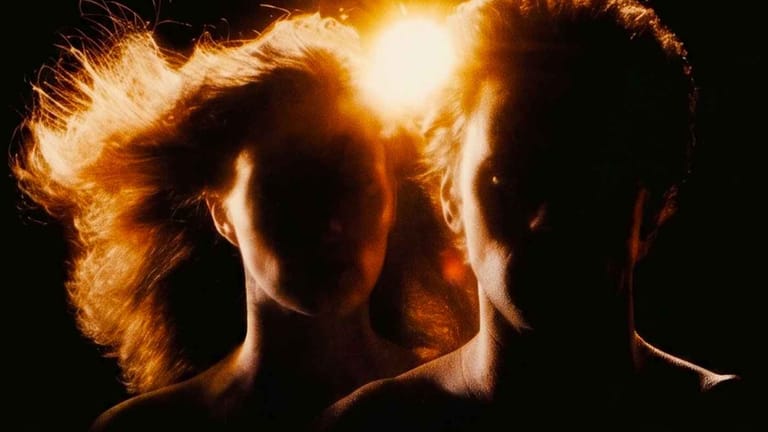
Writer, actor, comedian and all-round wonderful human being Mary Jo Pehl joins us as we try to untangle the twisted tale of Brian De Palma's Sisters (1972). Starring Margot Kidder (of Superman and The Amityville Horror fame) in the dual roles of demure French Canadian model Danielle and her psychotic, groin-stabby twin Dominique, and Jennifer Salt as the hard-boiled investigative journalist determined to prove the murder she witnessed from her apartment window, Sisters is at once a delirious Hitchcockian fever dream that would define the direction of De Palma's career and dark exposé of the forces ranged against the women's liberation movement. But is it a thrilling thriller or a shrill, tiresome pastiche? Find out!
Did we set it free?
Make your call to reveal our verdict, our star rating out of five and our full review.
Skip the guess and read the review
VerdictSet free
Mystery Science Theater 3000 alumna and RiffTrax regular Mary Jo Pehl brought us Brian De Palma's first full-blooded Hitchcock tribute, which she came to cold.
It opens on a tacky hidden-camera show, after which French-Canadian model Danielle Breton (Margot Kidder) takes the prank's victim, Phillip (Lisle Wilson), home. Next morning, reporter Grace Collier (Jennifer Salt) watches from across the courtyard as he's stabbed to death and scrawls 'HELP' in blood on the window. The police, casually racist and in no hurry, believe the demure Danielle over the assertive Grace, and Danielle's creepy ex-husband Emil (William Finley) has cleaned up before they arrive.
That sequence, in split screen, with Emil folding the body into a sofa bed on one side and Grace haranguing the detectives on the other, is still a masterclass in suspense. Rear Window, Psycho and Rosemary's Baby all loom large, and editor Paul Hirsch has called De Palma Hitchcock's heir; we'd say he builds on Hitchcock rather than copies him. Bernard Herrmann's score, twin Moogs, bells and full orchestra, never once calms down, and Herrmann reportedly insisted on main-title music, telling De Palma he was not Hitchcock and needed to keep the audience in their seats. The structure throws you off balance every half hour and the third-act exposition is clunky. The ending, with Grace brainwashed and Charles Durning's private eye stuck up a telegraph pole watching a sofa nobody will ever collect, is bleak as anything. Underneath it all is a sly study of women not being believed.
Mary Jo, Dan and Conrad set it free, and so did the patrons.
I just never knew what was going to happen next.
Dan It's a wonderful homage to Hitchcock, but it builds on Hitchcock.
Conrad I think it should be unearthed from, released from the Oubliette.
Mary Jo Pehl


Verdicts are decided with the people who back the show. Patreon supporters get a vote.