The Fourth Man (1983)
with Vincenzo Natali
Directed by Paul Verhoeven. Starring Jeroen Krabbé, Renée Soutendijk, Thom Hoffman, Dolf de Vries.

The incredible Vincenzo Natali, director of Cube, Splice and In the Tall Grass, joins us to explore Paul Verhoeven's final Dutch-language film before he launched his Hollywood career: The Fourth Man (1983). It's a visually stunning, darkly erotic thriller, with a Hitchcockian blonde, eye-popping and leg-crossing effects, and some subversive religious imagery. But is this hard-to-find tale of a drunken writer encountering a sultry widow of not one but three husbands a mischievous treasure... or a fever dream best forgotten? Find out!
Did we set it free?
Make your call to reveal our verdict, our star rating out of five and our full review.
Skip the guess and read the review
VerdictSet free
Director Vincenzo Natali (Cube, Splice, Hannibal) brought us the last Dutch film Paul Verhoeven made before RoboCop.
He first saw it on video at 17, and this time had to track it down at the last video rental shop in Toronto, since it's out of print. Jeroen Krabbé is Gerard Reve, a bisexual, Catholic, alcoholic novelist who shares his name with the author of the source novel, travelling to Vlissingen (Flushing) to address a literary society. There he falls into bed with its treasurer, Christine (Renée Soutendijk), a platinum-blonde widow whose beauty salon's neon sign, missing a few letters, reads SPIN, Dutch for spider.
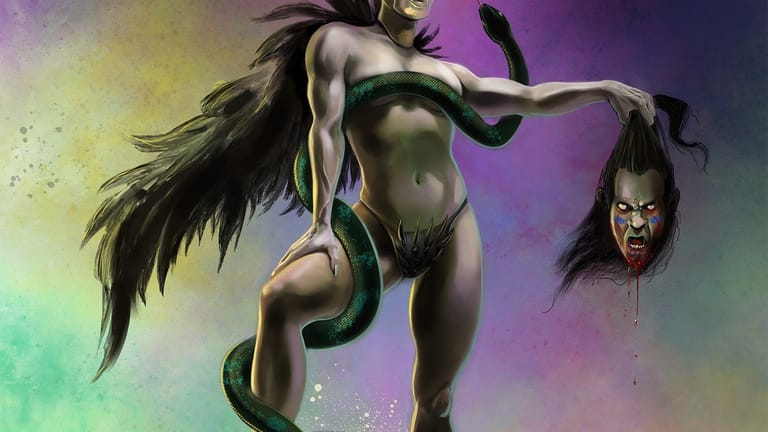
She has lost three husbands, and her boyfriend Herman (Thom Hoffman) turns out to be the hunk Gerard failed to pick up at the station. Gerard stays on in pursuit of Herman, plagued by visions of the Virgin Mary, death and a crucified Jesus in red Speedos. Almost every object, sign and line of dialogue points to doom, from the spider's web across Christ's face in the opening shot to a dream castration that left us crossing our legs. Yet Verhoeven keeps it ambiguous to the end whether Christine is a black widow or Gerard is, as he puts it, lying the truth. Jan de Bont's photography is gorgeous, the Hitchcockian camera moves are masterly, and its frank, unjudgemental sexuality hasn't dated at all. Dan thought the symbolism verged on too much, though he loved the intrigue and the thoroughly unlikable hero. Vincenzo thinks it may be Verhoeven's best film, and Conrad agrees.
About two thirds of the patrons set it free, and so do we.
When you have a sign saying Jesus is everywhere, you might as well just have a sign saying symbolism.
Dan It's charged with lots of eroticism, including homoeroticism. So there's something there for everyone.
Conrad I would go so far as to say it's maybe Paul Verhoeven's best film.
Vincenzo Natali


Verdicts are decided with the people who back the show. Patreon supporters get a vote.